
Birth to 3 Years
Your child has recently entered Westside Regional Center’s (WRC) Early Start Program. You may have questions about what to do next and which services are most important for your child.

Services for Birth to 3 Years
Services are based on need and must be requested through the Individualized Family Service Plan (IFSP) process. Your Service Coordinator (SC) will reach out to discuss recommended services.
Generic Resources, Private Resources, and/or Natural Supports must be explored prior to WRC funding. Examples include health insurance, and other state/county services.
-
Case Management
An Service Coordinator (SC) will be assigned to develop an Individualized Family Service Plan (IFSP) and assist with arranging appropriate services.
-
Assessments
Each child receives a developmental to identify developmental progress and intervention needs and services. As each child is unique, the types of services and supports they will need will vary.
-
Occupational Therapy (OT)
Insurance firstFor children with developmental delays or a known physical or mental condition associated with a high probability of delays, occupational therapy can help improve their motor, cognitive, sensory processing, communication, and play skills. Children with identified swallowing or chewing difficulties may receive specialized therapy to improve feeding. The goal is to enhance development, minimize the potential for developmental delay, and help families meet the special needs of their infants and toddlers.
-
Physical Therapy (PT)
Insurance firstChildren with significantly impaired physical function may receive therapy to preserve, enhance, and restore movement and function impaired or threatened by disability, injury, or disease. Services may include range of motion exercises, parent training, and an assessment for equipment needs.
-
Speech Therapy
Insurance firstAs your child develops, around the ages of 18—24 months, you may notice delays in speech and language. Children with delays in speech and language may receive therapy to improve communication skills.
-
Infant Development Services
Infant stimulation, center-based programs, specialized instruction and parent education services may be provided at home or in a therapeutic preschool-type setting to address developmental needs. Parent observation and participation provide the family with the skills needed to address the child’s needs on an ongoing basis.
-
Behavior Intervention Services
Services are provided by specialists who offer training and instruction to assist families, individuals, and caregivers in developing positive strategies and techniques to manage behaviors. For those families with private insurance and Managed Care, funding of behavior services will be based on current state/federal laws and regulations. See your service coordinator for further funding details.
-
Behavior Intervention Co-Pay Assistance
WRC may be able to assist with behavior intervention insurance co-payments, co-insurance and deductibles (Welfare & Institutions Code 4659.1).
-
Westside Family Resource and Empowerment Center (WFREC)
Our parent-run center offers support groups, trainings, community resources, and referrals to generic resources. Call 310-258-4063 or visit www.wfrec.org.
-
Conferences
WRC may be able to provide funding for conference registration fees. Ask your for more information.
-
Education Support Services (ESS)
A referral to an education advocacy can be made for families who need assistance with the Individualized Education Program (IEP) and /or accessing appropriate services through the school districts.
-
Medical Equipment
Insurance firstFamilies can access medically necessary equipment through referrals to Medi-Cal, private insurance, or other generic sources such as (CCS). WRC, as payer of last resort, may provide funding for equipment needs as determined through consultation with WRC specialists.
-
Formulas and Nutritional Supplements
Insurance firstWRC will assist families in exploring generic resources when there is a medical need for formula or nutritional supplements. In the event that all generic resources have been explored and exhausted, WRC will consider purchasing formula or nutritional supplements as the .
-
Written Translations and Interpretation
WRC offers written translation services for all documents when the family’s preferred language is not English. Interpretation services for IPP or service planning /review meetings are also available.
-
Incontinence Supplies
Insurance firstReferrals can be made to assist individuals with securing supplies available through Medi-Cal, private insurance, or through WRC’s vendored providers when no other generic source is available.
-
Nursing Supports
Insurance firstIf your child needs nursing supports, your service coordinator will assist with a possible referral. Many insurance companies or specialized services, such as EPSDT, provide assistance.
Please note that current legislation and regulation may require families to access their private insurance or managed care plan within Medi-Cal to obtain funding for these services. Your service coordinator will inform you about this process and will provide support as needed to obtain these insurance/managed care benefits.
The Brochure for This Age
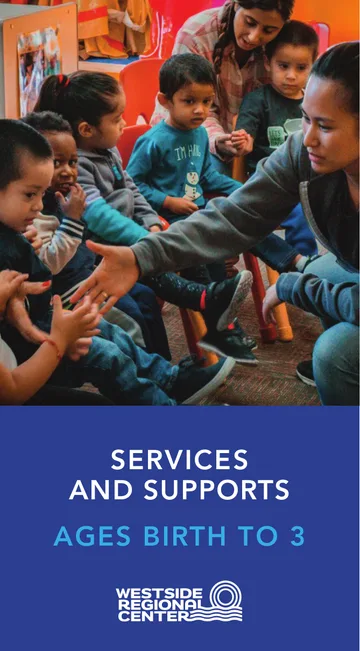
WRC prints the Services and Supports brochure for this age in each of these languages.
Printer-friendly copies
Next Step
New to WRC?
Apply for a Child Under 3Already with WRC?
Call your service coordinator to ask about a service. If you do not know who that is, call (310) 258-4000.
Support Groups Coming Up
Informed Education Partners (IEP) Support Group
Different Thinkers Different Learners
Siempre Amigas Support Group
With Westside Family Resource and Empowerment Center
Level Up: African American/Black Families Support Group
Ethiopian Support Group for Parents of Children who Have Special Needs
Informed Education Partners (IEP) Support Group
Different Thinkers Different Learners
Level Up: African American/Black Families Support Group
Siempre Amigas Support Group
With Westside Family Resource and Empowerment Center
Siempre Amigas Support Group
With Westside Family Resource and Empowerment Center
Siempre Amigas Support Group
With Westside Family Resource and Empowerment Center
Siempre Amigas Support Group
With Westside Family Resource and Empowerment Center
Siempre Amigas Support Group
With Westside Family Resource and Empowerment Center
Siempre Amigas Support Group
With Westside Family Resource and Empowerment Center
Siempre Amigas Support Group
With Westside Family Resource and Empowerment Center
Siempre Amigas Support Group
With Westside Family Resource and Empowerment Center
WRC posts new support groups, trainings and meetings on its calendar each month. Call (310) 258-4000 to ask about the next one.
Intake Process and Eligibility
If you have a developmental concern about your child or a family member, the Department will be your first contact at Westside Regional Center. Learn more about our eligibility process.
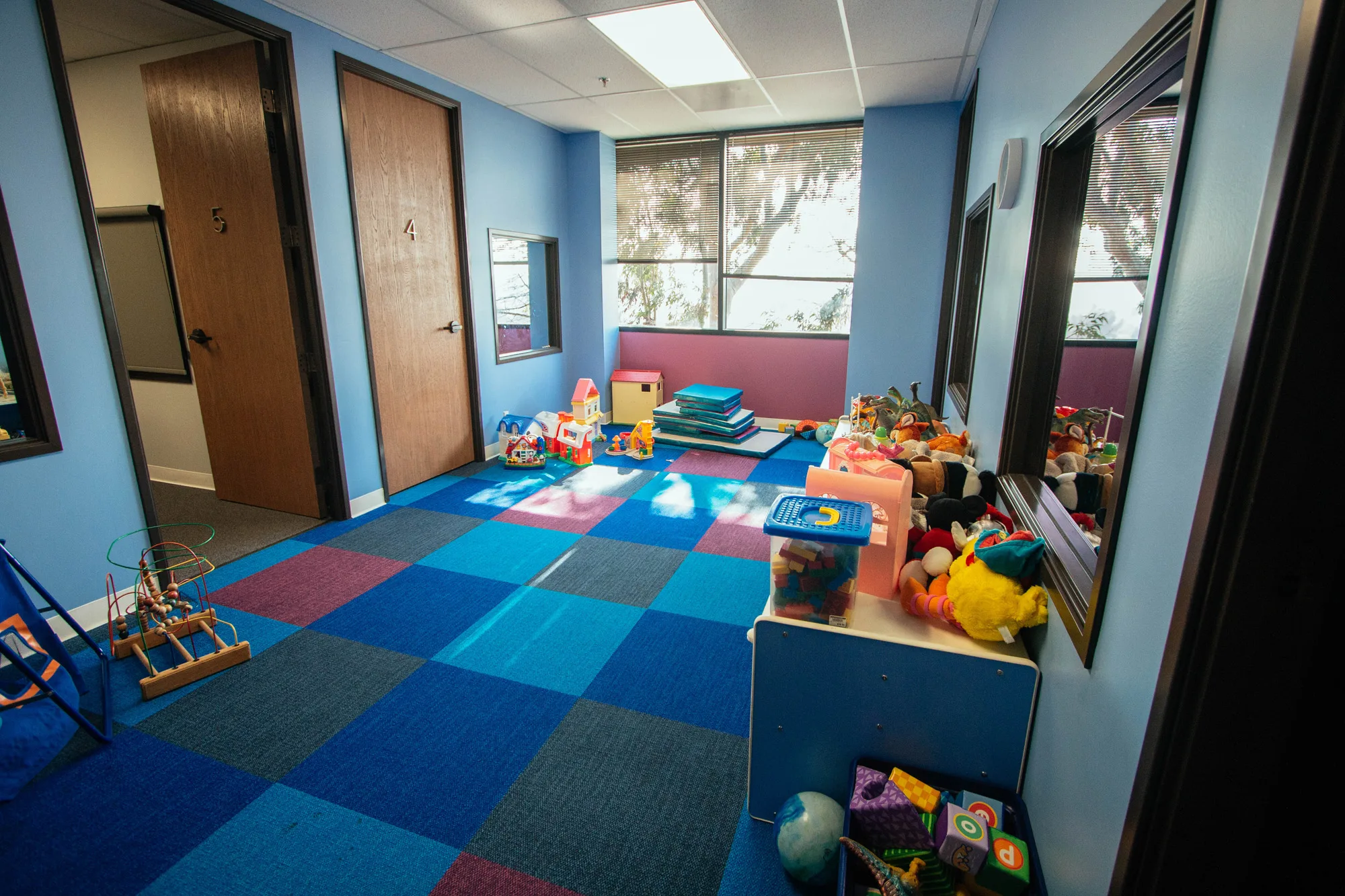
Welcome to the Early Start Program
The first three years of life are an important period of development for all children. As children grow, they learn certain skills such as smiling, waving, or taking their first steps. These abilities are called developmental milestones, and most children achieve them by a certain age. Some infants and toddlers may need additional support to help them reach their full potential. These services and supports are available via the Early Intervention Program for Infants and Toddlers with Disabilities.
Welcome Video
Resources for Parents & Caregivers
Early Start Information Packet
The California Department of Developmental Services (), with input from stakeholders, has created a new standardized information packet for consumers and their families going through the intake process, or anyone who is interested in learning more about California’s regional center system.
To get your copies of the information packets in a variety of languages, formats and modes of communication, visit the DDS website.
Early Start Parent Q & A (Question & Answer)
This Q & A session is facilitated by the Early Start Program Managers in collaboration with the Westside Family Resource and Empowerment Center () and offers attendees the opportunity to ask any questions that come up as they navigate California’s Early Start Program. For more information please call the WFREC at (310) 258-4063 or email westsidefrec@gmail.com.
When: Every 4th Wednesday of the month
Time: 9:30AM – 10:30AM
Download the flyer: English PDF, Spanish, Farsi/فارسی
Laptop & Hotspot Loans | LA County Public Library
You can now check out a kit with a Chromebook and wireless hotspot to access the internet (plus chargers) inside a handy carrying case, from any library location. Borrow for 3 weeks, with the option to renew, if available. Please call any library location to place a hold on a Laptop & Hotspot Loan Kit. A kit can be picked up at any open library or via Sidewalk Service. For more information, visit https://lacountylibrary.org/laptop/ .
Parents’ Rights – Early Start
Parents have rights and access to procedural safeguards to assure that early intervention services are provided in a manner appropriate to the child’s needs and concerns of the family. Procedural safeguards include confidentiality, access to records, evaluation and assessment, individual family service plans, and periodic and annual individual family service plan review. We encourage families to read the booklet, Parents’ Rights: An Early Start Guide for Families, to learn about their rights under the Early Start Program. Additional information is provided by the Department of Developmental Services (DDS) by visiting dds.ca.gov/services/early-start.
Westside Family Resource & Empowerment Center
The Westside Family Resource and Empowerment Center (WFREC) is housed within the same building and works in collaboration with the Westside Regional Center, local school districts, and community-based organizations that provide supports and services to children and their families. The WFREC is staffed by experienced parents and family members who are qualified to provide emotional, technical, and informational support to families who have an infant, child, or young adult with a disability, chronic illness, or other health care need.
They offer a variety of support groups where parents have the opportunity to meet and learn from other parents. These groups are designed to provide information, resources, community, and hope. When families share common concerns and experiences, the support can be uniquely meaningful. They also sponsor training and workshops to help families learn how to understand and navigate the often-times complex systems of care in California. Watch their welcome video to learn more.
For more information, please call (310) 258-4063 or visit linktr.ee/westsidefrec
WFREC Brochure
Training, Events, and Conferences
Westside Regional Center (WRC) sponsors training, conferences, workshops, and events for parents, individuals we serve, service providers, and other professionals within our community. Visit our calendar of events for more information.
Trainings and Conferences: In the Community
WRC encourages individuals with disabilities and family members to be empowered and informed through participation in trainings and conferences offered within the special needs community.
WRC may fund for tuition or conference registration fees up to a maximum of $300 for trainings and/or conferences per year. For adults receiving WRC services, funding may include lodging and/or transportation costs when authorized. Funding for parents or caregivers does not cover the cost of lodging or transportation. Check with your service coordinator or the WFREC to inquire about training and conference opportunities.
Exiting the Early Start Program
The process of exiting the Early Start Program and beginning new services or programs at age three is called “transition.” The process may start as early as a child’s second birthday by providing families with information at the Individual Family Service Plan (IFSP) meeting. Transition services are intended to support and prepare a parent or caregiver and their child to exit the Early Start Program by the child’s third birthday.
Transition Conference
When a child is 30 to 32 months of age, the parent or caregiver will participate in a Transition Conference (meeting) with representatives from their local school district and their Early Start SC. This meeting is intended to address the necessary steps to support your child during the transition out of the Early Start Program into preschool services and other community programs. A transition plan is created during the Transition Conference explaining procedures, activities, timelines, and responsible parties. During this meeting, school representatives may provide a general overview of Special Education and related services. Your Early Start SC will also review the requirements for ongoing regional center services under the Lanterman Developmental Disabilities Services Act.
Services After Age Three
If your family would like to pursue the continuation of services after your child exits the Early Start Program at age three, there are options:
- Regional Center services under the Lanterman Developmental Disabilities Services Act
- Special Education services under Part B of
- Community Programs
The eligibility requirements for these services are different for every agency or program. Your child may qualify for both programs (regional center and special education) should they meet the criteria.
Understanding the Diagnosis: A Guide for Families
Developmental disabilities are a group of conditions due to an impairment in physical, learning, language, or behavior areas. These conditions begin during the developmental period, may impact day-to-day functioning, and usually last throughout a person’s lifetime.
Receiving a diagnosis of a developmental disability comes with a lot of information, paperwork, appointments, changes, and feelings. You may have many questions regarding developmental disabilities. As you look for answers, you will encounter information about the various conditions, their causes, and possible treatments. All of this information may make it challenging to organize options and begin to choose a treatment plan that best fits your family.
It is natural to want to identify the single root cause of the diagnosis. Many families may battle with feelings of guilt and/or shame. Please understand that these diagnoses are complex and there may not be a single factor that has been identified as the cause. Know that families and caregivers can be strong advocates and have high expectations of a person/family member with the disability.
Westside Regional Center anticipates supporting you and your family as you proceed from the initial diagnosis to ongoing support services. You are not alone in this process. For additional information about diagnosis, you may contact your service coordinator, WRC’s Staff Psychologist, Kaely Shilakes, Psy.D at 310-258-4157, or click on the following documents below:
| Title | English | Spanish | Farsi |
|---|---|---|---|
| Understanding Autism: A Guide For Families | English PDF | Spanish PDF | Farsi Word |
| Understanding Cerebral Palsy: A Guide For Families | English PDF | Spanish PDF | Farsi Word |
| Understanding Down Syndrome: A Guide For Families | English PDF | Spanish PDF | Farsi Word |
| Understanding Epilepsy: A Guide For Families | English PDF | Spanish PDF | Farsi Word |
| Understanding Intellectual Disability: A Guide For Families | English PDF | Spanish PDF | Farsi Word |
Community Resources
- Department of Developmental Services (DDS) – Early Start webpage
- Early Start Frequently Asked Questions (FAQ)
- Effective Early Childhood Transitions: A Guide for Transition at Age Three – Early Start to Preschool [English] [Spanish] [Farsi/فارسی]
- Parents Helping Parents – Early Childhood
- Parents Helping Parents – Early Start Information Packets
Shows what this word means
IFSP (Individual Family Service Plan)
An IFSP is the plan for a baby or toddler in Early Start. It lists your family's goals and the services for your child.
WRC’s definition
Individual Family Service Plan. A written statement completed yearly which lists goals and specific objectives in areas important to the consumer. Each objective contains a target date that the objective is to be met and one or more plans designed to reach the objective.
IPP (Individual Program Plan)
An IPP is a written plan you make with WRC. It lists your goals and the services that help you reach them.
WRC’s definition
Individual Program Plan/Individual Support Plan. A written statement of goals and specific objectives in areas important to the client. Each objective contains one or more plans to achieve it and a target date for completion.
Early Start
Early Start is free help for babies and toddlers under 3 who have a delay or are at risk of one.
WRC’s definition
Some infants and toddlers may need additional support to help them reach their full potential. These services and supports are available via the Early Intervention Program for Infants and Toddlers with Disabilities.
Assessment
An assessment is a review of a person's skills and needs. It helps decide eligibility and services.
WRC’s definition
The process to determine whether, and to what degree, an individual has developmental deficits. An assessment identifies the individual’s strengths, abilities, needs, and developmental level.
Generic resources
Generic resources are help that is open to everyone, like health insurance, Medi-Cal or school services. WRC checks these first.
WRC’s definition
Services offered or available to the general public, as distinguished from specialized services for specific groups of people. For example, training provided by the Department of Rehabilitation is a generic service available to any California resident in need of rehabilitation. In the absence of a generic service, Westside may purchase that service for its clients.
Medi-Cal
Medi-Cal is California's free or low-cost health insurance program.
WRC’s definition
California’s version of the federal Medicaid Program that pays medical expenses for public assistance recipients and other low-income persons.
Service coordinator
Your service coordinator is your main contact at WRC. They help plan and arrange the services in your plan.
WRC’s definition
A service coordinator (SC) will be assigned to develop an Individual Program Plan (IPP) and assist with arranging appropriate services.
Vendor (service provider)
A vendor is a person or agency WRC has approved and pays to give services.
WRC’s definition
Any community agency or professional that provides services purchased by the regional center for its clients. Also known as a Service Provider.
CCS (California Children's Services)
CCS is a state program for children with certain physical health conditions.
WRC’s definition
California Children’s Services. Provides specialized medical and rehabilitation services for children with physical disabilities with certain conditions. The program is financed by federal, state, and county taxes, and supplemented by family repayments when indicated
Payer of last resort
WRC pays only after other sources, like insurance, have been tried.
WRC’s definition
WRC, as payer of last resort, may provide funding for equipment needs as determined through consultation with WRC specialists.
Intake
Intake covers the first steps after you call WRC: WRC gathers information and checks whether you can get services.
WRC’s definition
If you have a developmental concern about your child or a family member, the Intake Department will be your first contact at Westside Regional Center.
DDS (Department of Developmental Services)
DDS is the state department that funds and oversees California's 21 regional centers.
WRC’s definition
The Department of Developmental Services. This state agency administers the contracts with each regional center and sets many of the regulatory standards for service. The department also operates state developmental centers.
WFREC (Family Resource and Empowerment Center)
WFREC is a parent-run center with support groups and trainings for families.
WRC’s definition
Our parent-run center offers support groups, trainings, community resources, and referrals to generic resources.
Eligibility
Eligibility is whether a person can get WRC services. WRC decides it after an assessment.
WRC’s definition
The process to determine whether, and to what degree, an individual has developmental deficits. An assessment identifies the individual’s strengths, abilities, needs, and developmental level.
IDEA
IDEA is the federal law about special education for children with disabilities.
WRC’s definition
Individuals with Disabilities Education Act (PL105-17).