

Technology for local government & nonprofits
STOA
Public software people can actually use.
Stoa builds community-facing tools, public data systems, and accessible websites for cities, local government agencies, and nonprofits.
- Working prototype first
- Fixed fee, no nonsense
- WCAG 2.2 AA accessible
The prototype gallery
See the website before you sign anything.
Every tile below is a redesign concept Stoa built to compete for a real procurement. Each one is a working answer to the question every buyer has: what would this look like if Stoa built it?
Click through any of them right now — no login, no sales call. Every page is clearly marked as a Stoa concept, not the agency's live site.
- Gallery pieces
- 117
- Clickable pages
- 12135
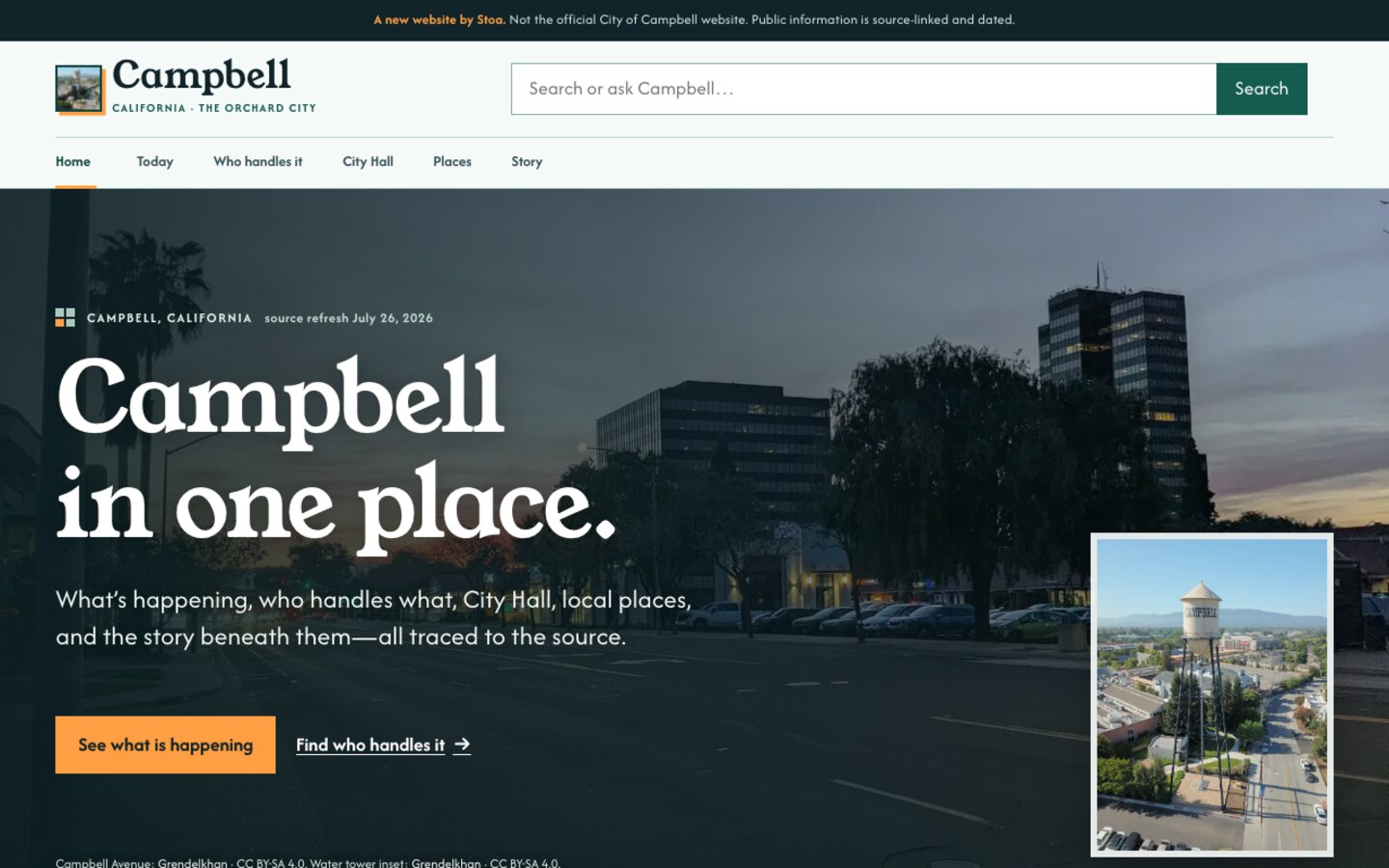
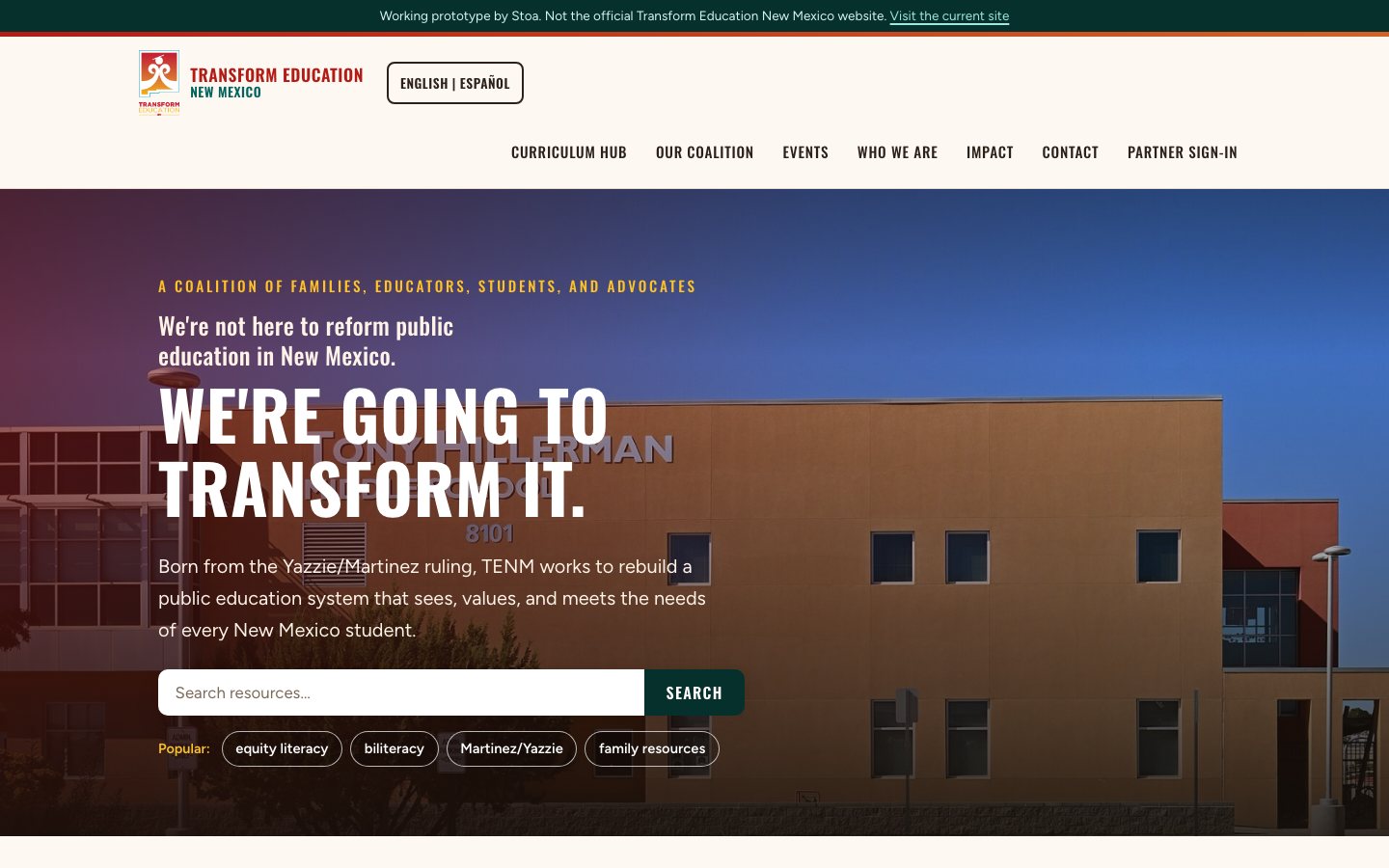
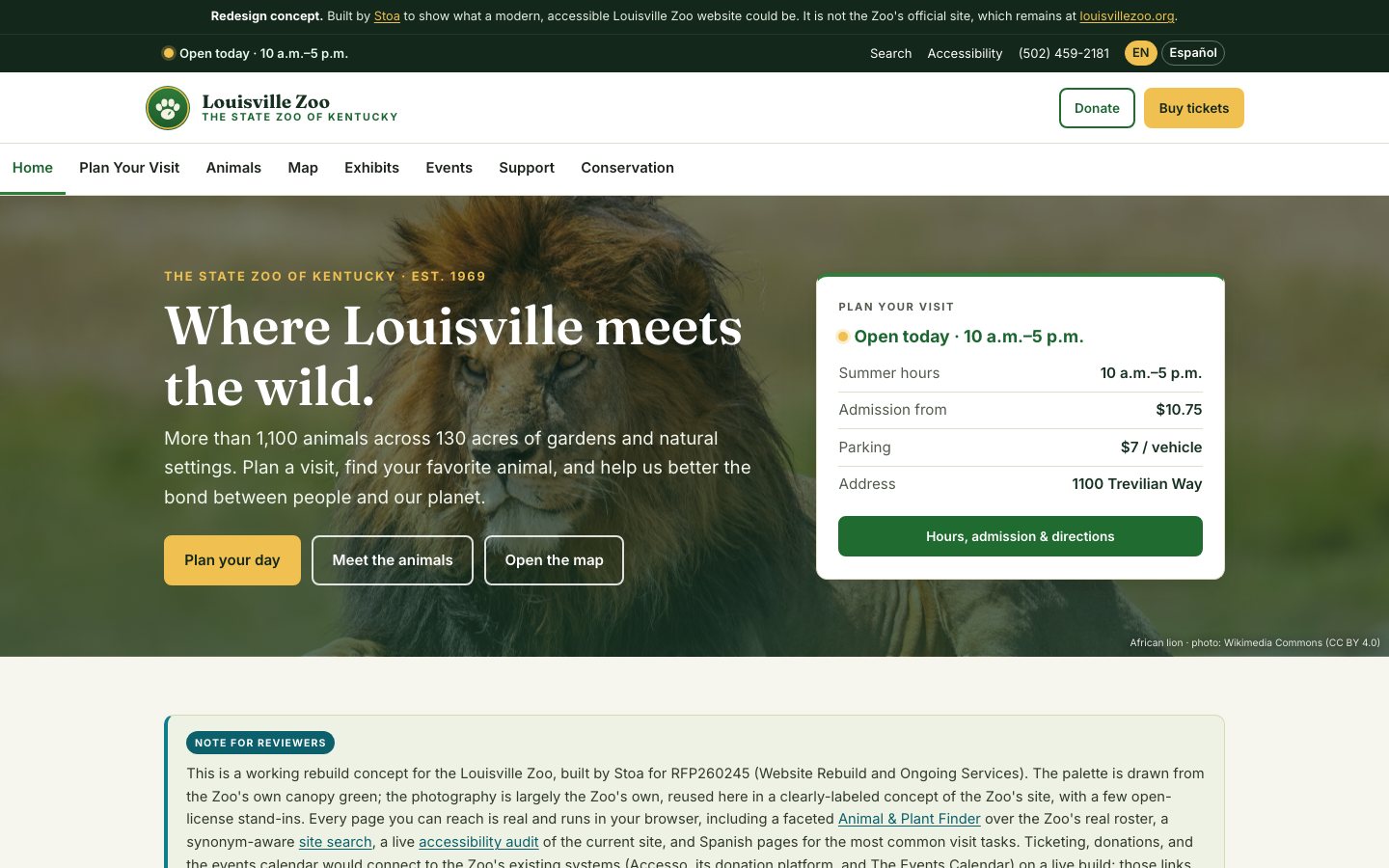
Why Stoa?
No translation required
We arrive already fluent in procurement, compliance frameworks, and the constraints public agencies work within. That saves weeks of scoping and produces software that fits how government actually works.
Built to be used, not shelved
We build for the people who actually have to use the software: the resident filing a permit at 11pm, the staff member juggling a busy front counter. Adoption is the measure of success, so we design for it from the first sketch.
Law, policy, and code under one roof
The same expertise that reads the statute also understands the accessibility requirement and writes the implementation. No handoff, no lost context. Just faster delivery and less time explaining the same thing twice.
What we build
Citizen-facing tools
Portals, dashboards, and search tools that make public services easier to use, built around how residents actually behave. Fast load times, plain language, and mobile-first design, because a resident who can't find their permit status calls the front desk instead.
Example: City of Campbell PortalPublic data access
Open data, budget transparency, and records search, including AI-powered retrieval over dense government datasets like meeting minutes, recalls, and permit archives. We turn FOIA-worthy information into searchable, linkable public interfaces that reduce staff burden while improving accountability.
Example: Budget DashboardADA Title II & WCAG 2.1 AA
The DOJ's 2024 Title II rule requires local government websites and apps to meet WCAG 2.1 AA. DOJ extended the compliance dates in April 2026: larger entities now have until April 26, 2027; smaller entities and special districts have until April 26, 2028. We build accessible by default, not retrofitted.
Read the plain-English Title II guideSelected builds
Full sites, real data, clickable today.
A sample of the redesign concepts in the gallery — complete, multi-page sites for cities, counties, courts, utilities, and parks. Every one is live right now; open any card.
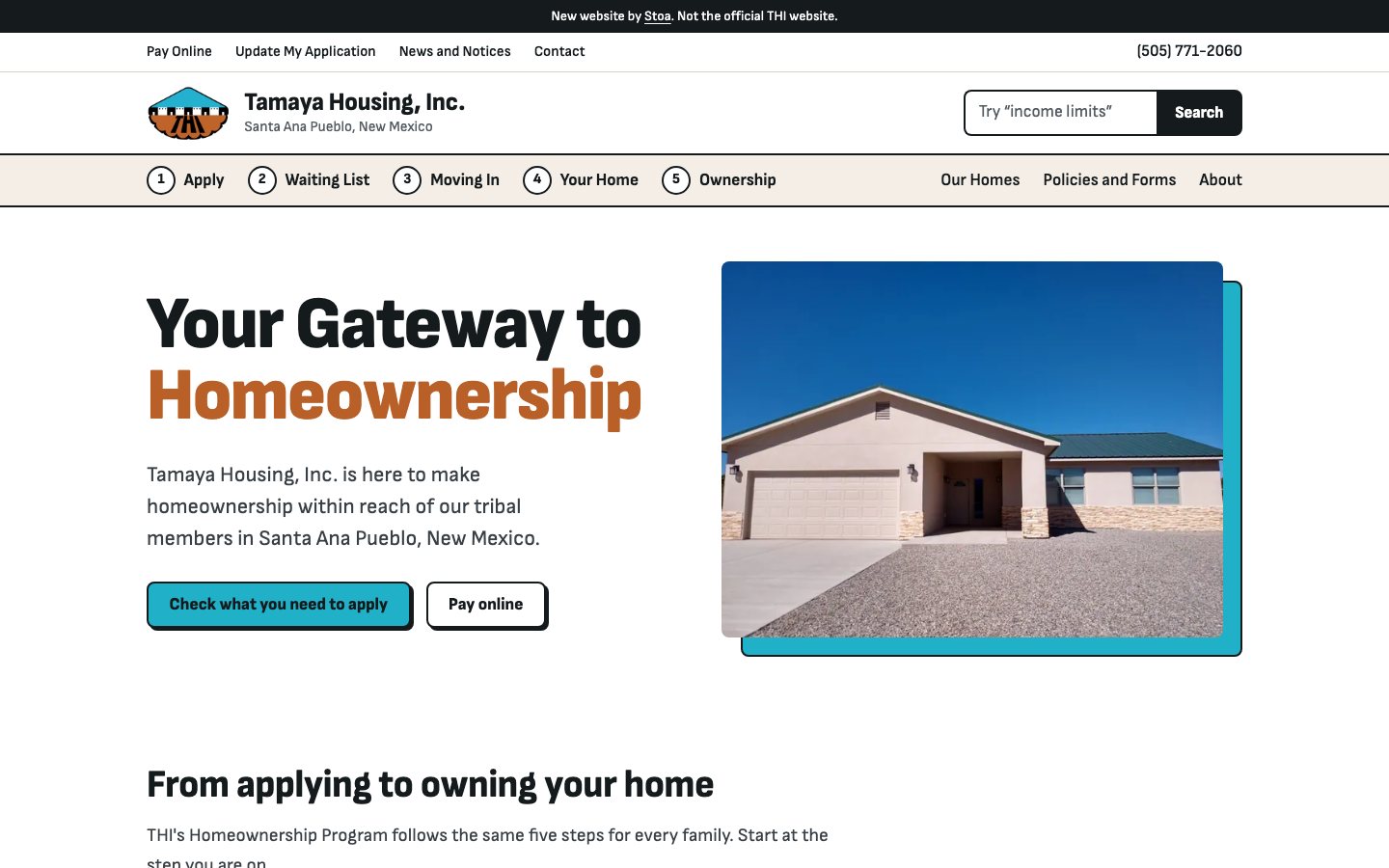 Concept · Tribal housing corporation (New Mexico)29 pagesTamaya Housing, Inc.Five steps from a housing application to the day the home is yours.The homeownership pathPolicies as web pagesApply onlineView project
 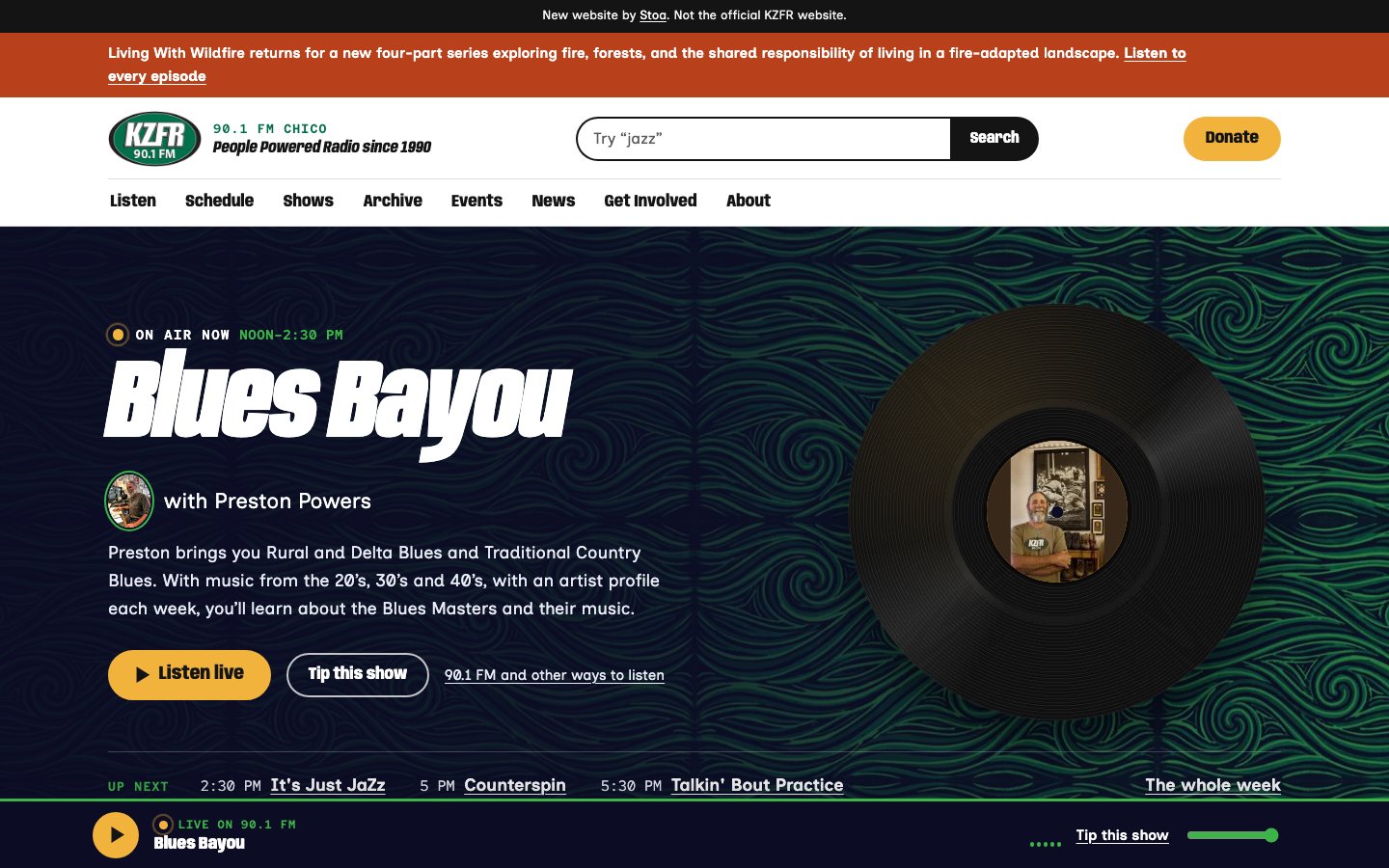 Concept · Community radio station (California)406 pagesKZFR Community Radio, ChicoThe whole broadcast week, from the archive to the hour on air.The broadcast weekA player that keeps playingAn archive to replayView project
 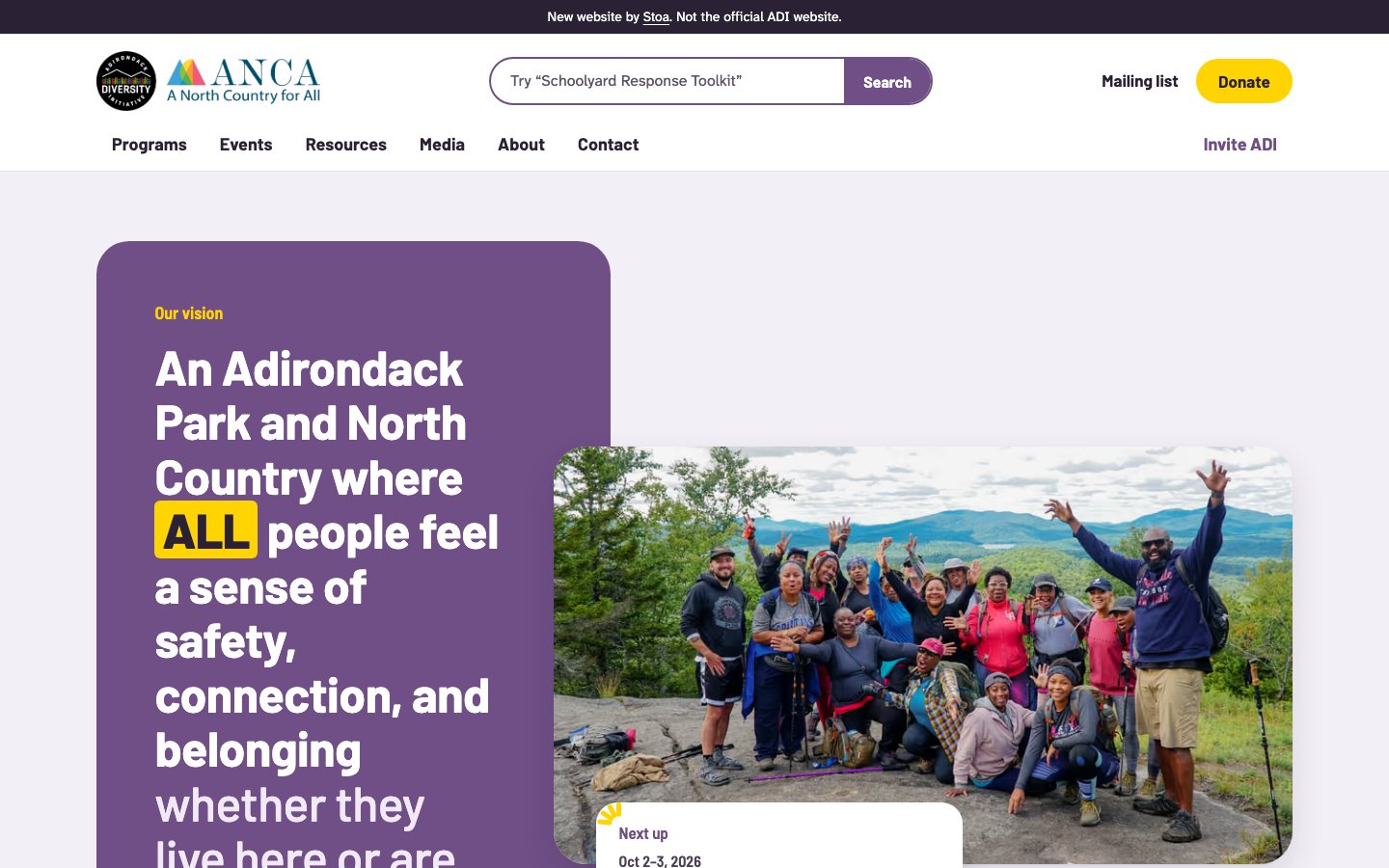 Concept · Regional nonprofit program (New York)100 pagesAdirondack Diversity InitiativeThree color trails from ADI's own booklet, and four Google Sites folded into one.Three color trailsWhat's Happening calendarSchoolyard Response ToolkitView project
 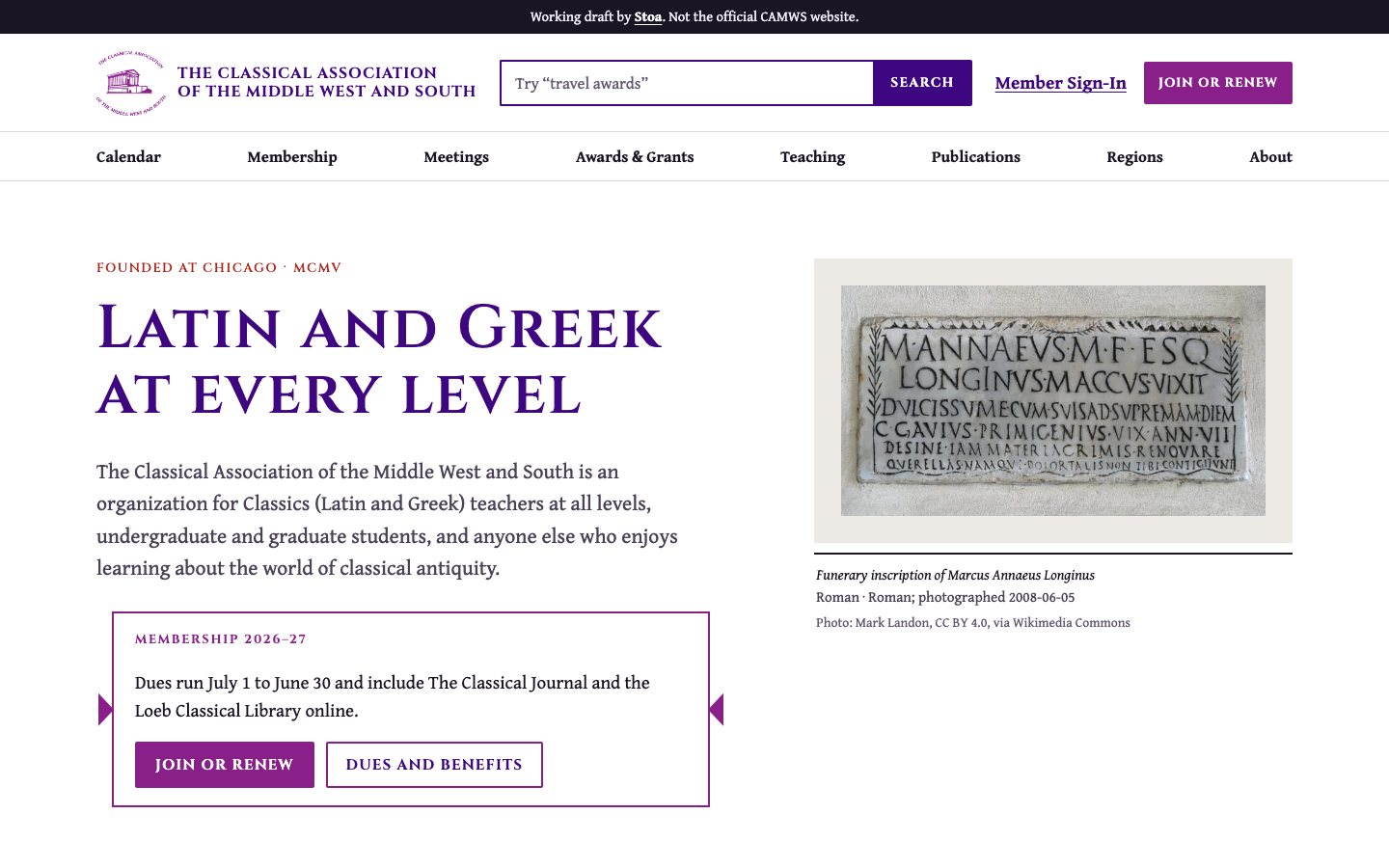 Concept · Academic association (32 states, 3 provinces)195 pagesCAMWSThe CAMWS year as one band: every deadline, meeting and award from July to June.The CAMWS yearAwards and deadlinesProposal checkView project
 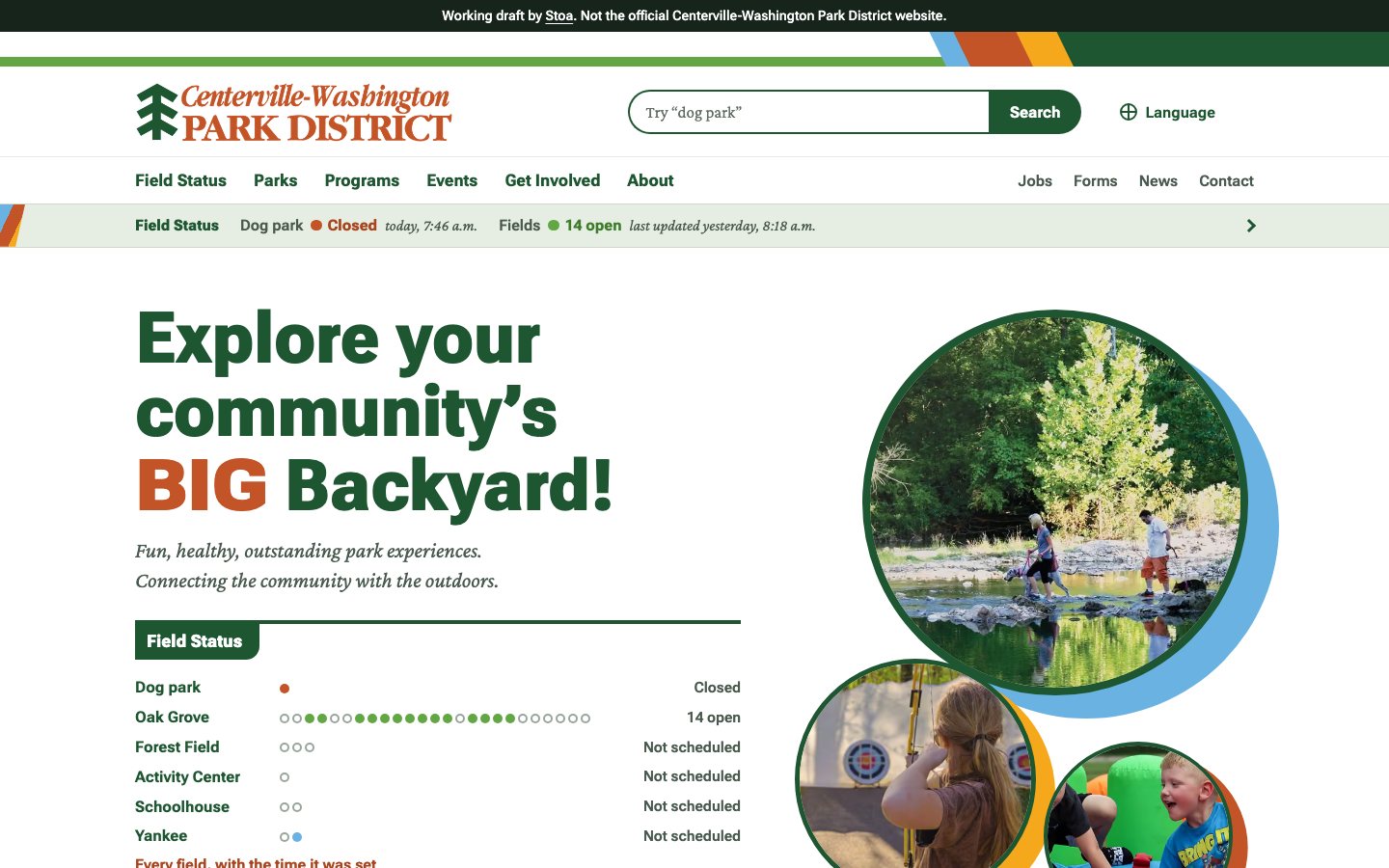 Concept · Park district398 pagesCenterville-Washington Park District, OhioIs my field open, and which park has what we need?Live field statusA Park Finder that answersThe BIG Backyard mapView project
 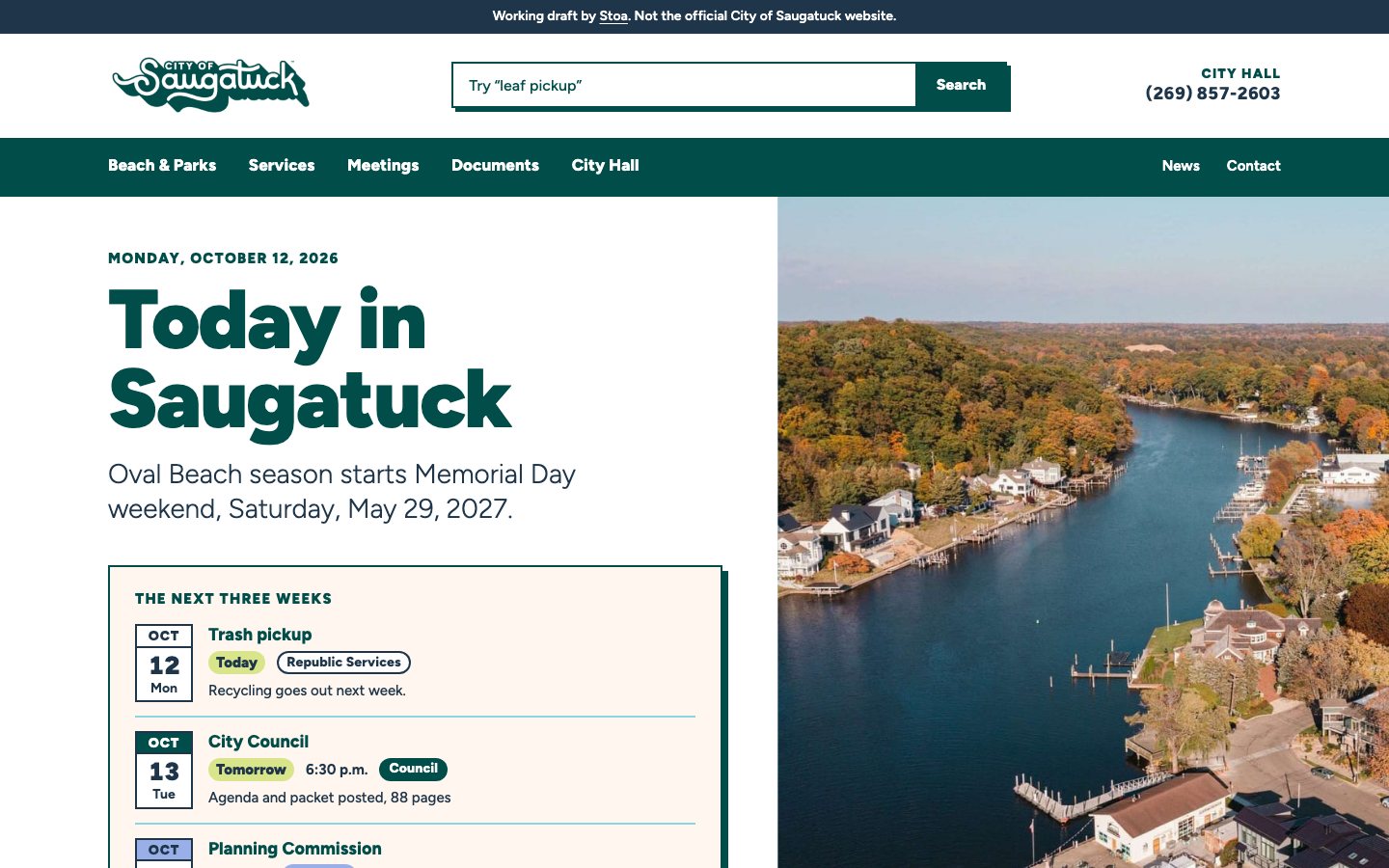 Concept · City1719 pagesCity of Saugatuck, MichiganA beach town's website that follows the calendar.Season-first homepagePackets by agenda itemDocuments searchable to the pageView project
How it works
Three steps from first email to working software. Here's how a typical engagement goes.
Brief us
Tell us what you're building, who it serves, and what's in the way. A paragraph is enough. No formal RFP required.
Scope together
Get a clear proposal with a fixed scope, timeline, and price. No vague estimates or bloated statements of work.
Build and ship
Tight sprints, regular check-ins, clean handoff. You own the code, documentation, and deployment. We don't disappear.
Start a conversation
Stoa takes on a small number of projects at a time. If your work fits, we move fast.
Good fits
- Citizen-facing tools: resident portals, service request systems, public-data search
- Open data and transparency tools: budget dashboards, council minutes, public records
- AI-assisted government search: permits, policy documents, meeting archives
- ADA Title II compliance: WCAG 2.2 AA audits and retrofits (clearing the 2.1 AA legal floor) for local government systems
Get in touch
Tell us what you're building and where you're stuck. A paragraph is enough to get started.
Send us a messageOr email directly: stephen@stoa.works

Stoa is led by Stephen Stanwood, a lawyer and developer in Campbell, CA, with experience at law firms and in government.