About
A small firm built for public work.
Stoa builds software for cities and local government agencies: citizen-facing tools, public data systems, and accessible websites. We're based in Campbell, California, and we work with agencies across the country.

The name
Why "Stoa"?
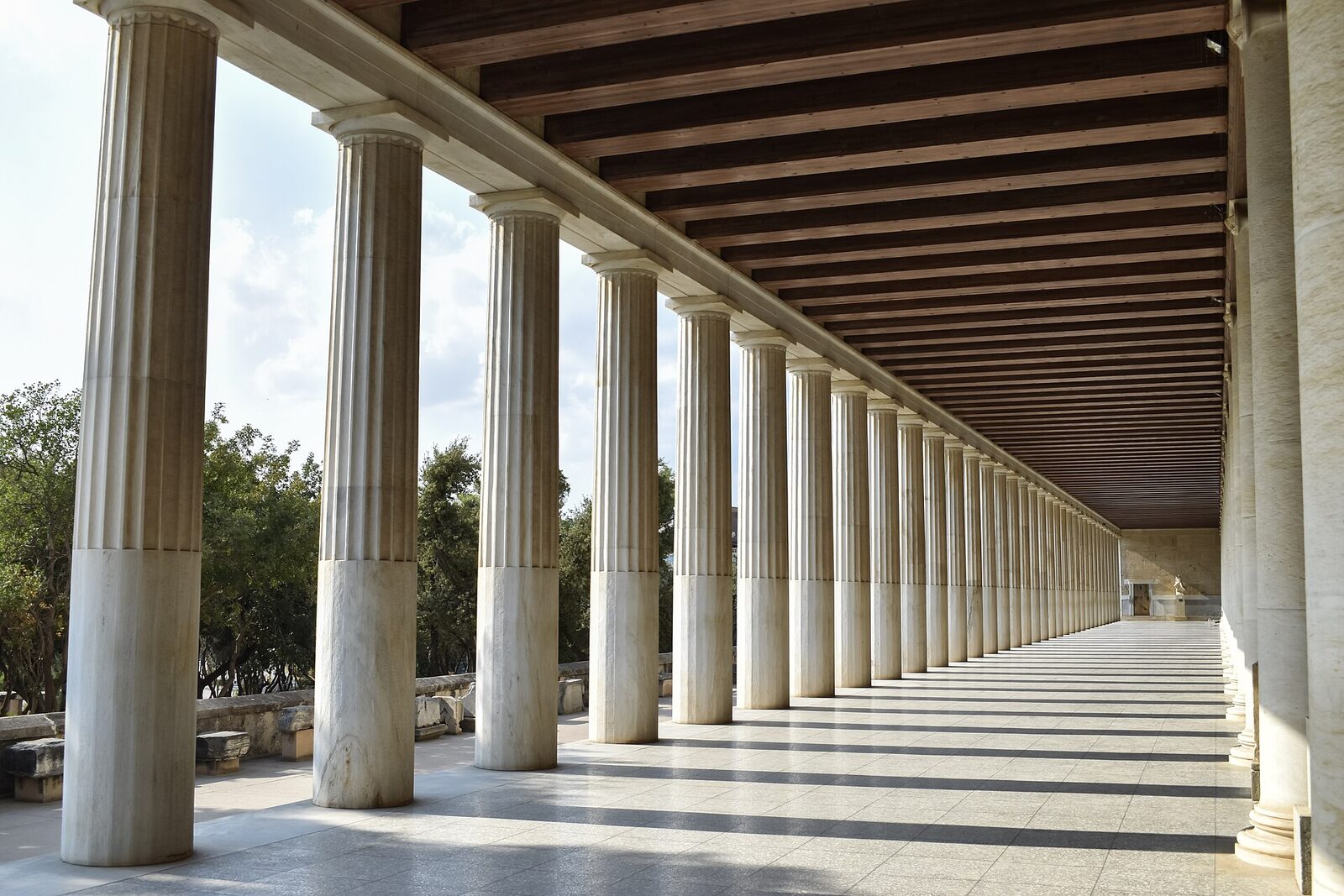
In ancient Greece, a stoa was the covered colonnade at the edge of the agora: shaded, open on one side, and free for anyone to walk into. It's where the city did its business. Merchants sold, officials met, neighbors argued, and at least one school of philosophy held class there.
That's the bar for public software. Open to everyone, practical, built to be used daily, and sturdy enough that nobody has to think about it. The beam over our wordmark is the lintel: the part of the architecture that quietly holds everything up.
Who's behind it
Hi, I'm Stephen.
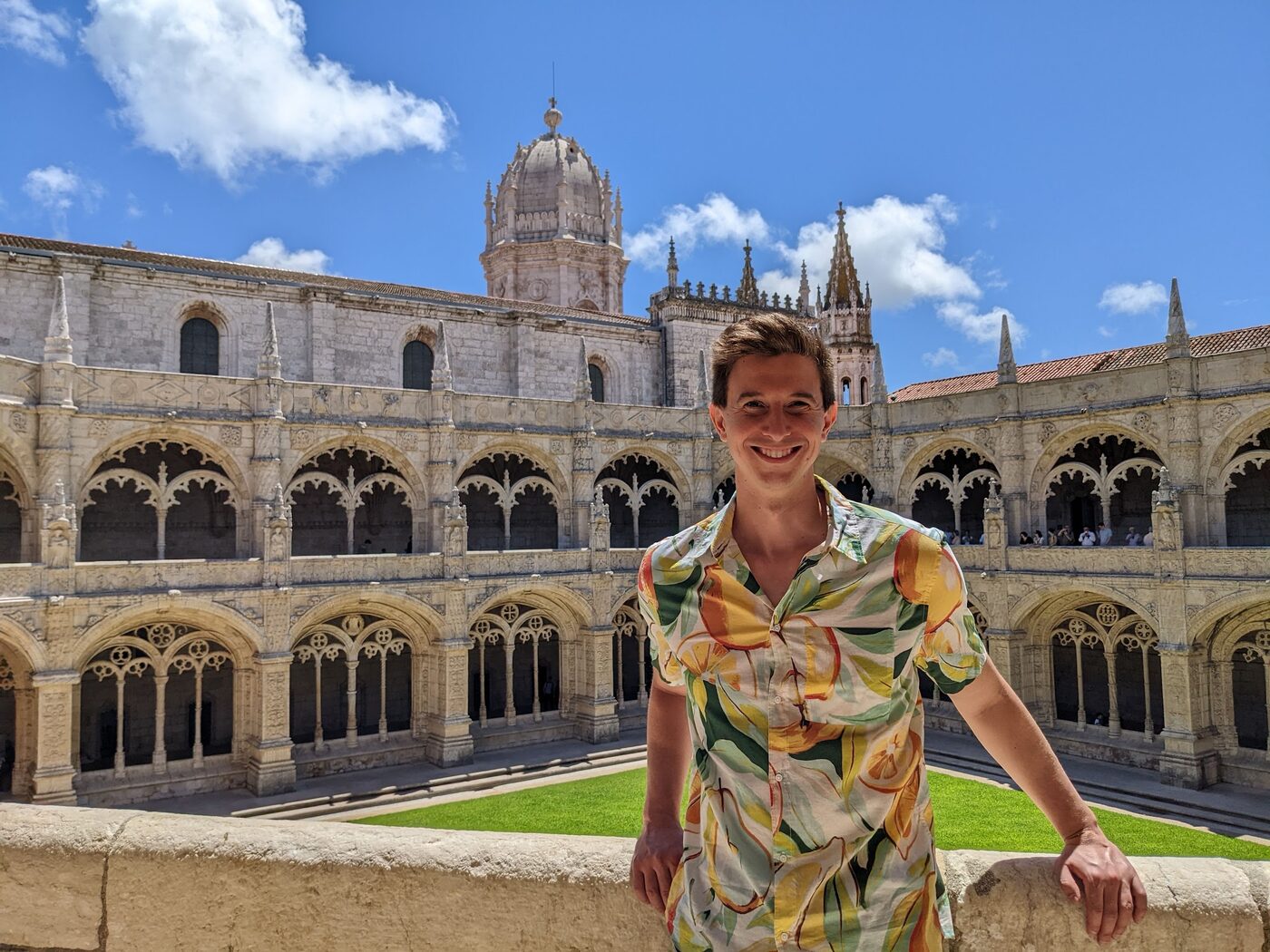
I'm Stephen Stanwood, and Stoa is me. I'm a lawyer and a developer in Campbell, California. I studied public policy at the University of Chicago, earned my JD from Santa Clara, and spent years at law firms and in government before I started building the software I kept wishing public agencies already had.
That mix matters more than it sounds. The same person who reads the DOJ's accessibility rule writes the code that satisfies it. The person who understands why procurement works the way it does drafts the fixed-fee scope. Nothing gets lost in a handoff, because there isn't one.
I keep coming back to local government because it's where software actually touches someone's day: paying a utility bill, finding a meeting agenda, pulling a permit. When those work, nobody notices. When they don't, the city takes the blame. I'd rather build the version nobody has to think about.
Stoa is small on purpose. I use modern tooling, including AI, to move fast on the repetitive parts: scaffolding, formatting, first drafts. But I review and test everything myself before it ships. That's how one person builds dozens of working prototypes and still stays hands-on from kickoff to handoff.
The method
Show, then scope, then ship.
The fastest way to earn an agency's trust is to put working software in front of it.
We build first
Before an agency signs anything, there's usually already a working Stoa prototype to click through. It's the fastest way to find out whether we see the problem the same way you do.
We scope tight
A fixed scope, timeline, and price on paper. Small enough to start soon, complete enough to matter.
We ship and hand off
Working software early, check-ins weekly, and a clean handoff with documentation your staff can actually use. We stay available without making you dependent.
What we hold ourselves to
Five working principles.
01
You own everything
Code, content, documentation, accounts, deployment. When a project ends, the agency holds the keys. Follow-on work happens because it's useful, never because you're stuck.
02
Accessible by default
WCAG 2.2 AA (a superset of the 2.1 AA legal floor) is the standard, not a line item. Every page we ship is built and tested for keyboard, screen reader, and contrast from the first commit.
03
Plain language
Residents shouldn't need a glossary to pay a bill, and councils shouldn't need one to read a proposal. We write the way people actually talk.
04
Adoption is the metric
Software succeeds when the resident finishes the task and the staff member's phone rings less. We design for use, not for feature checklists.
05
Fixed fees, no surprises
A clear price for a clear scope, agreed before work starts. No per-resident pricing, no seat licenses, no annual escalators baked into year three.
The practical part
Procurement-ready.
Stoa operates as Stoa Works LLC, a registered California limited liability company headquartered in Campbell. We respond to RFPs and RFQs through the portals agencies already use, we're comfortable with sealed-bid and SOQ processes, and we keep our paperwork boring: W-9 on request, references on request, certificates routed the same week they're asked for.
For work under your discretionary threshold, none of that ceremony is required. A short email is a fine way to start, and most conversations get a concrete next step within one business day.
Curious whether we're a fit?
Tell us what you're building and where you're stuck. A paragraph is enough.