
2025 Annual Report
Letter from Catherine Bracy
Founder and CEO
2025 was the year technology’s influence became impossible to ignore. As algorithms are used to decide who could rent an apartment, what prices we paid, and whether we kept our jobs, tech’s reach expanded into nearly every corner of our economy. Meanwhile, tech CEOs gained unprecedented access to the White House, blurring the lines between corporate power and government policy.
Correspondingly, the public conversation has shifted dramatically. The breathless excitement of 2023 has given way to something more grounded—and more skeptical. People are asking harder questions: Who’s really benefiting from these systems? What happens when an algorithm gets it wrong?
When you pull back the curtain on how these technologies actually work—and who profits from them—the picture gets a lot less rosy. AI isn’t a futuristic novelty anymore. It’s being used to make real decisions about real people’s lives today, often without transparency or accountability.
But advocates, organizers, workers, and others refused to let that happen unchecked. We worked to ensure that as tech’s power grows, so does our collective power to hold it accountable. And this year, we had wins that prove it’s possible.
Read “2025 in review: A letter from Catherine Bracy”AI isn’t inevitable, and its trajectory isn’t predetermined.
Catherine Bracy Founder & CEO, TechEquity
Who we are
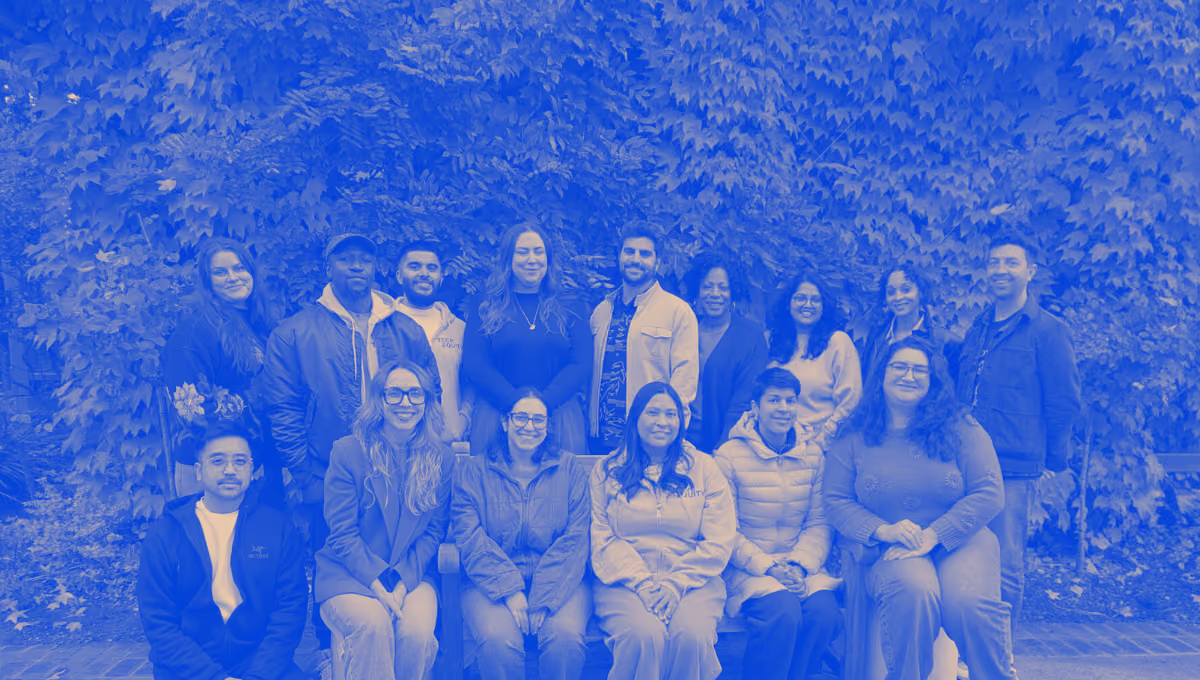
We envision a world where the tech industry is responsible for building widespread prosperity and is held accountable for the economic harm it creates in our communities.
We raise public consciousness about economic equity issues resulting from the tech industry’s products and practices and advocate for change that ensures tech’s evolution benefits everyone.
Our approach
The tech industry plays a consequential role in our society and within our communities. We want to see tech foster prosperity, not exacerbate inequity.
We’re addressing how tech intersects with the most consequential areas of the economy for everyday people: where they live (housing) and the conditions under which they work (labor).
Tackling tech’s intersection with economic equity requires a multi-faceted approach. We:
- Raise public consciousness about emerging areas where tech companies create economic inequity.
- Articulate and advocate for regulation and the adoption of industry-wide standards to address the harms and opportunities we identify.
- Support implementation and enforcement of these regulatory agendas and industry standards.
Education + research
We investigate frontier issues at the intersection of tech and economic equity and share those findings with policymakers, the industry, and the public.
Learn MorePolicy + regulation
We create policy grounded in impacted people’s experience so we can shape the tech industry to be a force for opportunity.
Learn MoreImplementation + enforcement
We know that any law is only as good as its implementation; once policy is passed, we work with government and industry to ensure these changes will be felt in people’s lives.
Learn MoreWhat we did in 2025
We published original research that highlights the impact of AI on working people and articulates practical solutions.
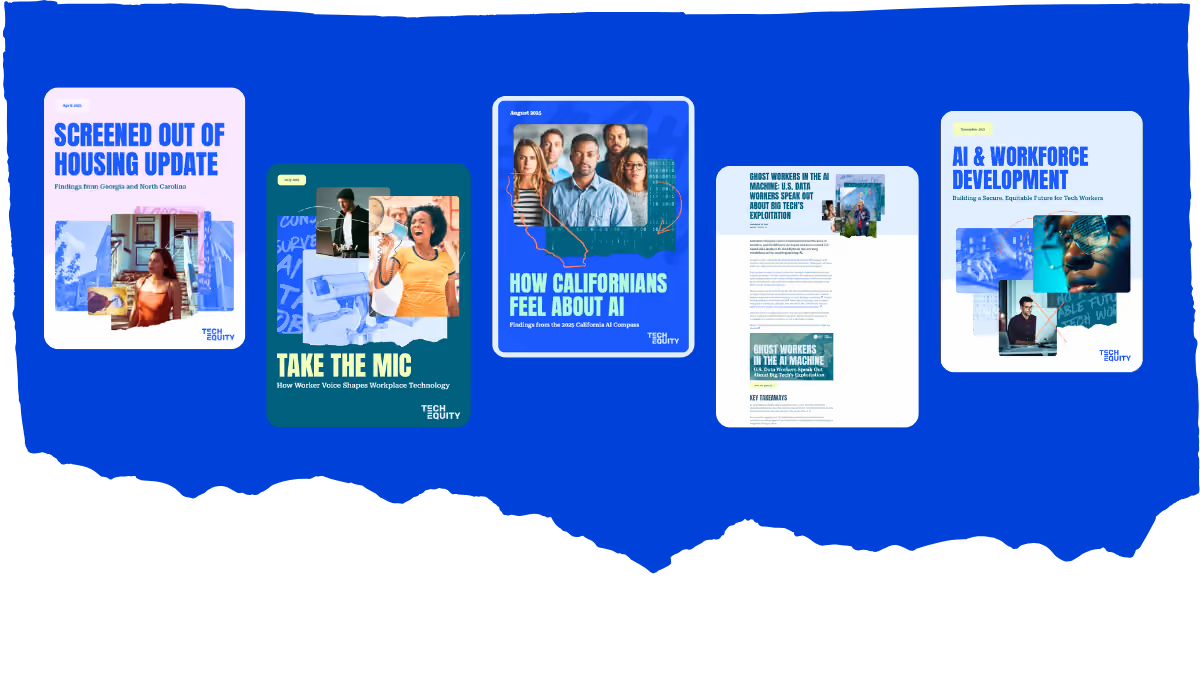
We published original research that exposed AI’s impact on workers, renters, and everyday Californians. From documenting exploitation in AI’s supply chain to revealing algorithmic housing discrimination to surveying what Californians actually think about AI, our research provided evidence-based foundations for policy advocacy while countering Big Tech narratives with data and lived experiences.
Charted the pathways workers can take to shape workplace technology
Workers hold the key to understanding how AI systems actually work and whether policies meant to protect them are effective. Our paper, Take the Mic: How Worker Voice Shapes Workplace Technology, provides a landscape overview of how “worker voice” is currently incorporated into workplace technology decisions, along with suggestions for additional models and experiments. This report helps workers, advocates, and policymakers learn from each other and envision new pathways for workers to shape the tech they use at work.
Exposed AI’s impact on workers—from exploitation to displacement
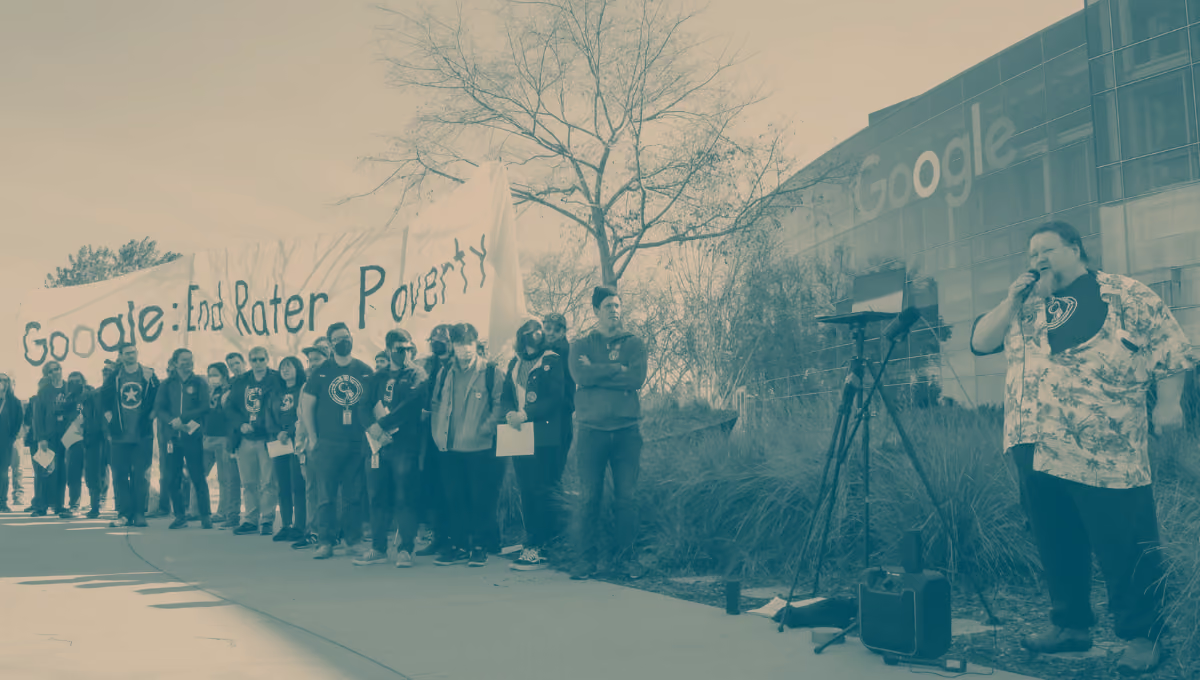
We examined AI’s effect on workers at every level—from data workers powering AI systems to those facing displacement. We teamed up with the AWU-CWA to survey and interview U.S.-based data workers to shed light on the working conditions of the people powering AI. Our report, Ghost Workers in the AI Machine, found that U.S.-based data workers face working conditions similar to those in the Global South, challenging our understanding of the global AI supply chain. In AI & Workforce Development: Building A Secure, Equitable Future For Workers, we identified intervention points to ensure workers aren’t left behind as AI reshapes workforce needs across industries.
Revealed algorithmic tenant screening as a nationwide crisis
Following our 2024 California research, we expanded our algorithmic tenant screening work to North Carolina and Georgia in our report, Screened Out of Housing – April 2025 Research Expansion. This research demonstrated that the harms of opaque screening algorithms—blocking renters from housing based on faulty data and biased systems—aren’t limited to California. They’re a nationwide crisis that demands coordinated advocacy across state lines.
Asked Californians how they really feel about AI
We released the California AI Compass, a survey of over 1,000 Californians. The findings were clear: 55% are more concerned than excited about AI, and 70% want strong laws requiring companies to make AI safe and secure. We presented findings at a launch event with author Karen Hao and labor icon Dolores Huerta, exploring how everyday people can shape AI’s future.
I just keep thinking…who’s going to step in? Somebody has to do something before it goes too far.
Focus Group Participant California AI Compass
We shaped conversations about the role of AI—and the capital that funds it—in our economy.
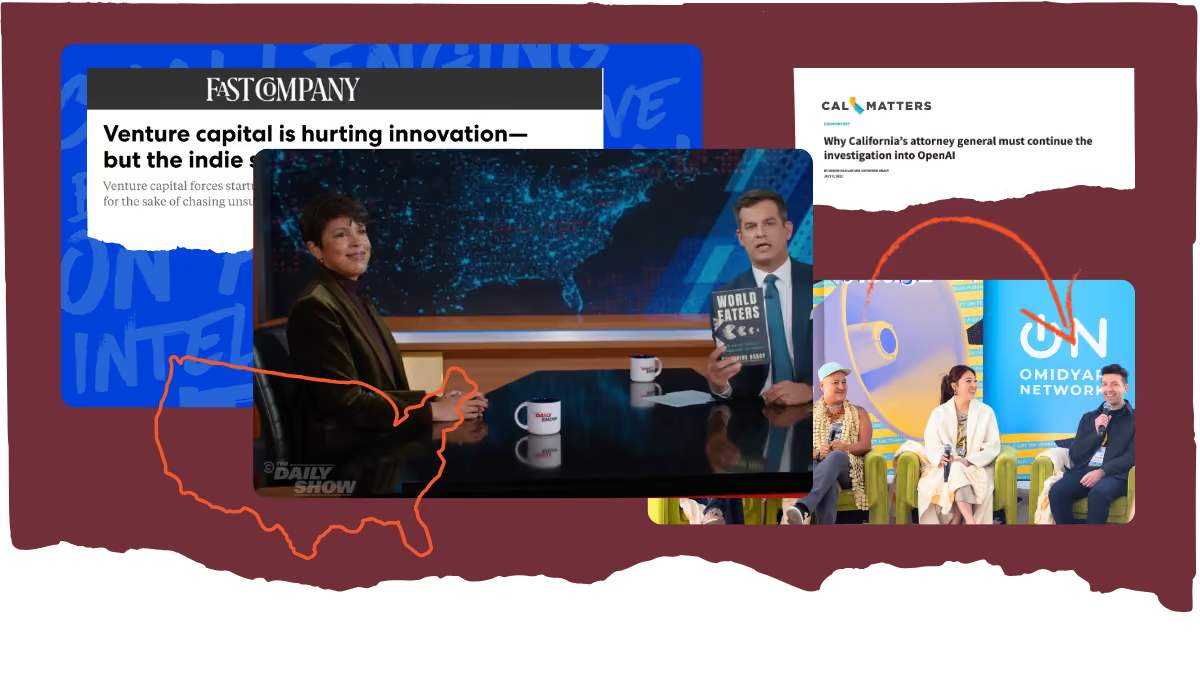
We brought our research and analysis to audiences worldwide—sparking conversations through World Eaters book events, reaching millions through media, and presenting at conferences from Berlin to Austin.
Our CEO followed the money, identifying how the VC playbook is causing unique harms to society
Catherine’s book, World Eaters: How Venture Capital is Cannibalizing the Economy, emerged from years of research connecting tech’s harms to the capital that fuels them. Catherine connected with experts around the country at book launch events—including NYT tech reporter Erin Griffith and fellow author Megan Greenwell—in DC, New York, and San Francisco to discuss who benefits from the current economy and who pays the price. These conversations illuminated how private capital is reshaping the economy and helped readers understand forces they’d felt but couldn’t name—from rising rents to precarious employment to AI’s unchecked expansion.
Reframed the tech conversation and countered Big Tech talking points
Our voice reached millions through media placements in The New York Times, Bloomberg, Politico, and KQED. Catherine’s Daily Show appearance brought World Eaters‘ analysis to mainstream audiences, connecting VC’s playbook to everyday impacts, such as rising housing costs, worker exploitation, and communities left behind. Our California AI Compass polling challenged industry narratives around AI, revealing that most Californians want AI regulation. Time, Tech Policy Press, and CalMatters, among other outlets, featured these findings.
Presented at conferences worldwide to reframe how tech shapes our economy
Our team presented at conferences in Berlin, Vancouver, and Austin, addressing how tech intersects with labor, housing, and economic justice. We spoke at events including UC Berkeley’s Making Tech Work for Workers Conference, Web Summit Vancouver, the Steward-Ownership Conference in Berlin, and SXSW, leading sessions on topics including worker surveillance, racial justice in AI policy, and responsible AI.
Catherine Bracy, a civic technologist and CEO of the advocacy group TechEquity whose new book, “World Eaters: How Venture Capital Is Cannibalizing the Economy,” is getting attention for its provocative argument that the structure of venture capital – the financial engine of the tech industry — has a distorting effect not just on companies and their values, but on American society overall.
Politico
We helped inform policy that creates meaningful guardrails around AI.
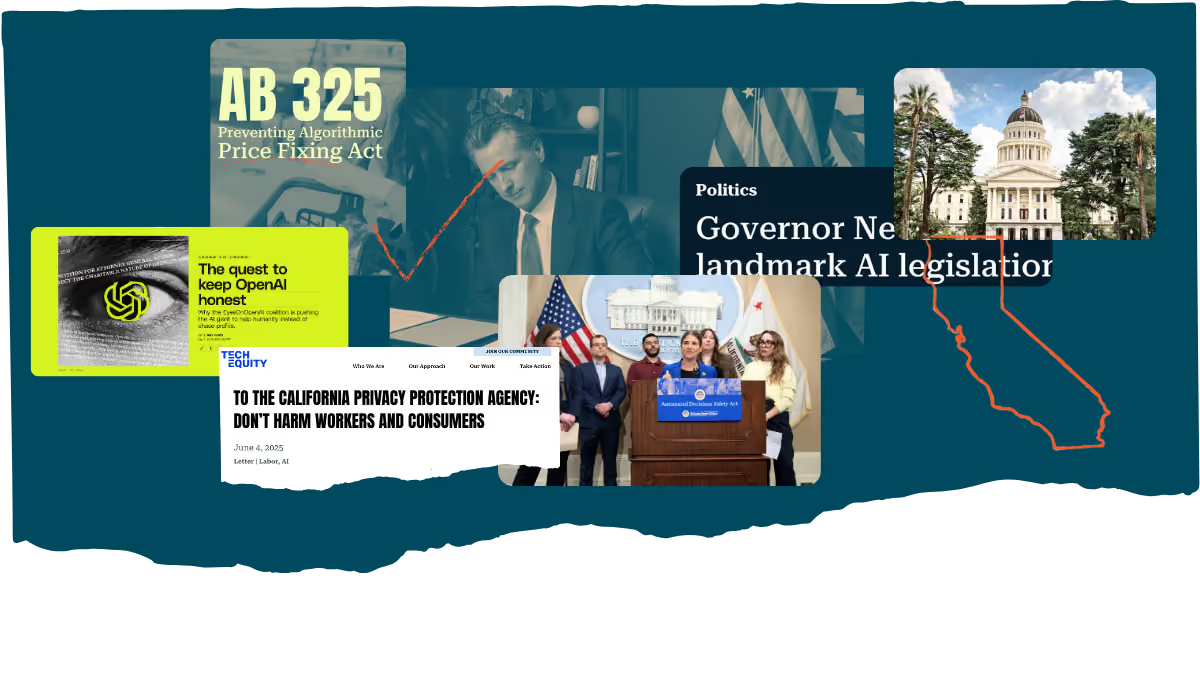
We contributed to people-first AI policy and corporate accountability discussions across California and beyond—providing education and analysis that informed legislative developments, positioned bills for future success, and ensured our principles informed regulatory decisions at every level, from state rulemaking to OpenAI’s controversial restructuring.
Educated policymakers on antitrust implications in the algorithmic age
Governor Newsom signed AB 325, the Preventing Algorithmic Price Fixing Act, into law in October 2025. We worked in partnership with author Majority Leader Aguiar-Curry and co-sponsors Economic Security California Action (ESCA) and American Economic Liberties Project (AELP) to provide research and educational support on this legislation that explicitly prohibits the use and distribution of pricing algorithms that coordinate prices across competing businesses. The law ensures digital tools can’t be weaponized to drive up consumer costs while skirting traditional anti-collusion rules.
Built momentum for AI protections in housing and automated decisions
We advanced two critical bills addressing AI’s harms: AB 1018, the Automated Decisions Safety Act, and SB 52, the End AI Rent Hikes Act. AB 1018 requires thorough testing of automated systems, transparency, and clear pathways to challenge discrimination and was designated as a two-year bill, positioning it for success in 2026. SB 52 would prohibit landlords from using algorithmic tools to coordinate pricing and artificially inflate rents, but didn’t pass this year. Through our work on both bills, we built crucial momentum and educated legislators about algorithmic harms in housing and automated decision-making.
Shaped AI rulemaking and accountability through strategic engagement
We advised regulatory bodies and policymakers on AI implementation, including participating in the OpenAI Nonprofit Commission process. As part of the Eyes on OpenAI coalition, we shared research with California’s Attorney General on OpenAI’s transition from a nonprofit to a for-profit entity. We submitted multiple rounds of comments to the California Privacy Protection Agency and provided analysis and information to California lawmakers and Congress on federal AI preemption attempts. These strategic interventions ensure that people-first principles inform AI governance at every level—from state rulemaking to federal policy debates.
AB 325 modernizes protections for California against illegal price-fixing. Artificially fixing prices is cheating—whether it’s old school deals cut in smoke-filled back rooms or today’s use of technology. TechEquity was a champion and critical partner throughout the process of this bill becoming law. They helped us shine a light on the problem and fight for a real solution. Their work helped deliver a huge win for consumers who are struggling to make ends meet in California.
Assembly Majority Leader Cecilia Aguiar-Curry Author of AB 325
We created the infrastructure that allows the people-first AI movement to scale.
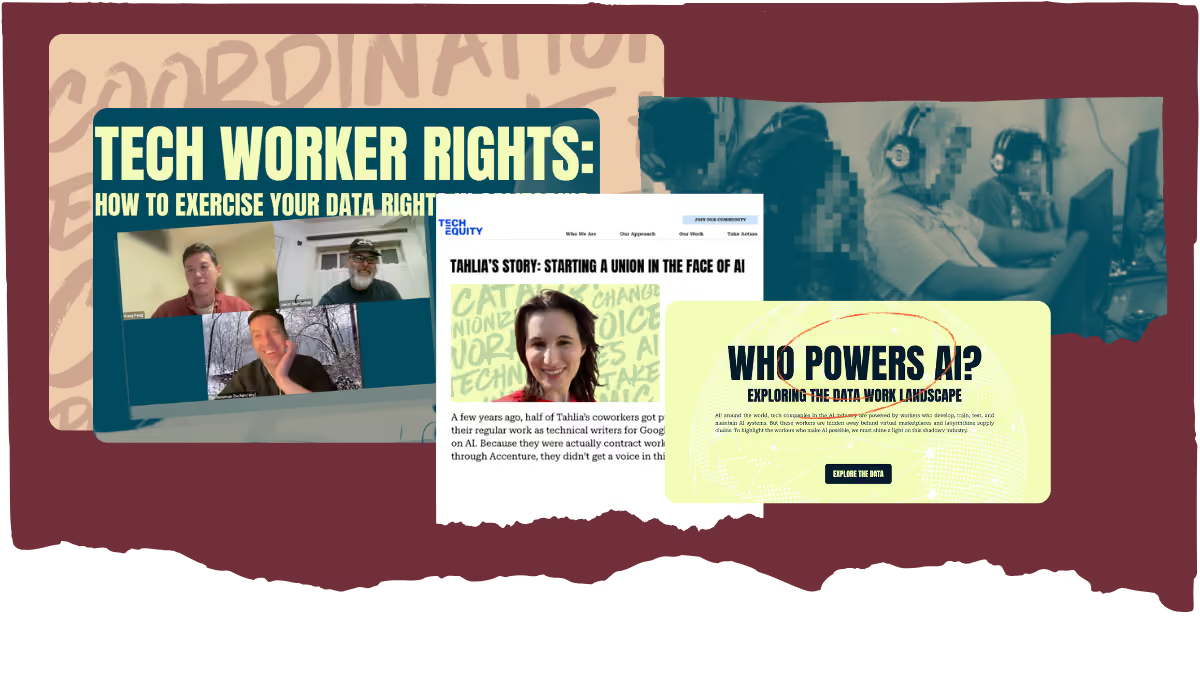
We built tools and strengthened networks that enable sustained advocacy. We connected with workers, advocates, and organizations advancing people-first AI across California and beyond.
Sustained cross-sector coordination through the AI Working Group
Our AI Working Group continued to grow with 40+ labor, civil society, privacy, and consumer protection groups throughout 2025. This ongoing coordination ensures we’re building collective power across California and beyond to shape AI policy together.
Strengthened our ties to workers experiencing AI’s impact firsthand
Our Tech Worker Group grew to 175 members, creating a network where workers share experiences and access resources, including Know Your Rights trainings on worker data rights. We attended organizing events like the Gig Workers Rising Uber rally and amplified individual stories like Tahlia’s. These connections with data workers in the US and abroad ensured our work remained grounded in workers’ lived experiences.
Illuminated the invisible workforce powering AI
AI systems don’t build themselves—they rely on a global workforce of data workers and content moderators whose labor remains largely invisible. We launched DataWorkLandscape.org, a searchable database that maps companies involved in data collection, annotation, model training, and content moderation. The landscape is a living resource—workers can submit information about companies they know to help us expand it. By making this supply chain visible and crowdsourcing knowledge from workers, we’re building a tool for advocates, researchers, and workers to push for accountability.
Built tools to track and advance people-first policy
We know that effective advocacy requires accessible information. This year, we maintained our anti-gouging rent calculator, TenantProtections.org, which helps renters understand their rights in the face of illegal rent hikes. We also developed and piloted our Legislative Tracker with partners throughout the 2025 session. This tool democratizes access to policy information that was previously scattered and difficult to follow, giving California advocates a powerful way to monitor AI and tech policy as it moves through the legislature. We’re refining it based on partner feedback and plan to expand access in 2026, enabling more organizations to engage strategically in the legislative process.
I had the pleasure of being a part of TechEquity’s research project on U.S. data workers with Alphabet Workers Union-CWA. It is refreshing to talk to people like TechEquity who see you, when you work in an industry designed to be invisible.
Krista Pawloski U.S. data worker and organizer with Turkopticon
We built organizational capacity to scale our impact.
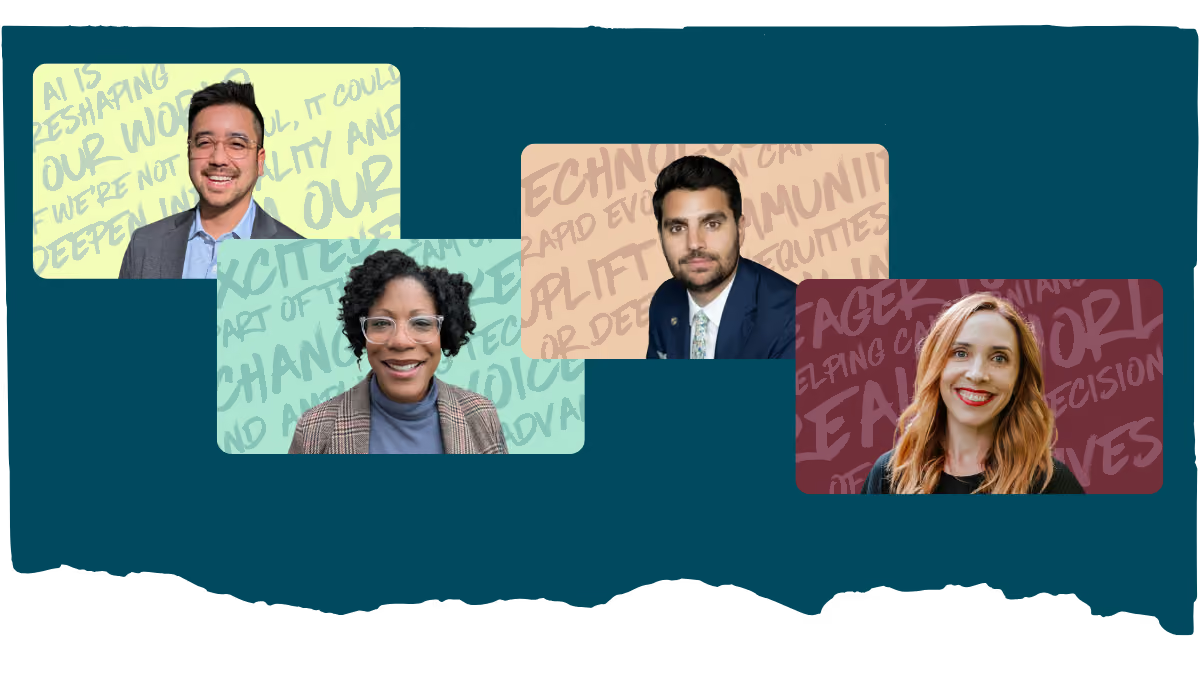
In 2025, we strengthened our leadership team to scale our impact. Vinhcent Le joined as VP of AI Policy and Kimberly Davis-Wells as VP of Communications, while internal transitions positioned Samantha Gordon as Chief Advocacy Officer and Jonathan Mehta Stein as Chief Program Officer. These changes positioned us to advance our 2024-2026 organizational strategy and build the capacity needed for the fights ahead.
Our work in 2025
2025 highlights

Screened Out of Housing – April 2025 Research Expansion
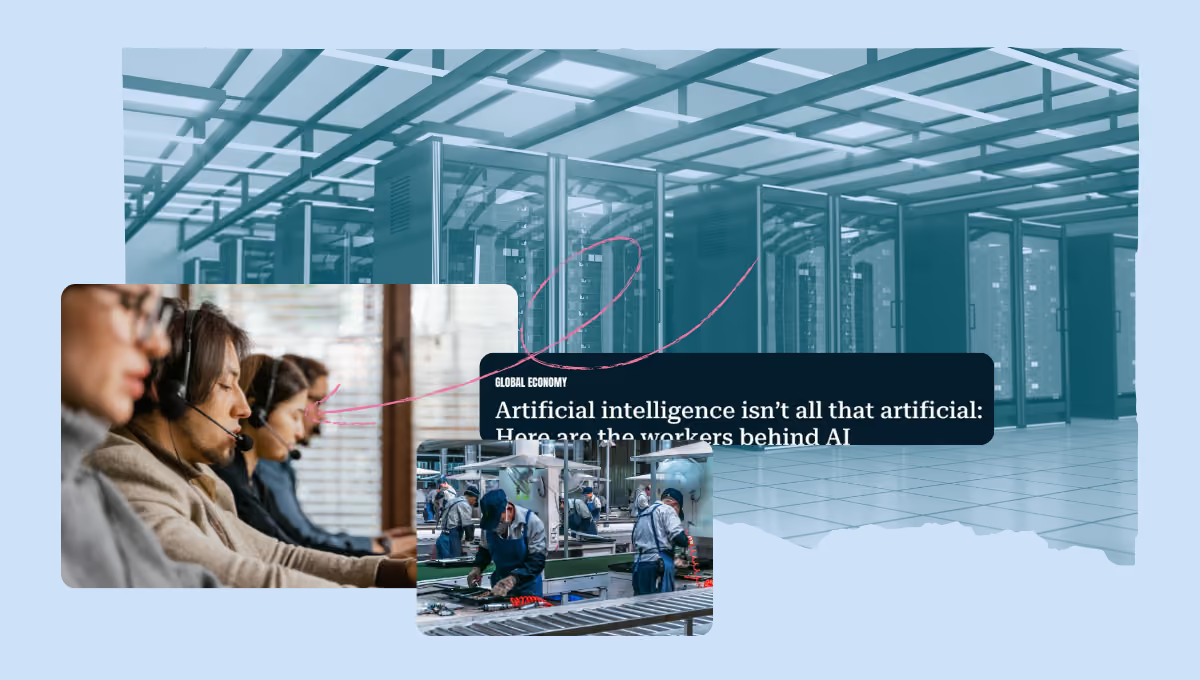
The AI supply chain, explained

Who’s powering AI? Shining a light on the AI data work industry.

Take the Mic: How Worker Voice Shapes Workplace Technology
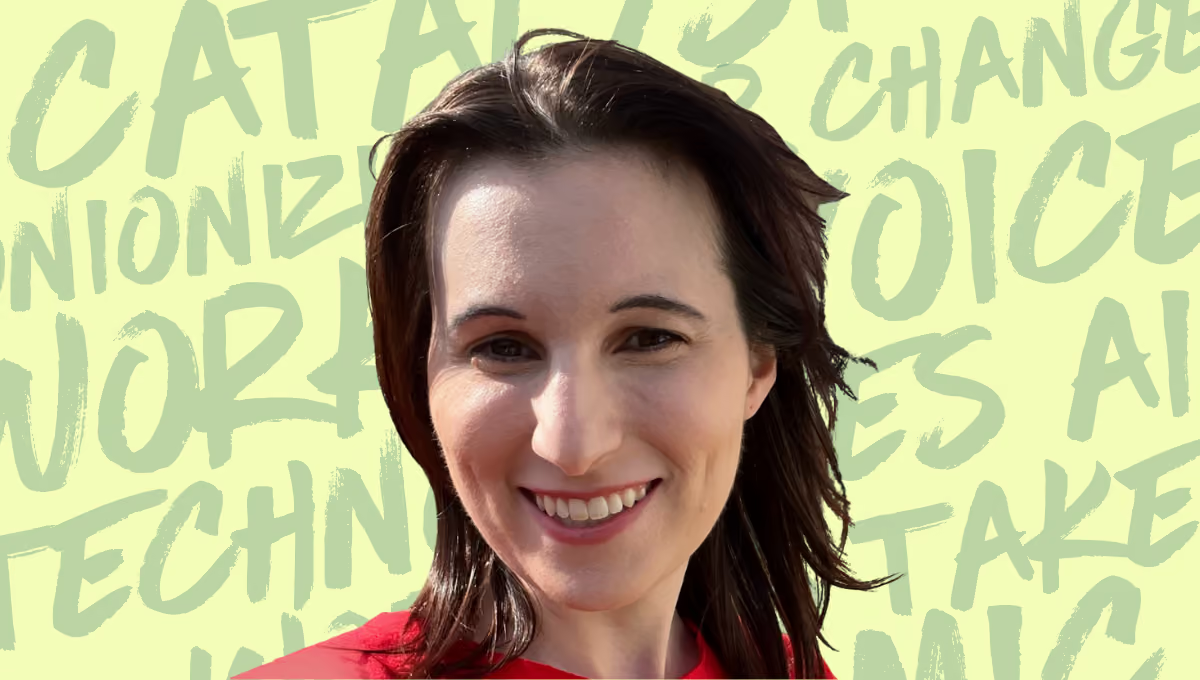
Tahlia’s story: Starting a union in the face of AI

How Californians Feel About AI – Findings From the 2025 AI Compass
Ghosts in the AI Machine – In a nutshell

AI & Workforce Development – November 2025 Report
Dive into our resourcesWhat’s on tap for 2026
Fight AI exploitation and displacement of workers.
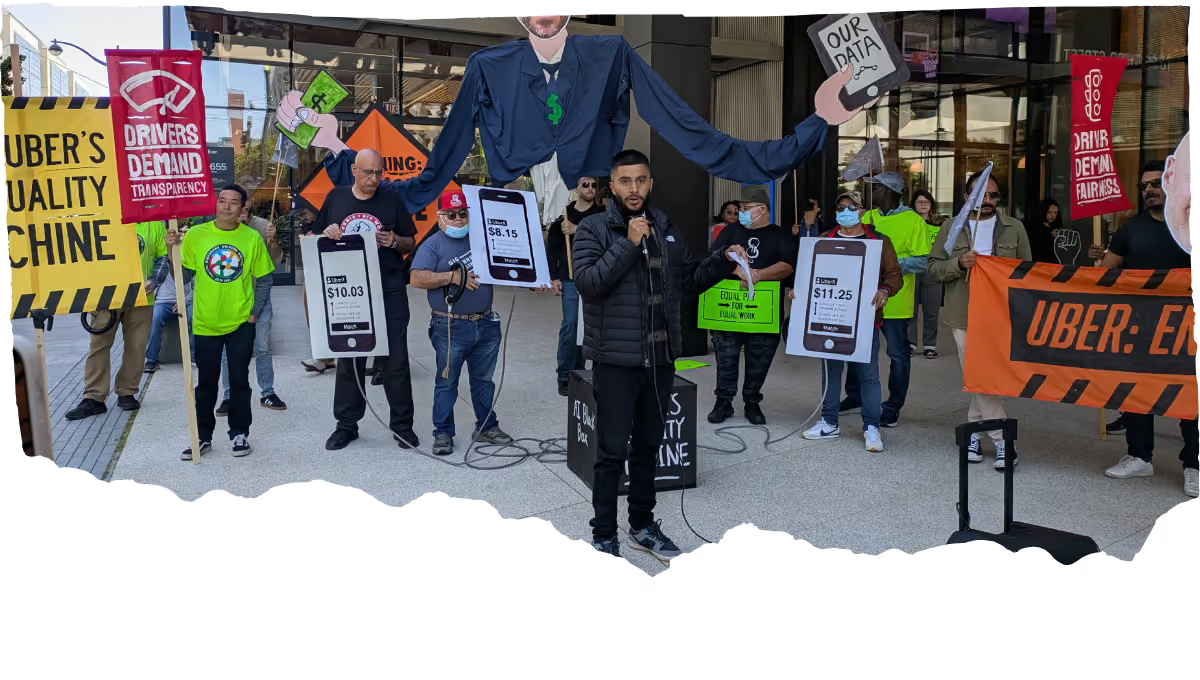
Workers are caught between exploitation and displacement—pressured by algorithms in their current jobs while facing the threat of being replaced entirely. We need to highlight those pressures and establish guardrails to improve conditions for workers in California, across the country, and around the world. In 2026, we plan to:
- Continue amplifying worker voice through research and reports that document real workplace conditions
- Shine light on the AI supply chain and the hidden workforce powering these systems
- Advocate for legislation that addresses the lack of transparency around AI-driven job displacement
- Engage in rulemaking at CalPrivacy and other regulatory bodies to advance workers’ data rights
Challenge corporate power through transparency and antitrust
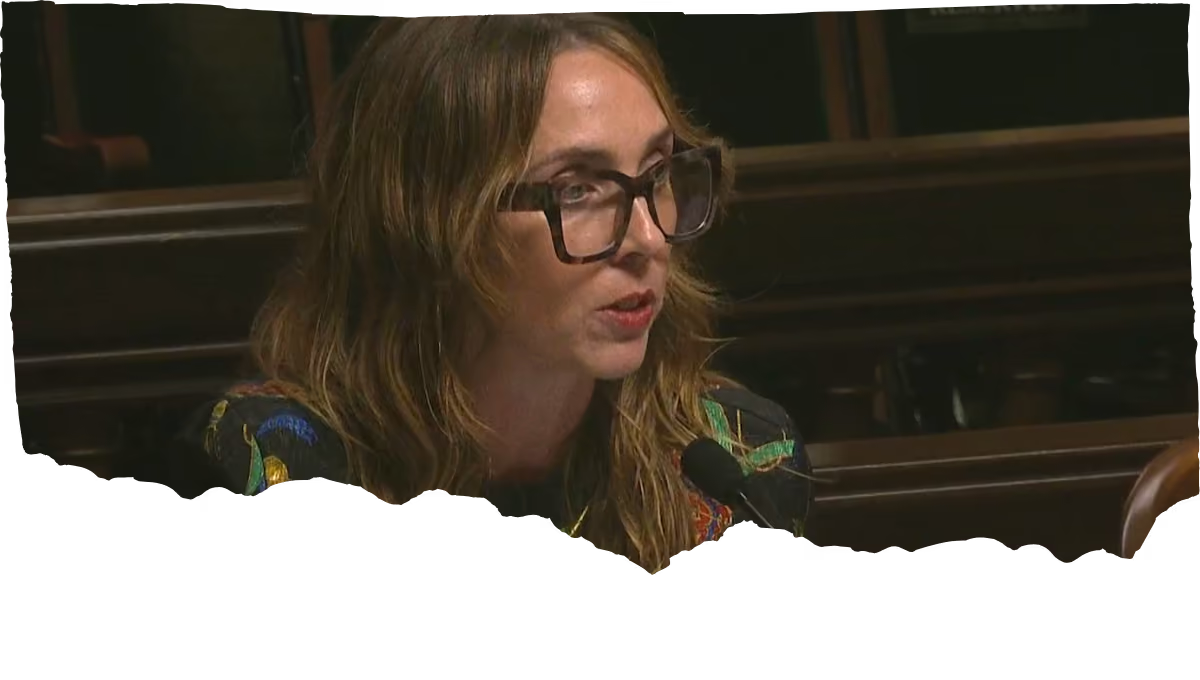
Tech companies are consolidating power, using algorithms to coordinate pricing, and leveraging dominant market positions to squeeze consumers and workers. We’re fighting back on multiple fronts. Following our success with AB 325, we’re building on California’s leadership in modernizing competition law while increasing transparency to address the information asymmetry between corporations and the public. In 2026, we will:
- Advance legislation to strengthen antitrust regulation and address anticompetitive single-firm conduct under California law
- Expand the Data Work Landscape to map more of AI’s hidden supply chain
- Continue work on public data sets for the rental market
- Amplify existing areas of enforcement authority to hold tech companies accountable
Establish people-first standards for AI and automated decisions
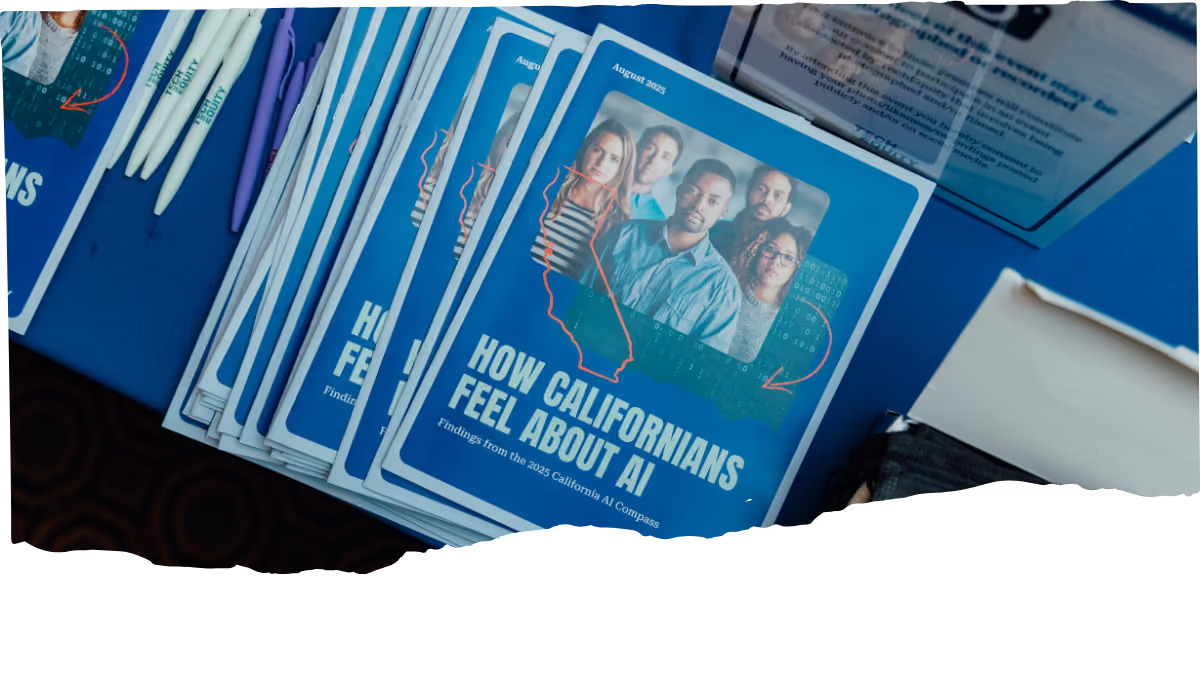
We’re in a critical moment to advance protections that ensure AI works for people, not against them. The momentum we’ve built positions us to win meaningful policy change. In 2026, we plan to:
- Secure passage of AB 1018, the Automated Decisions Safety Act
- Support multistate advocacy in Colorado, Illinois, and beyond
- Develop AI best practices for legal aid organizations
- Strengthen our people-first AI coalition and coordinate efforts across state lines
Make people-first AI a defining issue in 2026

The 2026 election presents a critical opportunity to shape the future of AI policy in California. In 2026, we will:
- Raise the saliency of AI as an issue that voters care about
- Articulate a clear policy vision that candidates from the Governor to the Mayor can adopt and champion
- Ensure AI accountability becomes as fundamental to any serious platform as healthcare or housing
Our team

Catherine Bracy
CEO & Founder
Samantha Gordon
Chief Advocacy Officer
Jonathan Mehta Stein
Managing DirectorRosita Vivanco
Chief Operating Officer
Tim Newman
Senior Vice President of Programs, Labor
Megan Abell
Vice President of Advocacy
Vinhcent Le
Vice President of AI Policy
Danya Sherbini
Vice President of Data and Technology
Kimberly Davis-Wells
Vice President of Communications
Sesoo Igbazua
Senior Director of Administration and Finance
German Calderon
Senior Manager of Community Outreach and Engagement
Lili Siri Spira
Senior Manager of Communications
Hannah Holloway
Research Manager, AI
Swati Chintala
Senior Research Manager, Labor
Keirstan Schiedeck
Senior Manager, Project Management & OperationsThank you to our partners
Building collective prosperity requires collective action. In 2025, we collaborated with partners across labor, housing, civil rights, technology, and policy sectors to make sure the tech industry’s growth benefits everyone. Below are some of the organizations we were honored to work with to co-author new research, develop legislation, and campaign for a tech-economy that works for everyone:





We’re also grateful to the many other organizations, coalitions, and advocates we’ve collaborated with throughout the year. Thank you for your partnership in this work.
Thank you to our board

Caitlyn Fox
Chair of the Board
Y-Vonne Hutchinson

Zack Rosen

James Hurd Nixon

Ifeoma Ozoma
Catherine Bracy
CEO & FounderThank you to our advisors

Aiha Nguyen
Program Director of Labor Futures Initiative at Data & Society Research Institute

Annette Bernhardt
Director, Technology and Work Program at the UC Berkeley Labor Center
Chris Benner
Professor and Director at UC Santa Cruz, Institute for Social Transformation
Desiree Nguyen Orth
Director of the Consumer Justice Unit of the East Bay Community Law Center and Lecturer at Berkeley Law
Harlan Yu
Executive Director of Upturn
Jenny Schuetz
Senior Fellow at Brookings Institute
John Green
Managing Principal at Blackstar Stability
Ken Wang
Policy Associate/Policy and Compliance Counsel at California Employment Lawyers Association
Laura Padin
Director of Work Structures at National Employment Law Project
Leah Simon-Weisberg
Legal Director at ACCE Institute
Maria Noel Fernandez
Executive Director of Working Partnerships USA
Michael Akinwumi
Chief Tech Equity Officer at the National Fair Housing Alliance
Natalie Foster
President of the Economic Security Project
Roberto Clack
Executive Director of Temp Worker Justice.
Saun Hough
CA Partnerships Manager for Californians for Safety & Justice
Shannon Wait
Former data center worker and organizerThank you to our major funders





2025 was a year of significant progress and hard-fought victories. From passing AB 325 to releasing World Eaters to shining light on data workers, we proved that strategic organizing and centering impacted voices can drive real change—even in challenging political times.
Thank you for being with us in 2025. The road ahead won’t be easy, but together, we’re building a movement that won’t back down.
Here’s to 2026.