
2025 in review: A letter from Catherine Bracy
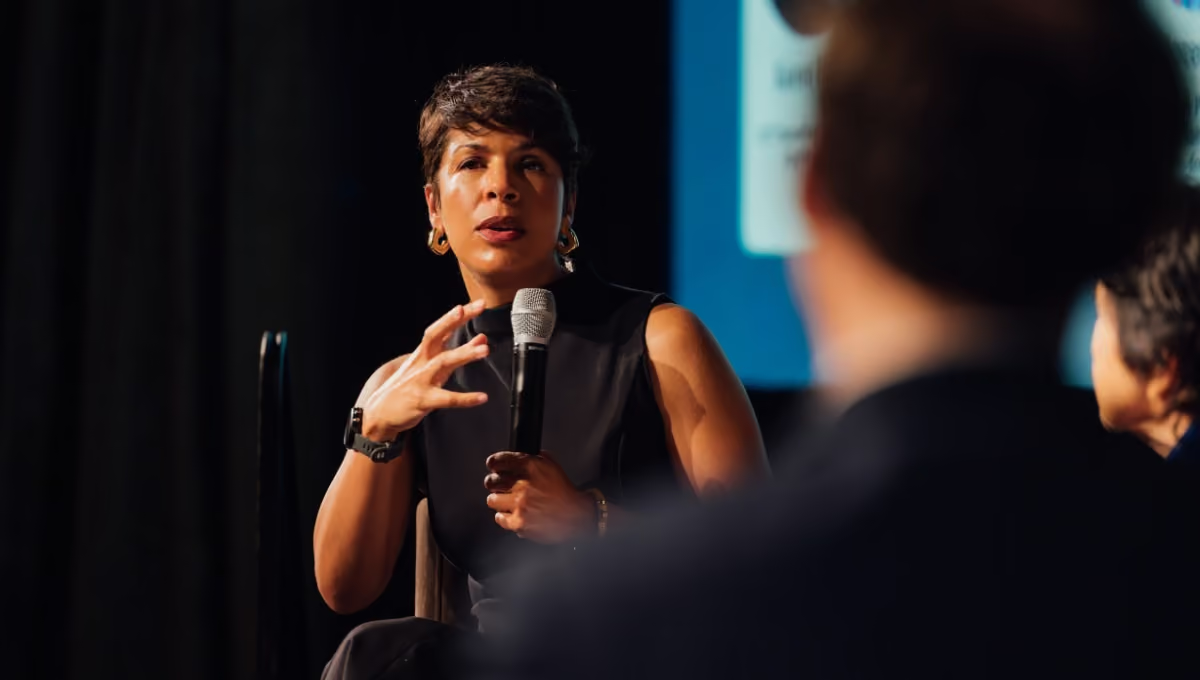
2025 was the year technology’s influence became impossible to ignore. As algorithms are used to decide who could rent an apartment, what prices we paid, and whether we kept our jobs, tech’s reach expanded into nearly every corner of our economy. Meanwhile, tech CEOs gained unprecedented access to the White House, blurring the lines between corporate power and government policy.
Correspondingly, the public conversation has shifted dramatically. The breathless excitement of 2023 has given way to something more grounded—and more skeptical. People are asking harder questions: Who’s really benefiting from these systems? What happens when an algorithm gets it wrong?
When you pull back the curtain on how these technologies actually work—and who profits from them—the picture gets a lot less rosy. AI isn’t a futuristic novelty anymore. It’s being used to make real decisions about real people’s lives today, often without transparency or accountability.
But advocates, organizers, workers, and others refused to let that happen unchecked. We worked to ensure that as tech’s power grows, so does our collective power to hold it accountable. And this year, we had wins that prove it’s possible.
AI isn’t inevitable, and its trajectory isn’t predetermined.
The Preventing Algorithmic Price Fixing Act (AB 325) became law in California—a victory that modernizes the state’s antitrust laws to make clear that using digital pricing algorithms to coordinate prices among competitors is just as illegal as traditional price fixing. Whether corporations collude in a smoke-filled room or through an algorithm, they’re breaking the law. This matters because it establishes a precedent: new technology doesn’t get a free pass from the rules that protect consumers and competition.
Functioning in the shadows alongside these pricing algorithms is the AI supply chain itself. We documented the working conditions of U.S.-based data workers and content moderators—the humans who label images, moderate violent content, and train the algorithms that companies claim are revolutionary. The irony is stark: the same companies selling AI as the future of work are relying on some of the most precarious labor conditions to make it happen. These workers deserve recognition and protections, not exploitation in the shadows. By making their labor visible, we’re challenging the narrative that AI emerges fully formed from Silicon Valley genius.
We also listened. Californians told us how they were starting to understand AI: they’re more concerned than excited about it. They want government guardrails. They’re worried about job displacement, wage reduction, and growing inequality. Our research confirmed that these concerns aren’t outliers. They represent the clear majority. And here’s what matters: AI isn’t inevitable, and its trajectory isn’t predetermined. The tech industry would like us to believe that AI’s development is like a force of nature—unstoppable and beyond our control. But that’s not true. Every choice about how AI is built, deployed, and regulated is a human decision. California policymakers have poll after poll showing what Americans, and their constituents, want: push back against federal attempts to preempt state AI regulation and enact the strong protections Californians are demanding.
While we fought these battles in California, I spent the year following the money. My book World Eaters: How Venture Capital is Cannibalizing the Economy, published in March, makes the case that we can’t fully address tech’s harms without confronting the financial engine driving them. From the Daily Show to events across the country and around the world, I connected the dots between venture capital’s growth-at-all-costs model and the housing and labor crises facing everyday people. The tech industry doesn’t exist in a vacuum—it’s shaped by the investors funding it, and those investors’ demands for exponential returns are directly connected to the algorithmic price fixing, worker exploitation, and housing discrimination we’re fighting.
When you understand that venture capital is optimizing for exits, not for building sustainable businesses or healthy communities, a lot of tech’s worst behaviors start to make sense. The most surprising outcome of putting World Eaters into the world was discovering the vast community of investors and entrepreneurs who are building a different model of innovation—one that funds solutions to the biggest problems we are facing, and that creates sustainable financial value in the process. In 2026, we hope to amplify their stories and create a blueprint that can provide the basis for an innovation economy for our next era.
In 2025, we proved that change is possible when we organize strategically, center the voices of those most impacted, and refuse to back down. We built coalitions that span continents. We equipped workers and renters with knowledge and tools to fight back. We pushed California legislators to act boldly, even when it wasn’t politically convenient.
We’re leading with a positive vision of what tech can be for humankind: a tool that advances our greatest potential, rather than a cudgel that keeps us down.
The battles ahead will be much harder. The consolidation of tech power with political power means we’re facing a generational fight—one that has implications for the future of American democracy. But, we’re also building something powerful: a movement that understands tech’s impacts deeply, refuses to be dazzled by hype, and knows how to translate that understanding into real policy change. We’re leading with a positive vision of what tech can be for humankind: a tool that advances our greatest potential, rather than a cudgel that keeps us down.
The road ahead will demand even more from us. But I’m energized by the workers sharing their stories, the advocates showing up to hearings, the partners collaborating across sectors and borders, and the growing movement of people who refuse to accept that technology must drive inequality.
2025 showed us what’s possible. Now let’s build on it.
Catherine Bracy, Founder and CEO of TechEquity