Stop 1 of 17 · Southcentral · Mile 0
Seward
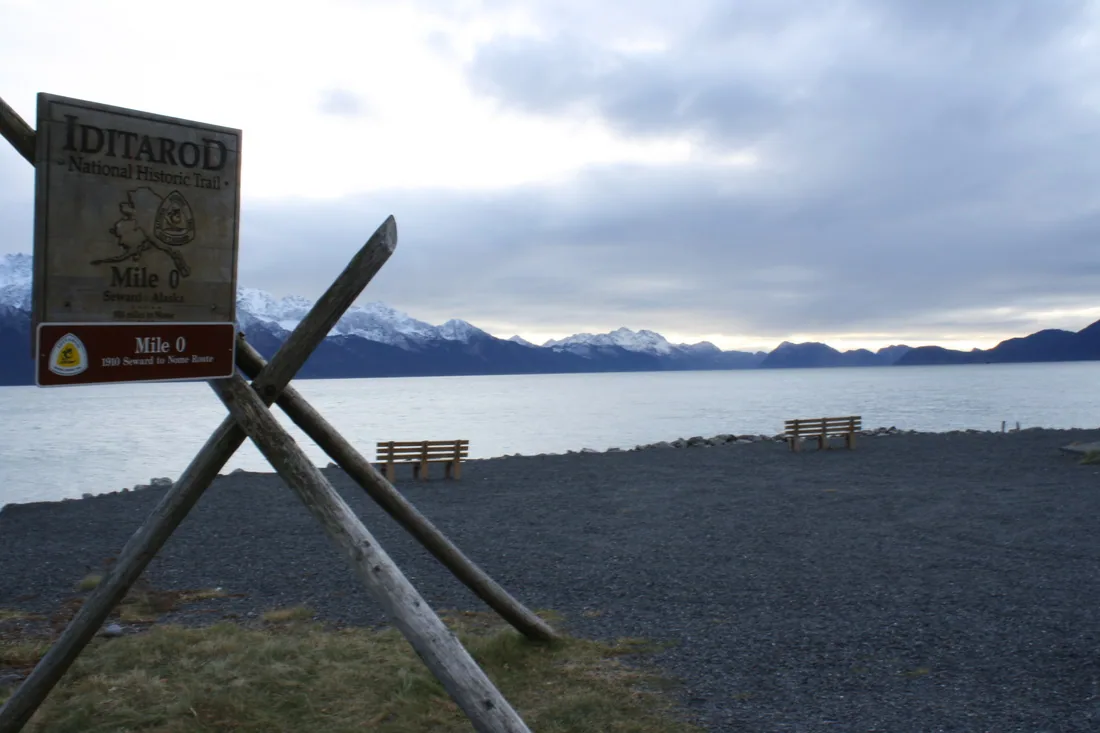
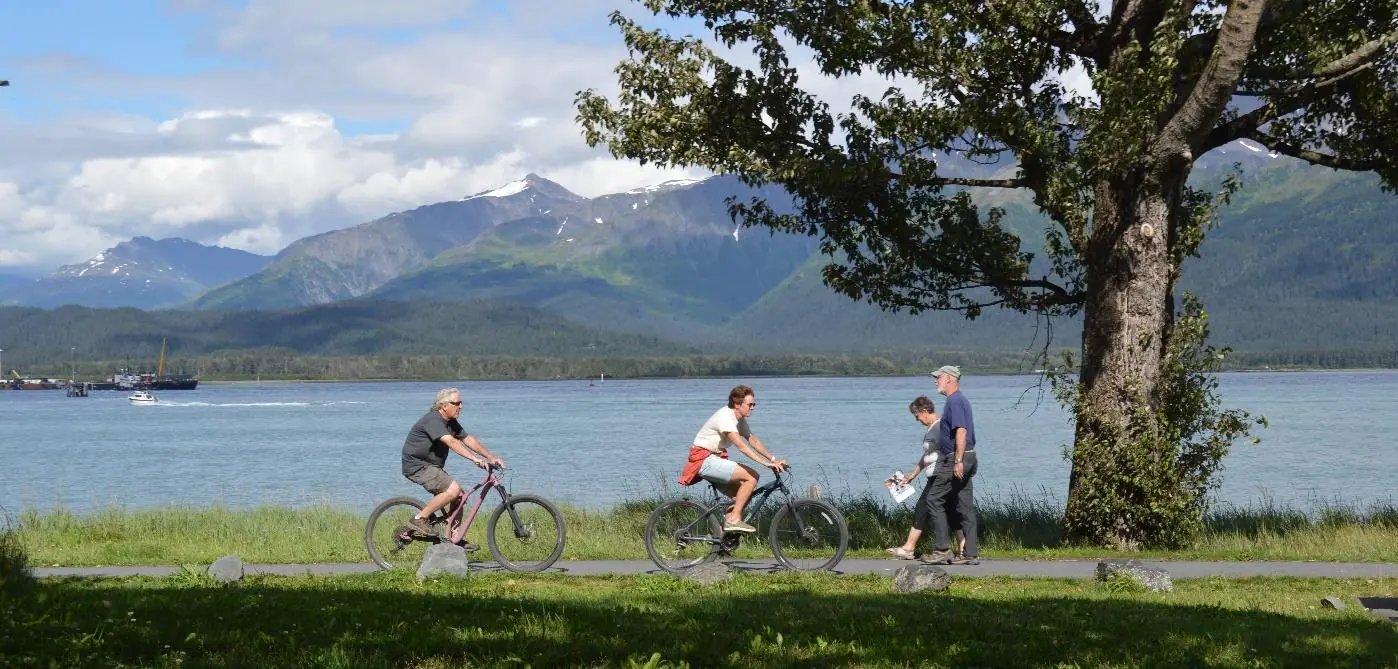
Mile 0 of the historic trail: a tripod and the historic Iditarod Trail monument stand on the shoreline of Resurrection Bay beside the Alaska SeaLife Center.
What to See
- The Mile 0 tripod and trail monument on the Resurrection Bay shoreline
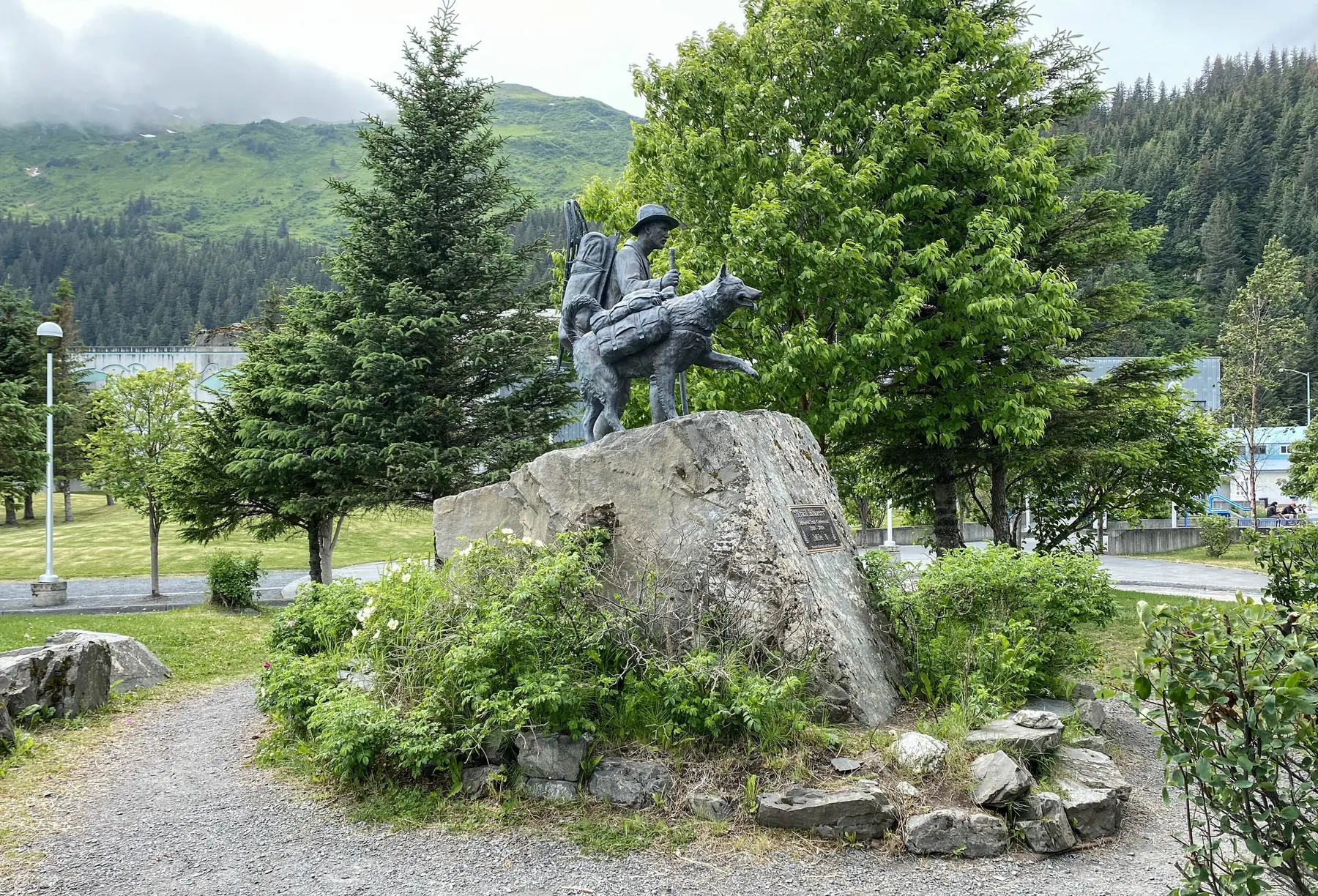
- The first mile of the trail, a paved path along the bay to the small boat harbor, with statues of historic mushers, among them Jujiro Wada
- The Seward Community Library and Museum, where the Resurrection Bay Historical Society tells the history of the area and of the Iditarod
Ways to Travel Here
- Hike or BackpackWalk the first mile of the trail along Resurrection Bay from Mile 0.
- BikeRide the paved bike path along Resurrection Bay.
- Ride the RailroadBoard the Alaska Railroad, which follows the main route of the historic trail north into the Kenai Mountains.
- DriveSeward is where the Seward Highway begins; much of the road follows the historic trail toward Anchorage.
No matter what the time of year, be prepared. Check local conditions before you venture out.
History of Seward
Seward is located on Resurrection Bay, named in 1792, by Alexander Baranof, the Alaska manager of the Russian American Company, while he was exploring the Kenai Peninsula for possible sites for new settlements. It is said that he named the bay Resurrection, because he first entered it on Easter Sunday. The next year, when he was ordered to build ships in Russian America, he selected Resurrection Bay as the site for the shipyard. In 1794 the first ship to be built in Alaska by the Russians, the Phoenix, was launched. Little more is known about the settlement after 1794. It was abandoned in the 1840's.
The city of Seward was founded in 1903 by Alaska Central Railway as the ocean terminus for its proposed railroad to the interior. It was named in honor of William H. Seward, the secretary of state who negotiated the purchase of Alaska from Russia in 1867. The Alaska Central went bankrupt and its successor the Alaska Northern Railway was purchased by the federal government in 1915. It became part of the Alaska Railroad, which the government was building from Seward to Fairbanks. With the completion of the Alaska Railroad in 1923, Seward became the Gateway City. All passengers and freight destined for South Central and Interior Alaska passed through Seward.
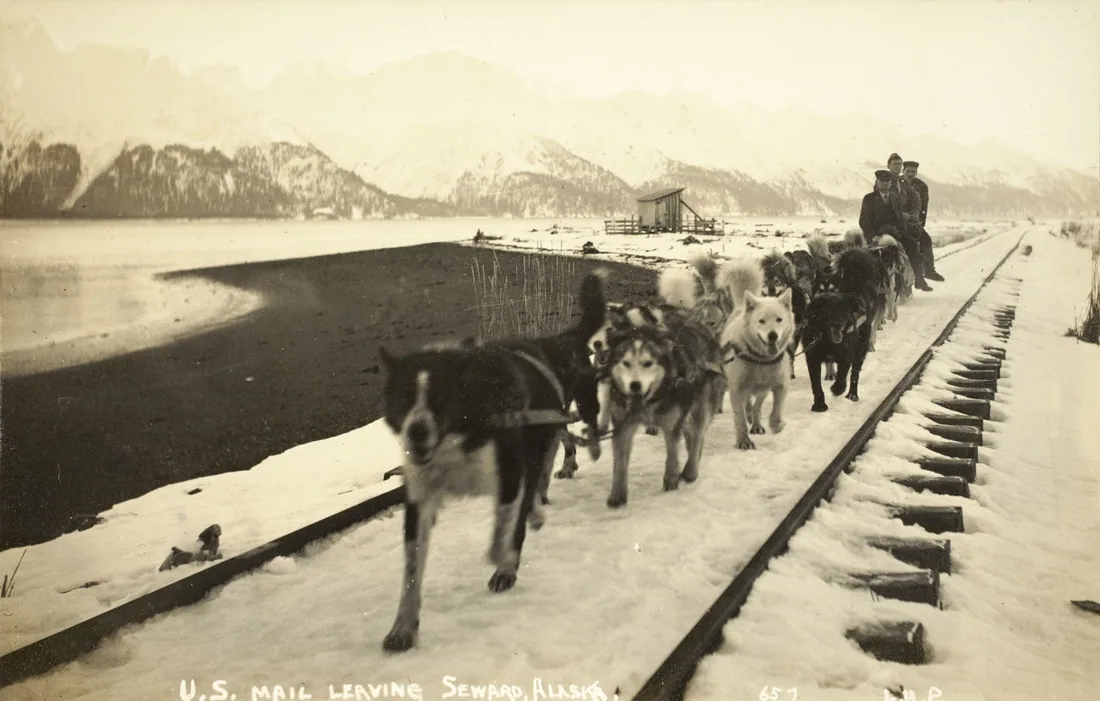
With the discovery of gold in the Iditarod country in 1908, Seward became the winter port for the new gold fields. Thousands of people and tons of gold, mail and supplies were carried over the Iditarod Trail between Seward and the Iditarod mining district. Heavy traffic continued over the trail until the 1920's when mining declined and the airplane began to replace the dog team. A renewed interest in the trail was born with the first running of the Iditarod Sled Dog Race in 1973. In 1978 the Iditarod was made a National Historic Trail with Seward as Mile "0".
Seward's economy based on railroading and stevedoring was destroyed by the March 27th, 1964 earthquake. Since then Seward has worked hard to rebuild and diversify its economy. Today in addition to its thriving tourist industry, Seward is home to Alaska Vocational-Technical Center, the Spring Creek Correctional Center, the Sea Life Center and the Kenai Fjords National Park.
Southcentral, Seward to Knik
- SewardMile 0
Mile 0 of the historic trail: a tripod and the historic Iditarod Trail monument stand on the shoreline of Resurrection Bay beside the Alaska SeaLife Center.
- Moose PassRailroad community
A railroad community in the Kenai Mountains near the Johnson Pass Trail, a 23-mile segment of the historic trail system.
- GirdwoodTrail town
Founded in 1906 as a place to rest and resupply before crossing the Chugach Mountains, Girdwood keeps some of the most easily reached and historically intact segments of the trail.
- Eagle RiverTrail valley
The Eagle River Nature Center sits on the trail at the north end of the Crow Pass traverse, in a valley Army explorers on the Iditarod once called a miniature Yosemite.
- AnchorageConnecting trail · Ceremonial Start
A blank spot on the map when the trail opened in 1910, Anchorage became a stop on its main route after 1915, and every March the Ceremonial Start of the sled dog race runs through it.
- EklutnaDena’ina village
A Dena’ina Athabaskan village site established in 1650 and once the winter crossing of the Knik River on the historic trail.
- WasillaRace headquarters
Home of the Iditarod Trail Sled Dog Race Headquarters, with a replica public shelter cabin, and near Reflections Lake, the old ice crossing of the Knik River.
- KnikGold-rush outfitting town
The last major outfitting town before the goldfields, home to 1,500 people at its peak, until Anchorage and the railroad passed it by.