
2024 Annual Report
Letter from Catherine Bracy, our Founder and CEO
In 2024, the buzz around AI has morphed into alarm bells. You can tell just from the way companies are changing how they talk about it. Whenever I drive into San Francisco, the billboards accosting drivers on the Bay Bridge are singing a different tune than they were mere months ago. They have slogans like “Make AI Work for Humans” and “Human-Centered AI” in an attempt to counteract the changing tide, which is that people are getting less excited and more concerned about AI’s role in their lives.
It makes sense. More and more, people are getting wary of AI and what it means for their work, housing, healthcare, and more. We saw that in the way contract workers speak about the algorithms they’re training, the tools that monitor their productivity—and that they fear will ultimately replace them. We’ve seen it in the way that landlords are using algorithmic tenant screening tools to decide whether or not an applicant can rent with them, often without the applicant even knowing.
Advocates in California, across the country, and around the world have been responding to AI’s growing presence in daily life, springing into action to chart a new course for AI. Conferences from Sacramento to Mexico City grappled with the question: how can AI be used as a force for collective prosperity, rather than another wedge to widen the gap between the haves and have-nots?
Read “2024 in Review: A Letter from Catherine Bracy”Who we are
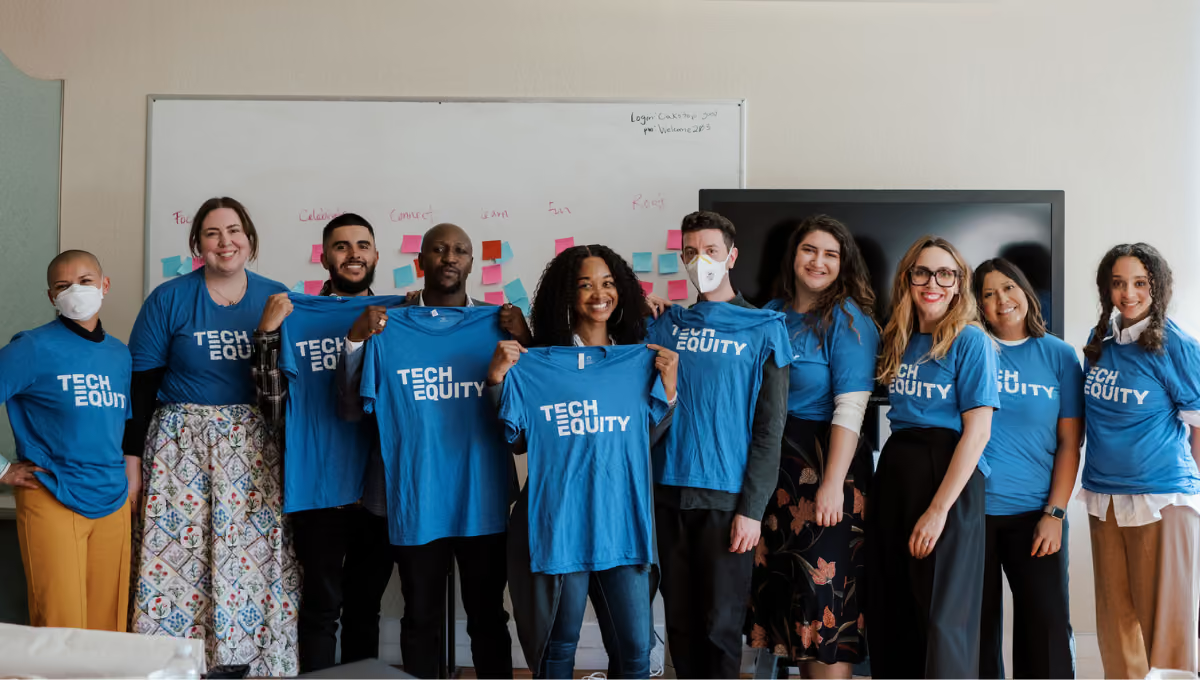
We envision a world where the tech industry is responsible for building widespread prosperity, and is held accountable for the economic harms it creates in our communities.
We raise public consciousness about economic equity issues that result from the tech industry’s products and practices, and advocate for change that ensures tech’s evolution benefits everyone.
Our approach
The tech industry plays a consequential role in our society and within our communities. We want to see tech foster prosperity, not exacerbate inequity.
We’re addressing how tech intersects with the most consequential areas of the economy for everyday people: where they live (housing) and the conditions under which they work (labor).
Tackling tech’s intersection with economic equity requires a multi-faceted approach. We:
- Raise public consciousness about emerging areas where tech companies create economic inequity.
- Articulate and advocate for regulation and the adoption of industry-wide standards to address the harms and opportunities we identify.
- Support implementation and enforcement of these regulatory agendas and industry standards.
Education + research
We investigate frontier issues at the intersection of tech and economic equity and share those findings with policymakers, the industry, and the public.
Learn MorePolicy + regulation
We create policy grounded in impacted people’s experience so we can shape the tech industry to be a force for opportunity.
Learn MoreImplementation + enforcement
We know that any law is only as good as its implementation; once policy is passed, we work with government and industry to ensure these changes will be felt in people’s lives.
Learn MoreWhat we did in 2024
Labor
This year we deepened our labor advocacy in California and expanded our efforts beyond our borders.
Highlighted impacts of AI on contract workers with the paper Inside Tech’s Shadow Workforce
AI is changing the tech labor force. That’s why in early 2024, we revisited our Contract Worker Disparity Project, confirming our hypothesis that working conditions are becoming more precarious with the rise of AI.
Advanced workers’ digital rights in California through engagement in rulemaking
Some of the most meaningful regulation happens behind the scenes. We advised regulatory bodies like the California Privacy Protection Agency, the California Civil Rights Council, and more on worker protections in the face of workplace tech, AI, and data collection.
Built relationships with tech labor advocates around the world
We believe in holding California-based tech companies accountable for the working conditions throughout the AI supply chain. That means connecting with scores of organizations focused on the data work section of the AI value chain as well as leaders of successful supply chain accountability efforts in other industries, including global labor federations, NGOs, think tanks, individual workers, academics, and advocacy organizations.
Connected with data workers who power AI in the US and abroad
We’ve met with data workers around the world to hear their stories and how they would shape these technologies to be safer for workers and consumers alike. We spoke up in support of Kenyan AI workers and their demands that the landmark US-Kenyan trade agreement include standards for people working for US Big tech companies under inhumane conditions.
We know that the labor inequities in the AI supply chain is a global issue—and we need to push tech to fix it, starting at its home base. TechEquity’s commitment to a global labor lens while working on regulating California companies is a key piece to the puzzle.
Martha Dark Founder and Co-Executive Director of Foxglove UK
Housing
In 2024 we highlighted the role of tech in the housing market and identified key intervention points to enable housing accessibility, not worsen longstanding inequities.
Illuminated algorithmic tenant screening with the paper Screened Out of Housing
In the summer of 2024, we published original research on algorithmic tenant screening, hearing directly from landlords and renters in California about their experiences with these tools. Since that release, we have briefed approximately 40 housing organizations on our findings, including tenant organizing, legal aid, and policy advocates.
Hosted a nationwide tenant screening convening
We partnered with PolicyLink to host a multi-day gathering of organizers, legal and policy experts, and housing justice advocates from across the country to discuss the future of tenant screening policies. We galvanized attendees around tech’s impact on tenant screening and envisioned a collective tenant screening advocacy platform together.
Shined a light on housing data gaps
Our new Vice President of Data + Tech Danya Sherbini explored the role that housing data can play in supporting renters and leveling the playing field with landlords and property owners. We examined the extent of the housing data currently available to us and have strategized creative ways to increase transparency on housing data for renters and the rest of the public.
Algorithmic tenant screening is one of the housing world’s most insidious issues today, and we need all hands on deck to prevent these tools from harming renters. Working with TechEquity on our advocate convening this year was instrumental in building the coalition needed to tackle it.
Rasheedah Phillips Director of Housing at PolicyLink
People-first AI
In the face of lightning-speed AI adoption, we advocated for people-first policies and practices to ensure that these new tools can advance human flourishing rather than undermine it.
Founded the AI Working Group
We created the AI Working Group with 43 labor, civil society, privacy, and consumer protection groups represented.
Issued the AI Policy Principles
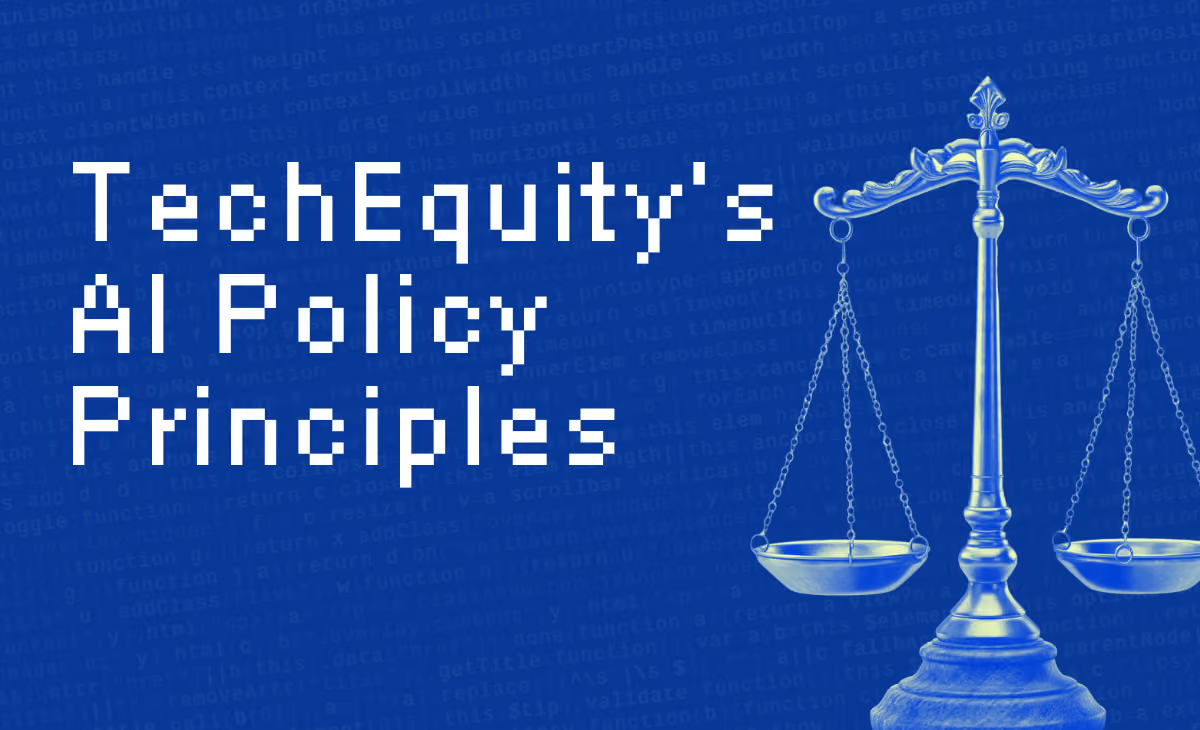
We know that in order to respond to AI’s impact, we need a clear, coordinated vision for what the proper guardrails should look like. In early 2024 we developed and launched the Guiding Policy Principles for Responsible AI, an alternative vision for the ethical deployment of AI within our communities.
Launched the AI + Equity Education series
In the first half of the year, we held the AI + Equity Education series, bringing together experts, advocates, and policymakers to better understand how AI will impact all aspects of daily life, including housing, hiring, voting, and more.
Sponsored pivotal AI legislation
In Sacramento, we were invited to co-sponsor two key AI regulation bills: AB 2930 and SB 92. These bills set out to address the potential for discrimination and bias in AI-driven automated decision systems. We also tracked the 50+ AI bills going through the California legislature, sharing updates with advocates around the world.
Hosted briefings and advised regulatory agencies
Behind the scenes, we hosted briefings for California-based civil rights groups and discussed ways to create infrastructure to support them on AI policy. We participated in rulemaking review in California and beyond, advising the House Committee on Energy and Commerce, the California Privacy Protection Agency, the California Law Revision Commission, the Colorado Legislature, and more.
Addressing discrimination and bias in AI is complicated, technical, and often-fraught work—TechEquity’s clear-eyed vision of people-first AI policy is both refreshing and necessary. I’m grateful for their partnership this year and for the fight ahead.
Assemblymember Rebecca Bauer-Kahan Author of AB 2930
Data and tech
This year we launched a new programmatic focus: data and technology. Our new Vice President of Data + Tech, Danya Sherbini, has begun exploring the role that housing data can play in supporting renters and leveling the playing field with landlords and property owners. We conducted a holistic review of the housing data we’ve amassed so far as part of our Housing Data Initiative. Now we’re envisioning resources we can build for tenants that leverage this data, as well as exploring partnerships that have the potential to broaden the impact of our work in this area.
Workers and renters
We believe that the people impacted by technology are the experts in their own experience and that they deserve a seat at the table to help shape these tools and their impact. We connected with workers in California and around the world, hearing their stories and finding opportunities for them to weigh on the tech that impacts them every day. We founded a tech worker roundtable for workers to share their experiences and brainstorm strategies on policy and resources. We hosted an informational session to ensure that workers know their rights in the event of a layoff. We updated the Tenant Protections Calculator and built resources to help people use it in the face of illegal rent hikes.
When I got laid off, I felt lost navigating the fallout. TechEquity is actually listening to tech workers’ stories and providing resources to help workers like me get back on their feet.
Michelle Fiesta UX Researcher impacted by tech layoffs
Public consciousness
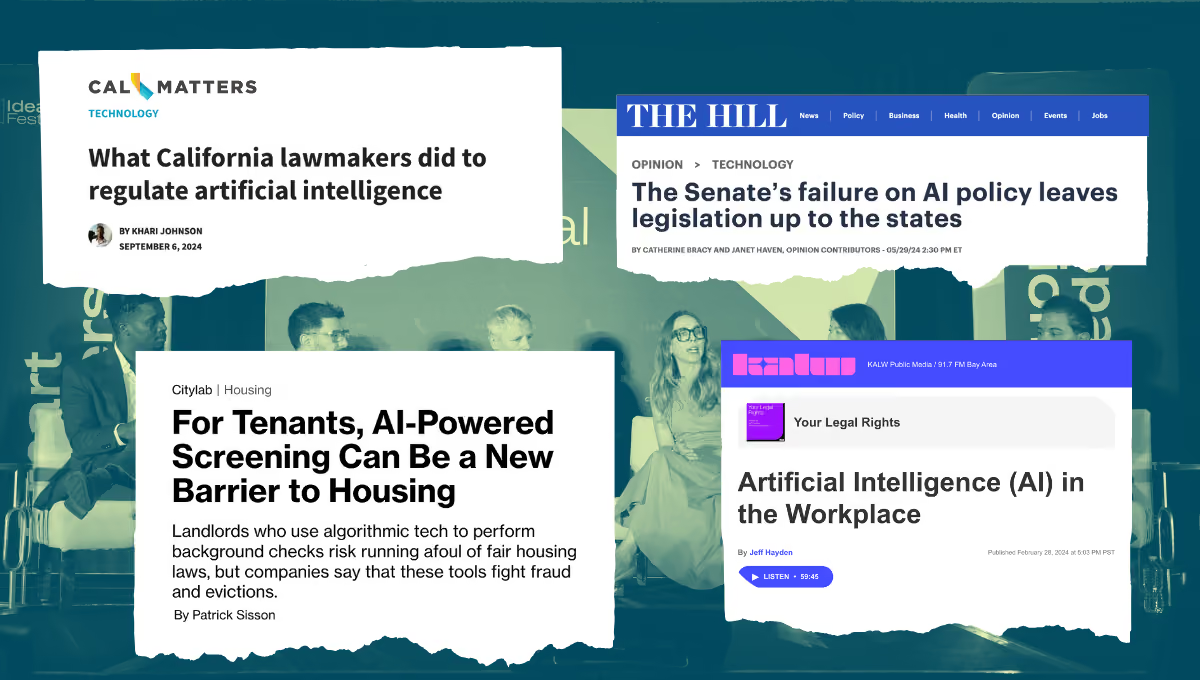
We weighed in on critical conversations in California and beyond about tech’s impact on the most consequential areas of the economy: where they live and the conditions under which they work. We shared our perspective at convenings like SXSW, the California Summit on GenAI, CalMatters 2024 Idea Festival, Circuit Breakers, and more. We spoke on pressing issues in publications like KQED, The Hill, CalMatters, and CityLab.
Organizational strategy
We enacted our 2024-2026 organizational strategy. To support our ambitious body of work, we strengthened our internal operations and honed our approach to better meet the needs of workers and renters whose lives are directly impacted by tech’s evolution. In the summer of last year, we rebranded to reflect our new chapter as an organization. We also expanded our capacity with four incredible new people on the team: Tim Newman, Danya Sherbini, Swati Chintala, and Keirstan Schiedeck. While the team tackled tech’s impact on the economy, our founder and CEO, Catherine Bracy, set her sights on the driving force behind the industry. She wrote World Eaters: How Venture Capital is Cannibalizing the Economy, out March 4th of this year.
Our work in 2024
2024 highlights

“Inside Tech’s Shadow Workforce” – Explained

Screened Out of Housing – In a nutshell
AI Policy Principles

Community conversations: “Corporate Auntie” Yolanda speaks out
Community conversations: Dani shares what contract work is really like
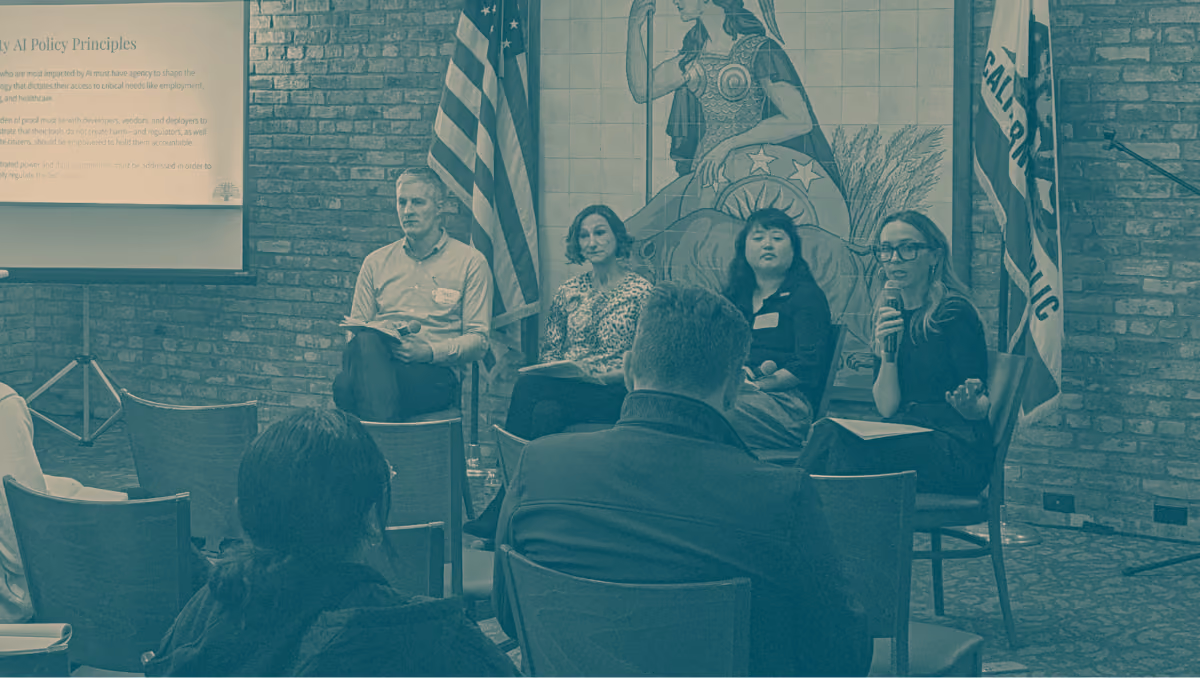
How do we create a people-first approach to AI policy?

California workers: What you need to know about your layoff rights
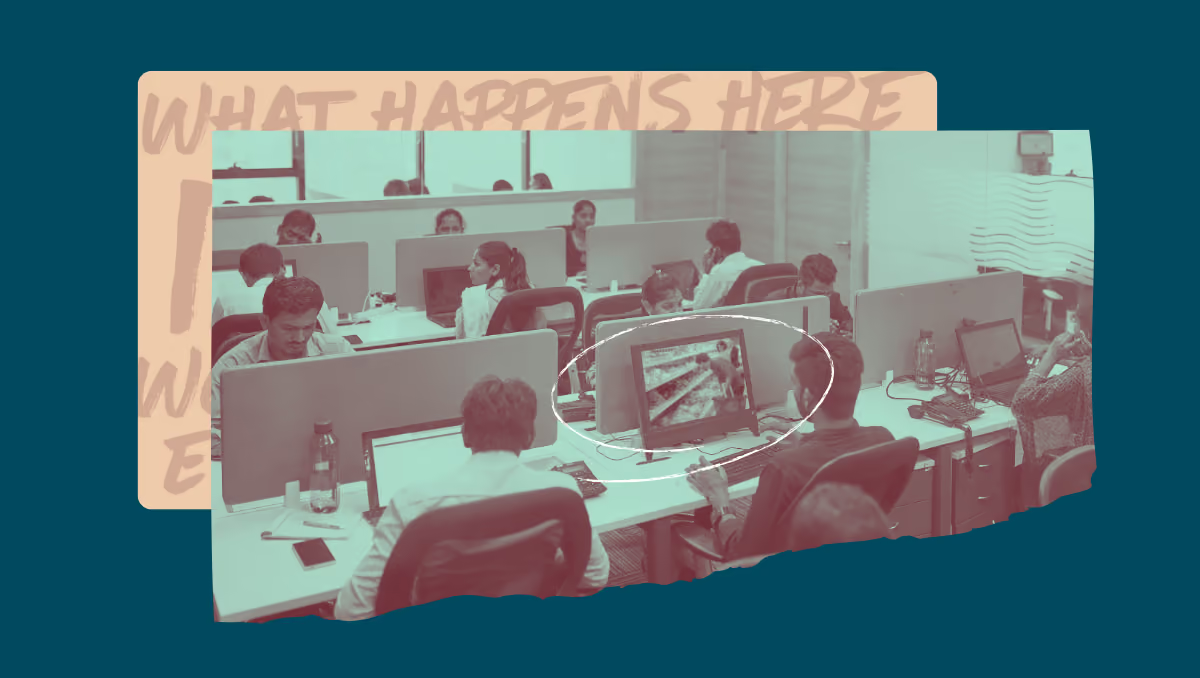
Beyond our borders – a global approach to contract work
Dive into our resourcesWhat’s on tap for 2025
Shine light on the workers in the AI supply chain and those impacted by workplace tech
The workers powering AI and those experiencing that tech in the workplace are feeling the pressure of the exploding industry’s demands. We need to highlight those pressures and establish guardrails to improve conditions for workers in California, across the country, and around the world. In 2025, we plan to:
- Illuminate how worker voice can be incorporated into emerging workplace technology
- Host virtual convenings to coalesce labor partners in California and around the world
- Examine the main actors in the AI supply chain and how they impact working conditions throughout
- Advocate for policy, regulation, and enforcement activities that address AI, discrimination, digital rights, and workplace rights here in California and beyond its borders
Examine tech’s impact on housing in California and beyond
As rent becomes increasingly unaffordable, homeownership falls further out of reach, and homelessness is on the rise, we need to ensure that tech is shaped to help people access housing rather than deepen the bias and discrimination that runs rampant in the housing market. In 2025 we will:
- Expand our research on algorithmic tenant screening outside of California
- Utilize public data and access rights to illuminate how technology impacts vulnerable renters
- Explore the role that housing data can play in supporting renters and leveling the playing field with landlords and property owners
- Advance legislation that holds Proptech accountable for its current harms
- Tackle AI-powered rent price-fixing in Sacramento
Establish much-needed guardrails on AI and automated decision-making
We’re in a moment of unprecedented momentum and coordination to drive an alternative vision for AI so it can enable collective prosperity, not exacerbate harm. In 2025 we plan to:
- Strengthen our people-first AI policy coalition and coordinate efforts across state lines
- Advocate for bold AI policy in Sacramento on automated decision-making technology and algorithmic price fixing
- Bring workers, renters, and advocates to Sacramento to ensure that California legislators are hearing from the people most impacted by this technology
- Foster opportunities for workers, renters, and impacted people to co-create solutions to AI-driven problems
Illuminate venture capital’s role in tech’s impact on our economy
Our research has found that venture capital is impacting the health of our economy by exacerbating the housing crisis, exploiting workers, and suppressing innovation in the areas where we need it most. In order to sufficiently address tech’s inequities, simply put: we need to follow the money. In 2025 we plan to:
- Release Catherine Bracy’s new book, World Eaters: How Venture Capital is Cannibalizing the Economy
- Shine a light on venture capital and how it drives the tech industry toward growth at all costs
- Connect the dots between venture capital and the most consequential areas of our economy: housing and labor
- Envision a regulatory agenda that fosters a healthy risk capital ecosystem and curbs harmful practices
Our team

Catherine Bracy
CEO & Founder
Samantha Gordon
Chief Advocacy OfficerRosita Vivanco
Chief Operating Officer
Tim Newman
Senior Vice President of Programs, Labor
Hannah Holloway
Research Manager, AI
Danya Sherbini
Vice President of Data and Technology
Vinhcent Le
Vice President of AI Policy
Megan Abell
Vice President of Advocacy
Sesoo Igbazua
Senior Director of Administration and FinanceMarion Wellington
Director of Communications
German Calderon
Senior Manager of Community Outreach and Engagement
Lili Siri Spira
Senior Manager of CommunicationsDaniel Geller
Research Manager, Housing
Swati Chintala
Senior Research Manager, Labor
Keirstan Schiedeck
Senior Manager, Project Management & OperationsThank you to our partners



Thank you to our board

Caitlyn Fox
Chair of the Board
Y-Vonne Hutchinson

Zack Rosen

Darrell Jones III

James Hurd Nixon

Ifeoma Ozoma
Catherine Bracy
CEO & FounderThank you to our advisors

Aiha Nguyen
Program Director of Labor Futures Initiative at Data & Society Research Institute

Annette Bernhardt
Director, Technology and Work Program at the UC Berkeley Labor Center
Chris Benner
Professor and Director at UC Santa Cruz, Institute for Social Transformation
Desiree Nguyen Orth
Director of the Consumer Justice Unit of the East Bay Community Law Center and Lecturer at Berkeley Law
Harlan Yu
Executive Director of Upturn
Jenny Schuetz
Senior Fellow at Brookings Institute
John Green
Managing Principal at Blackstar Stability
Ken Wang
Policy Associate/Policy and Compliance Counsel at California Employment Lawyers Association
Laura Padin
Director of Work Structures at National Employment Law Project
Leah Simon-Weisberg
Legal Director at ACCE Institute
Maria Noel Fernandez
Executive Director of Working Partnerships USA
Michael Akinwumi
Chief Tech Equity Officer at the National Fair Housing Alliance
Natalie Foster
President of the Economic Security Project
Roberto Clack
Executive Director of Temp Worker Justice.
Saun Hough
CA Partnerships Manager for Californians for Safety & Justice
Shannon Wait
Former data center worker and organizerThank you to our major funders