
There ought to be a law: How you can help make a bill a law in California
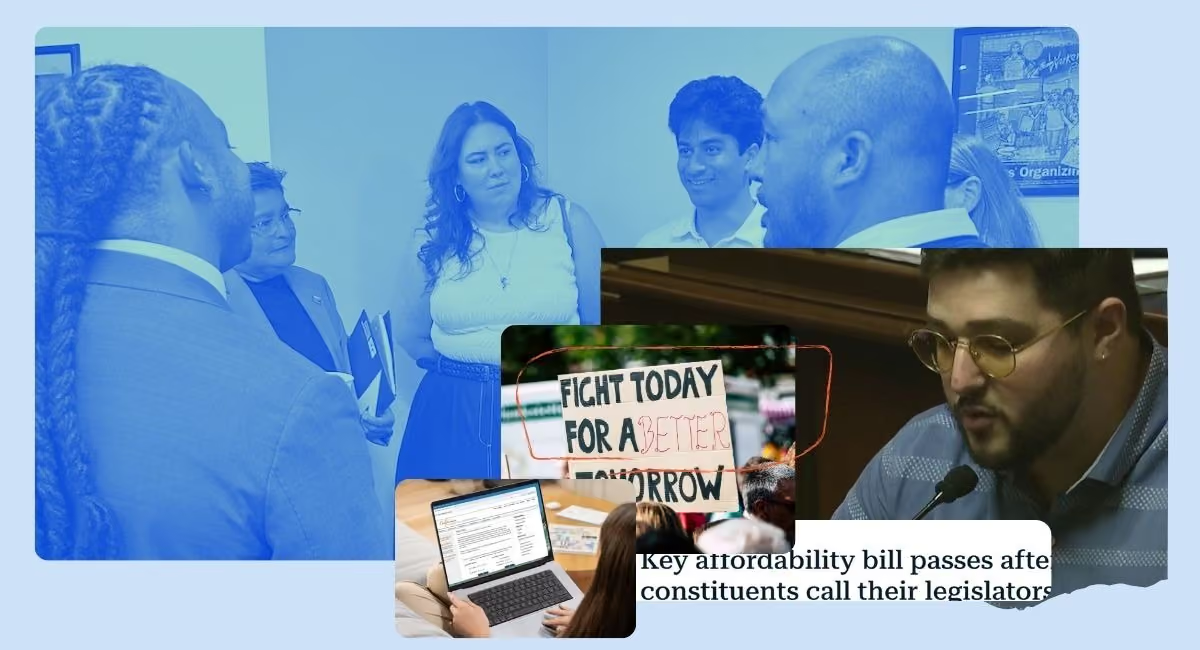
Who decides what becomes law in California? In some cases, it could be you! Everyday Californians can play a role in the government that goes beyond voting. If you choose to accept, you can help pass a bill that may become law.
If you’ve ever listened to Schoolhouse Rock, you probably know the basics of how a bill becomes a law. And if you’ve read our blog, you probably know how that happens specifically in California.
Where do you fit into the process? There are many ways to contribute throughout the legislative session!
See a problem, advocate for a solution
Members of the California legislature introduce over 2,000 bills every year, many of which are tech- and AI-focused. Most of these bill ideas weren’t simply dreamed up by legislators or their offices. Some are in response to events, like a 2025 bill requiring a temporary pause on mortgage payments for victims of the Los Angeles wildfires.
Many are written in partnership with advocacy groups, like those that TechEquity Action co-sponsors. At TechEquity, we frequently get inspiration from community members who share their stories, participate in research, and take part in our Tech Worker Group.
Occasionally, bills are introduced because a concerned constituent directly (by contacting their office) or indirectly (by writing a blog or creating a TikTok) made a legislator aware of an issue. If you’re interested in contacting your legislator directly, their contact information is available online.
Recently, the state of California has taken another approach to ensuring that Californians can voice their needs and influence policy and implementation. Engaged California is a digital democracy platform that operates as a “modern digital town hall.” It uses deliberative technology to help communities find common ground and shape state solutions.
Legislators have until late February to submit their bills. After that, the issue may have to wait until next year, or you can look to the local government, regulatory bodies, or another avenue to address the matter.
Read up on bills that could become laws, and share the information
Once bills are introduced, the legislative session is on! If you’re really motivated, you can scroll through the legislature’s website, where all bills introduced are made available to the public. But with such a high volume of bills each session, it’s a lot to keep up with!
So we suggest supporting local journalism, following your representatives and trusted profiles on social media, and/or subscribing to informative newsletters to ensure you hear about bills that may be important to you. For instance, each year, the TechEquity Action team reviews introduced bills and selects a legislative agenda that we believe can ensure the tech economy works for everyone, and our advocacy team works hard to campaign for their passage.
You may also want to specifically pay attention to bills that your representative is working on, as those are the ones you can most readily influence by sending a message to or calling your legislator. They’re supposed to work for you!
As you hear about bills, you’ll notice they’re usually labeled SB (Senate Bill) or AB (Assembly Bill), followed by a number. California, like the federal government, has a bicameral legislature—the Assembly and the Senate—and bills start in the chamber where the main author is a member. This is the house of origin, where the bill is first introduced.
Vocalize your support—or maybe your opposition
Each bill is referred to two to three policy committees in the house of origin, based on its content and character. The Surveillance Pricing Protection Act (AB 2564), for instance, went through the Privacy and Judiciary committees in both the Assembly and Senate.
These committees will hold a hearing in which legislators hear testimony from the bill’s author, sponsors, opponents, and committee members, who then deliberate on the policy’s merits. The hearings are open, and any member of the public can attend! If you can’t make it to Sacramento, you can watch the deliberations online for the Senate and Assembly. Advocates and constituents like you can also chime in with a comment in support or opposition.
Groups that support or oppose the bill often also testify during these hearings. In 2023, Alphabet Workers Union member David Jones-Krause testified in favor of AB 1356, the Protect Laid-Off Workers Act, in front of the California Senate Judiciary Committee. David’s testimony helped secure passage of the bill through the state legislature. Unfortunately, the Governor didn’t sign AB 1356 into law, but David’s testimony helped secure passage of the bill through the state legislature and onto the Governor’s desk.
Your stories matter. If you’re interested in getting involved at this level, read our blog about the power of stories and submit your own at the bottom of the page. When opportunities to testify on bills arise, we can reach out to you if your experiences are a good fit for the bill we are advocating for.
Ensure your representative is truly representing
Based on feedback from committee members, experts, or the public, a bill author may make amendments to ensure that the bill can continue moving through the process. If a bill successfully gets through committees, then it’ll go to the Assembly or Senate floor.
If a majority of legislators vote in favor of the bill, then the committee process starts again in the other legislative body. This means that even if your representatives didn’t author the bill or weren’t on the committees it went through, they will vote on it at some point.
After passing through both houses of the legislature, the Governor signs the bill into law, leaves it unsigned, or vetoes it. Their decision can be overturned by a 2/3rds majority vote in the legislature. That doesn’t happen often, though, so the governor’s race this year will be very consequential for what can get done over the next four years.
But then, like your representatives, they’ll be up for election again. One of the most effective ways we can keep our elected officials accountable is to show them that people are watching how they use their power. Call their office to thank them for supporting bills you support, or ask them why they supported a bill you oppose.
If you’re calling, emailing, posting on social, etc., and your representative or the governor is still moving forward with legislation you oppose or blocking legislation you support, keep pushing. Contact the media about it. Find people to organize with. Get active during elections to vote out people who don’t represent you and volunteer with candidates you believe in.
You’re not alone in this
Let’s do a run-through of the different actions you can take:
- Follow your legislators, trusted individuals, and organizations on social media
- Share your story about an issue that needs a solution or a specific bill idea with a legislator or advocacy organization
- Fill out public comment or survey forms when available
- Educate yourself and others about bills moving through the legislature
- Contact legislators to vocalize support or opposition to a bill
- Get involved in elections to get a representative who truly represents you and your community
There are even more powerful actions you can take, but you don’t need to do all of them, and you don’t need to do them alone. There are organizations and communities throughout the state coming together to ensure a more equitable future—including TechEquity and our partners.
Together, we go farther. Sign up for our newsletter to stay up to date on what we’re working on and how you can support.