
How young Californians feel about AI
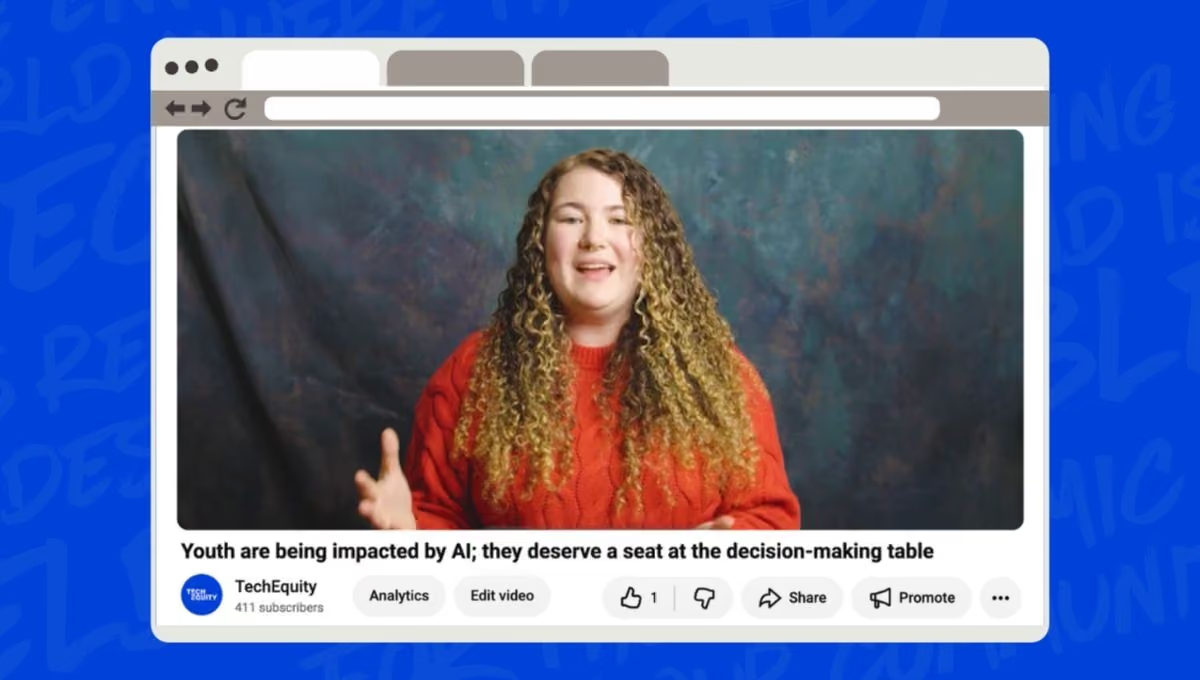
Big Tech is pouring money into shaping AI policy. But some of the loudest pushback is coming from the generation with the most to lose. From coast to coast, young people are taking action.
High schoolers in Pittsburgh, California, marched against a data center planned next to a middle school. Students at a Florida college are protesting the use of Flock surveillance cameras. A recent study found that some Gen Z workers intentionally sabotage AI workplace initiatives they know undermine their work and are meant to eventually replace them.
For the second year in a row, we surveyed California adults about AI and what they want from their state leaders. This year, we also spoke with young Californians, whose futures will be shaped by what we do at this inflection point.
Young Californians are using AI, but that doesn’t mean they like it
42% of Californians aged 25-44 report using AI daily or near-daily—the most of any age group. 70% are weekly users. Meanwhile, half of 18–24-year-olds describe themselves as very familiar with AI, more than any other age group
Like Georgia, a recent college graduate, many are excited to use AI to solve problems and start businesses. But they’re skeptical of how useful it is right now and who is developing and deploying AI. On a net favorability scale, 18–24-year-olds rate AI itself at −14, OpenAI at −18, and AI company executives at −40.
They’re feeling the impact of AI usage at a vulnerable time in life
This makes sense, given that they’re entering an economic landscape that’s actively and drastically being shaped by AI adoption. They also were teens when generative AI first hit the scene—a new tool for cyberbullying.
In fact, one in ten 18–24-year-olds say someone has used AI to generate a fake image of them; even more know someone it’s happened to. They’re actively suffering the consequences of unregulated AI tools at a vulnerable time of life, as youth advocate Ariella notes.
It’s no surprise that when asked whether people like them have a real say in how AI is used, 18-44-year-olds came out narrowly positive (+12), well below 25-34-year-olds (+30).
Early career workers are feeling stumped, instead of empowered
25–44-year-olds also report experiences with deepfakes as well as unfair automated decision systems and changes at work. Early in their careers, they lack the power to determine how the companies they work for deploy AI.
Overall, Californians are 21 points more likely to say AI will cost jobs than to say it will create them, and they have good reason to think so. Companies are already using AI in order to hire fewer employees and lay off workers—just look at the entertainment industry.
As Marissa notes, writing rooms are getting smaller, opportunities for people from diverse backgrounds are shrinking, and the California dream of “making it” is increasingly a pipe dream.
The future doesn’t feel so bright
Given what they’re already facing, it’s no wonder young Californians aren’t counting on AI to improve their lives. When asked whether AI will make life better for people like them, 18-24 came out negative (−16), the only group under 45 to do so. Those slightly older were only mildly hopeful, with +12 net favorability and +8 among 35–44-year-olds.
Rowan is more in line with the 18-24 crowd. Like most Californians, he believes AI’s benefits will flow to the wealthiest households and corporations rather than to working people and the middle class.
That’s why he and most people in the same cohort are distrustful of candidates funded by tech billionaires at −11.
So despite increased usage, young Californians aren’t feeling warmer towards AI
When we map these sentiments onto our AI compass, the youngest adults didn’t move into the enthusiast groups as the broader adoption story might suggest. 18–24-year-olds are more likely to fall among the Cautiously Disengaged (27%) and Alarmed Populists (23%) than Hopeful Regulators (17%).
Maybe it’s the shock of it all. Coming into an age of new technology, bright-eyed and excited, only to face the reality that AI isn’t being developed and deployed in ways that feel more burdensome than bright.
That’s what happened to Neil after he moved to San Francisco to join his friend’s AI startup.
Young Californians want state leaders to act
When presented with different policy options, about 60% of 18-44-year-olds chose strong laws that check Big Tech’s outsized economic power and provide protections for workers and consumers.
They don’t want this because they’re anti-tech. They want to ensure the future of technology and our economy puts people first.
How do we get there? Check out our AI policy memo series.