A win for Californians: Gov. Newsom signs a slate of critical AI and economic fairness protections
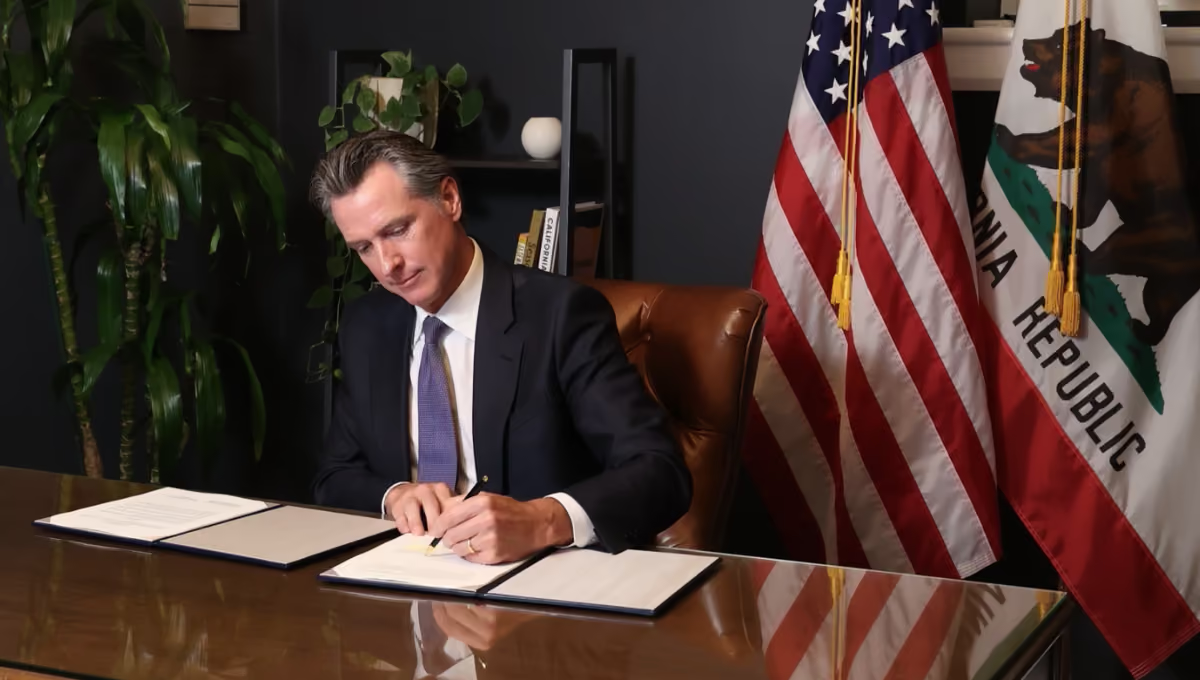
September 30, 2026, marked a winning moment for California families, workers, and small businesses. In addition to signing the COMPETE Act—taking a step to rein in the kind of illegal monopolization that’s been driving up prices, killing jobs, and squeezing workers and consumers dry—Governor Newsom signed into law a package of bills that protect workers from AI systems, establishing first-in-the-nation protections for California workers facing the risks of unregulated AI in the workplace.
These actions are an important step toward establishing baseline protections that put workers first and give working Californians meaningful control back: you can’t be fired by an algorithm, surveilled without limits, or replaced without a safety net. But deeper than that, these laws put humanity back at the center of the workplace. They reaffirm, for all of us, that no one should lose their livelihood because of a company’s use of an algorithm.
Getting these bills across the finish line wasn’t easy. Big Tech and other corporate interest groups spent big to weaken these bills as they went through the process. But workers, advocates, and small business owners mobilized and refused to back down. This is a powerful example of what can happen when everyday people come together to beat out a flood of tech money.
But it also wasn’t a clean sweep for Californians. The Governor vetoed AB 1542, which would have stopped companies from selling Californians’ sensitive personal data. This veto comes at a time when that information is being used to track and target vulnerable communities.
He also vetoed AB 2575 and SB 903, which would have given nurses and mental health professionals greater protections to use their professional judgment to override algorithmic treatment decisions that could put their patients at risk.
These laws put humanity back at the center of the workplace. They reaffirm, for all of us, that no one should lose their livelihood because of a company’s use of an algorithm.
Samantha Gordon Chief Advocacy Officer
The full slate of legislation signed by Gov. Newsom and prioritized by TechEquity Action includes:
- AB 2155 (Aguiar-Curry)—closes a gap in forced arbitration law so workers get the same protections under California law as under federal law.
- SB 923 (Becker)—strengthening Californians’ rights to control their personal information
- SB 947 (McNerney)—setting a common-sense standard that employers cannot use AI to fire or discipline a worker
- SB 951(Reyes)—modernizing our safety net to ensure that workers facing job loss due to an employer’s use of AI systems are covered by California’s layoff protections
- AB 1883 (Bryan) and AB 1331 (Elhawary)—prohibiting employers from using invasive workplace surveillance tools at work and in off-duty areas
- AB 1979 (Bonta)—ensuring patients can rely on medical experts to provide quality healthcare, not algorithms or robots.
- AB 1776 (Aguiar-Curry)—prohibits illegal single-firm monopolization that drives up prices and squeezes workers and small businesses.
- AB 1857 (Aguiar-Curry)—bans restrictive covenants that block new grocery stores from opening in communities that need them
- AB 1609 (Abur)—guarantees Californians the right to reach a real person for customer service and requires disclosure when AI chatbots are used
- SB 574 (Umberg)—requires attorneys and arbitrators to verify AI-generated work and keep human judgment at the center of legal proceedings.
- AB 1159 (Addis)—extends student data privacy protections from preschool through college
- SB 1050 (Ashby)—requires companies to disclose when a synthetic performer is used in a video or audio advertisement.
The signing of these bills is a direct result of organizations and communities throughout the state coming together to ensure a more equitable future. If you want more information on how you can be a part of next year’s legislative season, check out “There ought to be a law,” which breaks down ways you can take action.
And sign up for our newsletter to stay up to date on what we’re working on and how you can support.