
AI & Workforce Development – In a nutshell

Anthropic CEO Dario Amodei sparked a wave of press coverage this year when he speculated that AI would eliminate half of entry-level white-collar jobs within 1-5 years.
And he’s not the only one making these claims.
Despite these statements from CEOs and the resulting media narrative, recent research suggests that “the broader labor market has not experienced a discernible disruption since ChatGPT’s release.”
Nonetheless, policymakers and working people are feeling uncertain about an AI-driven future and are seeking appropriate policy responses. What can we do to address the issues we face now and alleviate our concerns about the future well-being of our workforce?
Our latest paper, “AI & Workforce Development: Building a Secure, Equitable Future for Workers,” explores lessons from 3 main approaches to workforce development in the face of changing economies and technologies. These were our main takeaways.
Industry-led upskilling alone isn’t enough

Tech companies are major employers and are, at the same time, developing the technology that is reshaping the labor market. As such, many have announced workforce reskilling or upskilling programs, but these commitments largely remain vague and opaque.
Big tech companies, including Amazon, Google, IBM, and Microsoft, are offering a range of paid and free online courses. Some tech giants have formed an AI-Enabled ICT Workforce Consortium, with Google pledging $130 million for AI training around the world, Cisco planning to train 25 million people in cybersecurity and digital skills by 2032, and Intel aiming to equip more than 30 million people with AI skills by 2030.
However, there is little to no data about the effectiveness of the recent wave of industry-led AI upskilling programs. And if reskilling or upskilling workers is the aim, the mass layoffs and reduced training budgets tell a different story. Further, workers who are displaced by technological advancements are often unable to return to jobs comparable to those they lost.
If industry-led programs are to provide workers with meaningful support, they need to lead to secure, full-time employment. Companies need to make transparent commitments, paired with independent evaluation, regarding how these programs can help current employees maintain job security and how they can create new, high-quality jobs.
Public policy has a pivotal role to play
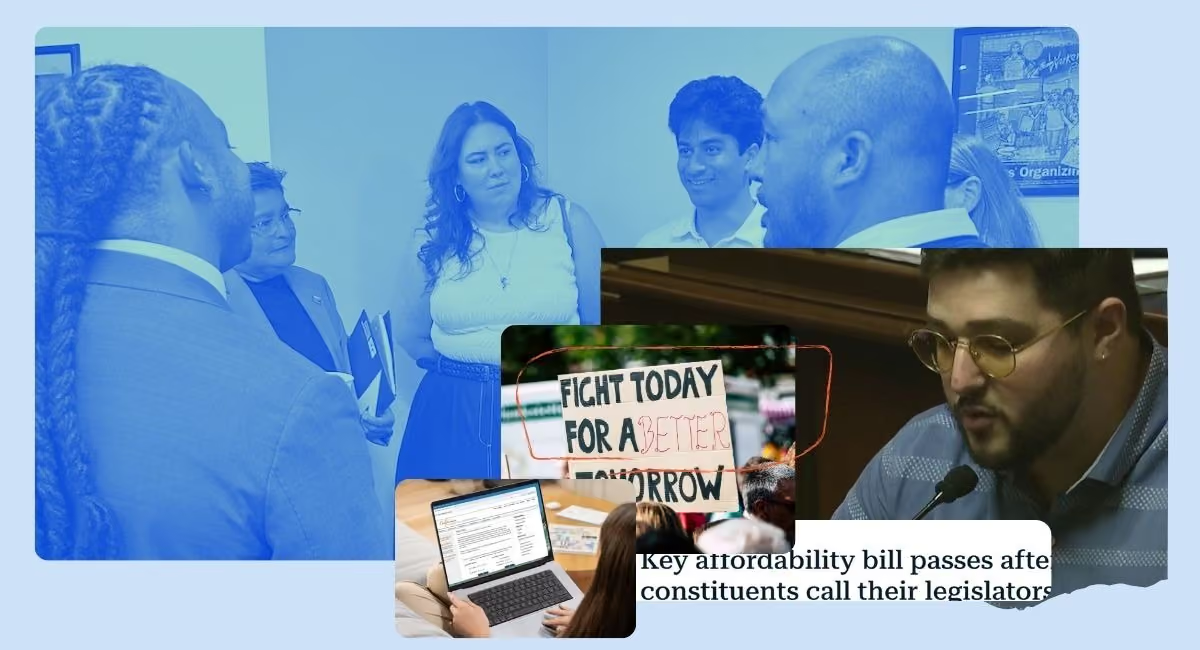
The public sector can also fund education and upskilling, and, generally speaking, there are more levers of accountability in comparison to the private sector.
At the federal level, in April 2025, President Donald Trump signed the “Advancing Artificial Intelligence Education for American Youth” executive order, which mandates the creation of an AI education task force, the development of resources for K-12 AI education, enhanced AI training for educators, and the promotion of registered apprenticeships. The administration’s “AI Action Plan” also includes several policy recommendations related to workforce development.
However, these measures do not address the question of the quality of jobs expected to be generated. Further, the AI Action Plan refers to a worker-first AI agenda, but details on how such an agenda is to be achieved are sparse.
Several states are also in the early stages of developing structured AI training and workforce development programs, according to a report from Code for America. This includes California, which initiated a generative AI training for state employees in 2024, focused on “how the technology may safely, ethically, and equitably function in the workplace.” The state also signed agreements with big tech companies—Nvidia, Adobe, Google, IBM, and Microsoft—focused on training students in high schools, community colleges, and state universities for jobs in AI.
While we haven’t seen the outcomes of these programs yet, some existing public workforce development programs have proven to be successful in connecting job seekers with employment. It’s important to note, though, that the workforce development strategies that are the most successful have a clear structure and services that provide sustained financial and social support.
Policymakers could also consider recent proposals to address labor transitions in the context of AI—everything from a federal job guarantee to a robot tax should be on the table. Another area of recent policy development, inspired by New York state, focuses on requiring employers to report AI-related layoffs to state agencies as a means of expanding transparency.
Labor unions are effective at taking charge and protecting workers

Ultimately, the people who are the biggest experts on the impacts of AI on workers—and, thus, what should be done about it—are workers themselves. Labor unions are a powerful vehicle to balance the power between employers and workers.
In TechEquity’s recent paper “Take the Mic: How Worker Voice Shapes Workplace Technology,” we shared examples of how unions have won legally binding contracts that preserve working conditions and prevent job displacement; place limits on workplace surveillance; safeguard workers’ rights against algorithmic management; and prepare for future technological developments. While union membership has declined over the decades, unions have continued to provide a model for successfully negotiating around workplace technology and education and training.
Unions are also actively forging relationships with various stakeholders to help their members navigate the demand for AI skills development. The AFL-CIO Working for America Institute (WAI) worked with Jobs for the Future (JFF), the National Association of Workforce Boards (NAWB), CompTIA, TechSF, and community colleges to develop the IT Workers’ Rights Guide, as part of the Rapid IT Training and Employment Initiative (RITEI).
It’s also important that private and public sector organizations recognize that involving unions in the development of workforce development and upskilling programs can help make these initiatives more effective. “More union engagement in skills leads to more employer investment and co-design processes leading to better outcomes,” according to a discussion paper from the Trade Union Advisory Committee to the Organisation for Economic Co-operation and Development (OECD).
Building a secure, equitable future for workers
The future of human labor and AI is far from decided.
If we look at previous waves of automation, we see that these changes have not permanently reduced the number of available jobs. With all of this in mind, here are our key recommendations for the future:
- Center workers in developing solutions: As highlighted in the full paper, workers need power and a voice when it comes to how technology impacts their work. Responses to AI at work should authentically engage workers and unions, who are closest to the technology and best suited to speak to their needs more broadly.
- Hold companies accountable for the funds they’ve committed to address AI education and training: While millions of dollars are being committed in press releases, there is often a lack of transparency and independent reporting on where these funds are being spent and the impact and efficacy of these donations. Community benefits agreements and collectively bargained training programs can be powerful mechanisms for accountability.
- Policymakers need to think expansively about a robust policy response rather than an overemphasis on AI skills training: Education, training, and workforce development, even when effectively designed, are only one piece of the puzzle. Increasing worker power and the right to collective bargaining, expanding a durable and sustainable social safety net, and addressing workplace fissuring and related labor arrangements are all ideas that should be considered.
If you want to learn more, check out “AI & Workforce Development: Building a Secure, Equitable Future for Workers.”
Read the full report