Design study / Aging services nonprofit · Virginia
Rides, meals, and support for seniors close to home
A website concept for an aging-services nonprofit whose readers are frequently older adults and stressed family caregivers — two audiences that punish any unnecessary complexity.
Concept only. Facts come from the organization's published materials; this is not the official Senior Services of Southeastern Virginia website.
- Nonprofit website design
- Aging services
- Caregiver navigation
- Service directory
- Accessibility
Senior Services of Southeastern Virginia — open the working site
About this concept
The problem
Aging-services organizations run many programs — transportation, meals, in-home support, care coordination, benefits counseling, caregiver support, wellness, ombudsman advocacy — funded separately and therefore published separately. But nobody needs one program; they need a day to work. A daughter arranging care for a parent in another city is trying to assemble rides plus meals plus in-home support, and a program-shaped site makes her do that assembly herself.
The approach
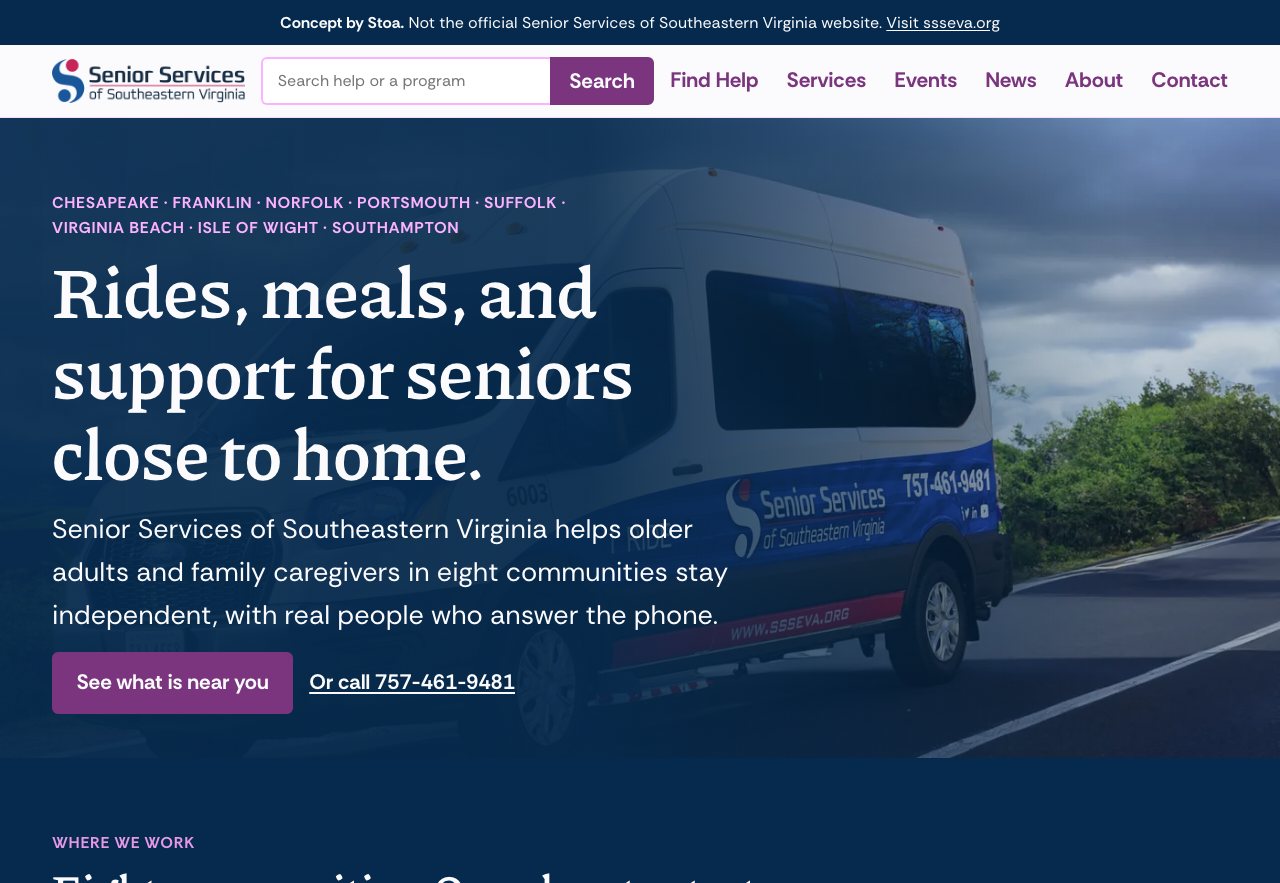
The site is organized around the whole day rather than the individual program — help for the whole day, not just one errand — so the services read as a combinable set. Eight communities get one clear starting point rather than eight service areas to decode. A concrete walkthrough of what a day actually looks like does the explanatory work a service list cannot, and giving, volunteering, and real documents and reporting are published plainly, since donor confidence for an organization like this rests on visible accountability.
The result
Forty routes covering services, help, documents, giving, volunteering, about, contact, and search, with accessibility handled as a premise for an older readership.
Your next project
Have a similar public need?
Tell us who needs to use it and what they need to do. We can help turn the problem into a clear, practical project.