Design study / Tourism nonprofit · Wisconsin
Eleven Nations, one respectful front door
A trip-planning concept whose central design constraint is not visual but jurisdictional: send visitors onward to each Nation's own pages, where the authority belongs.
Working concept for review, not affiliated with the official Native American Tourism of Wisconsin.
- Tourism website design
- Interactive atlas
- Source-bound answers
- Events calendar
- Cultural protocol
Native American Tourism of Wisconsin — open the working site
About this concept
The problem
A statewide tourism organization representing eleven federally recognized sovereign Nations cannot speak for them. The usual tourism pattern — absorb everything into one branded destination site, write your own descriptions, own the visitor relationship — is exactly wrong here. But the opposite, a bare link list, gives a visitor no way to plan. The design problem is helping someone plan a trip while making it unmistakable who owns each fact.
The approach
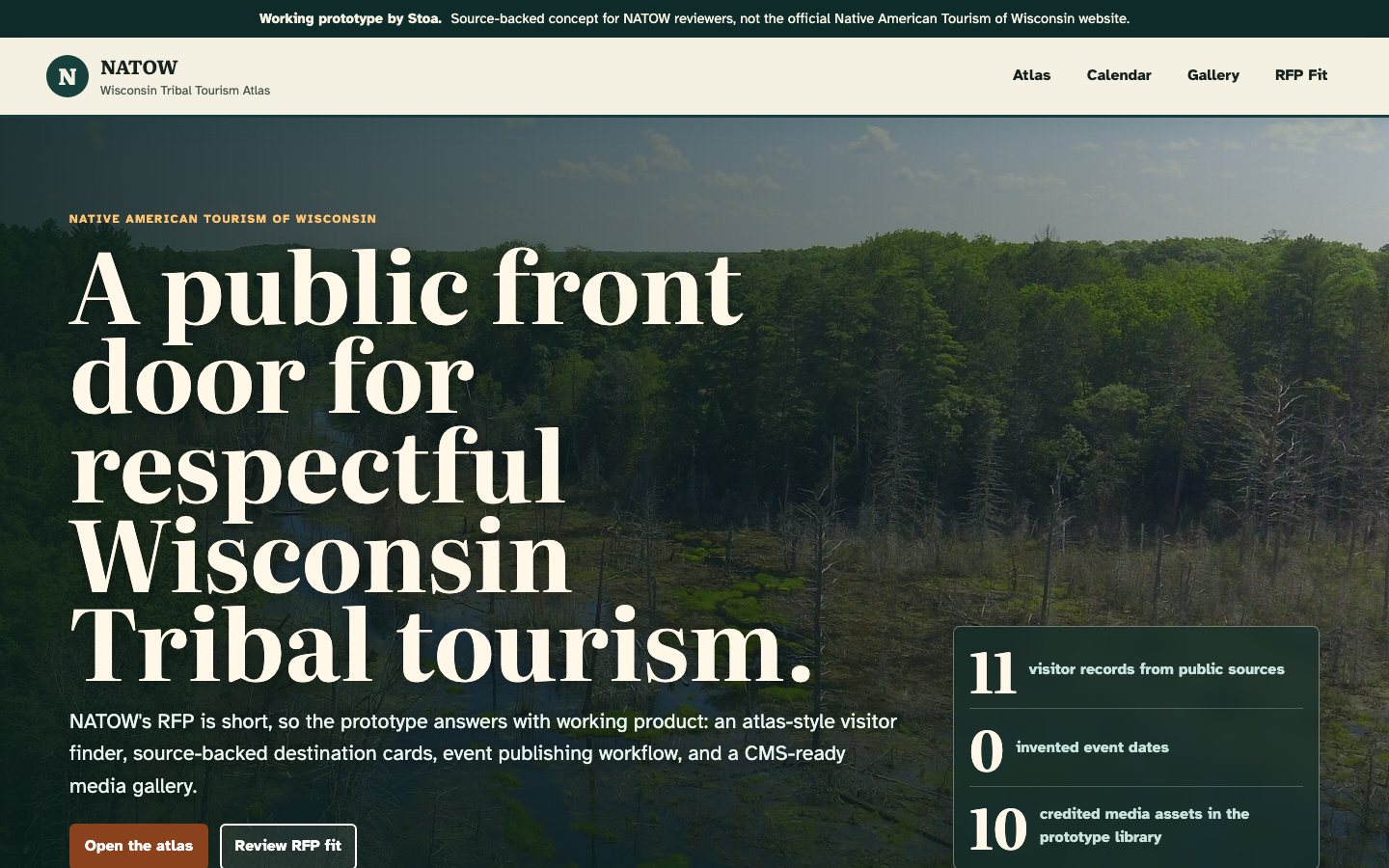
The site is built as a front door, not a destination. It gathers official destinations, public events, cultural centers, and lake-country routes, then routes visitors straight to each Nation's own pages. The atlas organizes eleven Nations across six regions of Wisconsin's waters and woods, so geography rather than an alphabetical list carries the browsing. Events are listed only with confirmed dates. The guide answers plain questions strictly from source-backed records and links out to official pages — and says so on the page: it does not invent. That restraint is the feature, because a tourism assistant that improvises about ceremony, protocol, or access would be worse than no assistant at all.
The result
Five routes covering the Nations, an interactive atlas map, a cultural events calendar, and a media gallery — with sovereignty and source authority preserved at every step rather than flattened into one voice.
Your next project
Have a similar public need?
Tell us who needs to use it and what they need to do. We can help turn the problem into a clear, practical project.