
Tackling the AI supply chain
AI is neither artificial nor that intelligent.
Every day, content moderators review child sexual abuse material, hate speech, and graphic violence to keep platforms safer. Yet their work is largely hidden, unsafe, and undervalued—despite protecting the public from some of the worst content online.
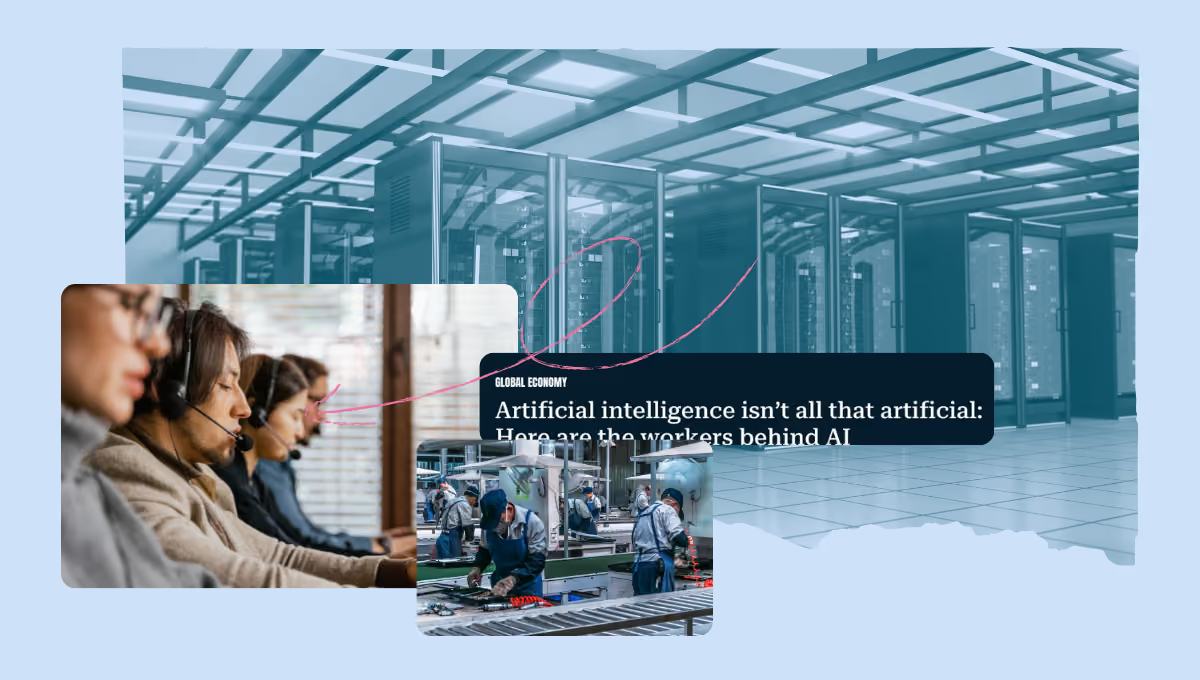
At the same time, data labelers, annotators, and evaluators categorize, tag, process, and stress-test the vast datasets used to train and evaluate AI. Sometimes, they even step in when the AI isn’t working—known as “fauxtomation.” From the USA to Kenya, Colombia to Ireland, Türkiye to the Philippines, their labor fuels multi-billion-dollar AI systems, but many face precarious employment, low wages, and limited social support.
This is the reality behind Silicon Valley’s AI boom. This is the AI supply chain.
The companies behind AI
The term “supply chain” typically refers to the raw materials and processes involved in the production and distribution of goods, such as clothing and groceries.
Some industries have become more visible due to dedicated research, decades of worker organizing, consumer and investor pressure, and activism, like the garment industry, which faced pressure from United Students Against Sweatshops. Organizations like the Worker Rights Consortium then helped enforce labor standards in the industry, conduct worker-centered investigations, and implement remedies when garment workers’ rights are violated.
The same is not yet true for AI systems, although they are also built upon networks of human labor spread across the world.
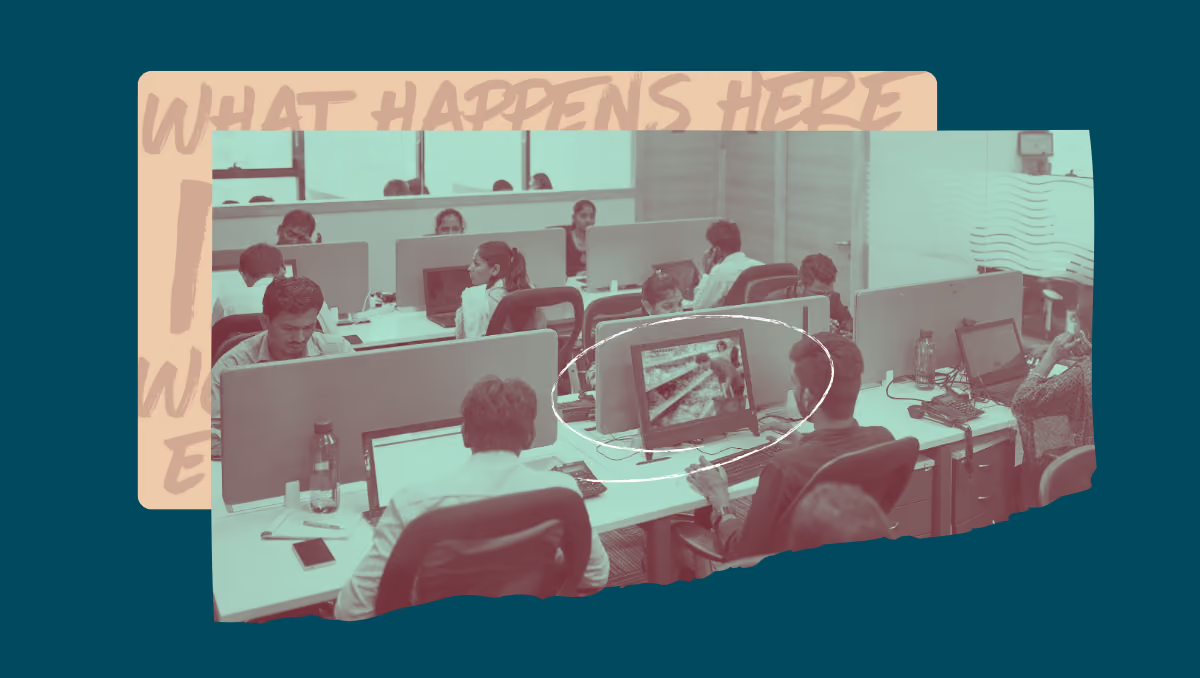
The global and fragmented nature of the work, which takes place both in physical offices and on platforms in workers’ homes, and the constant shifting of companies’ contracts, also pose challenges for workers and organizations seeking to bring workers together to fight for improved conditions.
We created the Data Work Landscape to help address this challenge. By highlighting some of the companies that employ data workers, we help to shed light on this shadowy industry—and provide a resource to data workers building power.
Explore the Data Work Landscape
Shining a light on this shadowy industry
Explore the Landscape
The work behind AI
AI tools exist because of a vast global supply chain that includes everything from mineral extraction to manufacturing, shipping, data storage, and handling e-waste and connects workers and communities across continents. The segment of this supply chain that creates the datasets and trains the algorithms that underpin AI—referred to as “data work”—provides a helpful case study of how work is sourced to fuel the current AI boom.

While it might be easy to imagine that engineers are necessary to write the algorithms that produce AI, tech companies provide little transparency about the vast number of data workers who build, populate, train, and maintain these systems.
Check out our AI supply chain, explained blog for a full run-down of the different roles data workers play.
The workers behind AI
The globally distributed nature of the AI supply chain is becoming more apparent as workers speak out. AI companies are largely concentrated in North America and Europe, whereas AI labor flows primarily from the Global South.
For instance, in order to train ChatGPT, OpenAI outsourced labeling of toxic content to workers in Kenya who were reportedly paid less than $2 per hour to trawl through vast quantities of traumatizing text, images, and videos.
By combining data from a survey of 160 data workers with insights from 15 in-depth interviews, TechEquity and the Alphabet Workers Union-CWA found that these poor working conditions are also prevalent in U.S.-based data work. We detail these findings in our report, Ghost Workers in the AI Machine.
- Workers struggle to make ends meet. Eighty-six percent of surveyed workers worry about meeting their financial responsibilities, and 25% of respondents rely on public assistance, primarily food assistance and Medicaid.
- Workers perform critical, skilled work but are increasingly hamstrung by a lack of control over the work process, leading to lower work output and, in turn, higher-risk AI systems. More than half of workers assigned an average estimated time (AET) to complete a task felt that AETs are often not long enough to complete the task accurately. 87% of respondents report they are regularly assigned tasks for which they are not adequately trained.
- With limited or no access to mental health benefits, workers are unable to safeguard themselves even as they act as a first line of defense, protecting millions of people from harmful content and imperfect AI systems. Only 23% of surveyed workers are covered by employer-sponsored health insurance.
Ghost Workers in the AI Machine
U.S. Data Workers Speak Out About Big Tech’s Exploitation
Read the full paper
Workers are tackling the AI supply chain
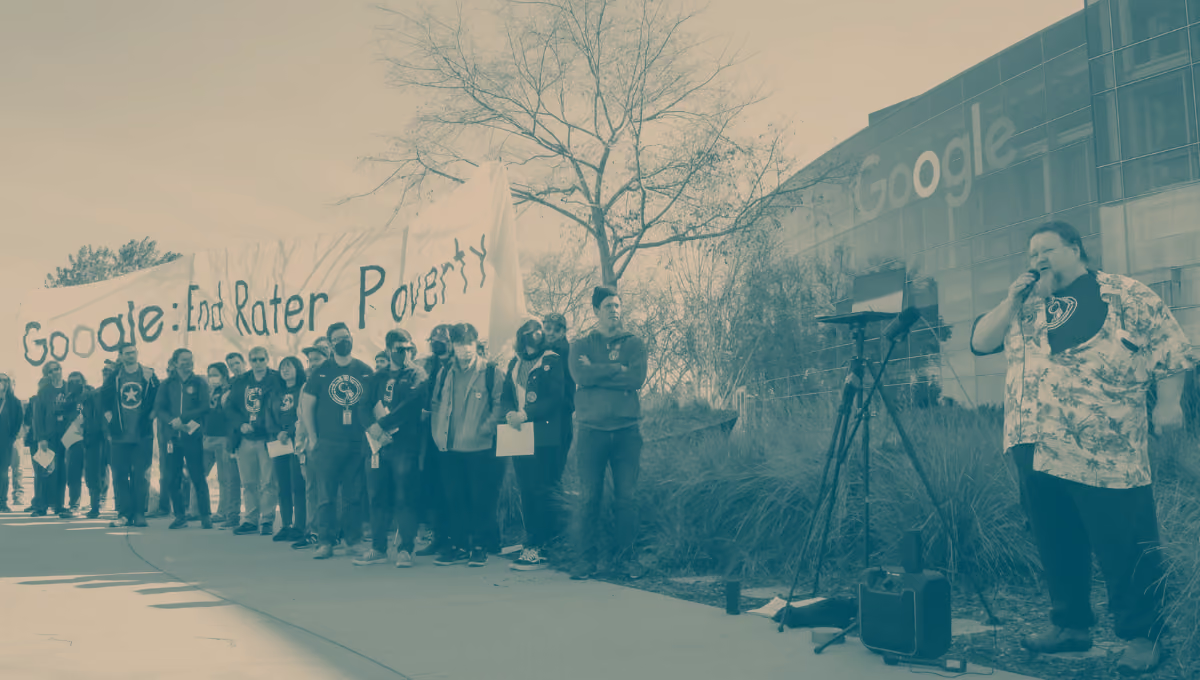
Content moderators make the Internet safer and also contribute to AI training—but at a high cost to workers. That’s why the UNI Global Union’s Global Trade Union Alliance of Content Moderators is calling on tech companies to adopt mental health protections throughout their supply chains.
Content moderators and data workers across Africa are building political power, including in Kenya, where the Data Labelers Association is advocating for fair treatment and better conditions, and workers have joined lawsuits for justice.
In the US, data workers are organizing for change by unionizing with the Alphabet Workers Union (AWU)-CWA. Raters at GlobalLogic, a subsidiary of the multinational conglomerate Hitachi, are fighting for standardized pay and fair raises, equitable paid time-off, benefits for all workers, job security, and clear employment pathways—despite allegedly facing retaliation for speaking out. Other data workers employed by Alphabet contractors have already won critical workplace improvements with the support of AWU.
Understanding the AI supply chain
Learn more about the AI supply chain

AI & California’s Labor Market
The AI supply chain, explained
Ghosts in the AI Machine – In a nutshell

How companies make money tracking you
Beyond our borders – a global approach to contract work

Who’s powering AI? Shining a light on the AI data work industry.
Read more research on work and livelihoodsShare your story
Do you work in content moderation, data annotation, or similar roles contributing to AI, or do you have additional information to share about the AI supply chain? We want to hear your story.
Share your storyGet Labor Updates
Thank you
You’re on the list for TechEquity’s updates.