
Exhibit A-2 · Parks & Public Art

Public Art

Commissioned work at the Convention Center, PPG Paints Arena, and the North Shore Riverfront Park. The text below is the Authority’s own, published as it stands.

The Works

Every piece the Authority names and photographs across the three collections, with the holding it stands on.

The Collections

Convention Center

Downtown

Convention Center Public Art

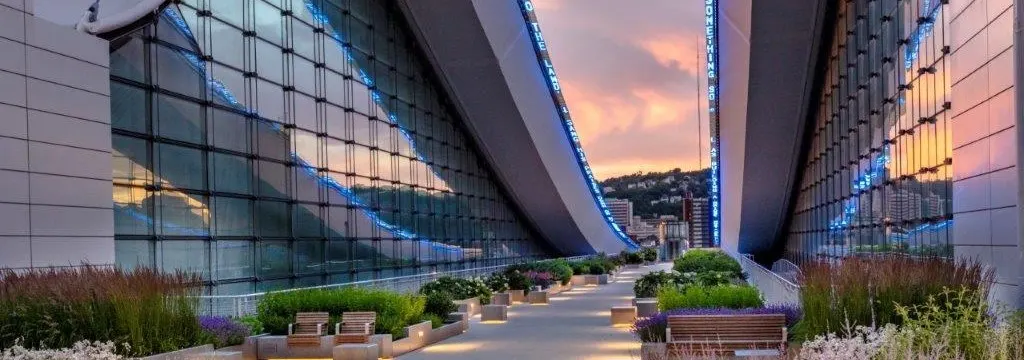
Overview The integration of public art was an important component of the design of the David L. Lawrence Convention Center. A Public Art Program was created to maximize community involvement and to facilitate the selection of artists. The purpose of the program was to select artists whose work compliments the unique design of the Convention Center, diversifies the public art forum, and reflects the historic role of art and architecture in Pittsburgh.

The total budget for the Public Art Program was $2 million. Local foundations contributed $1 million and the SEA contributed a $1 million match. The following local foundations contributed to this program: Vira L. Heinz Endowment The Hillman Foundation The Pittsburgh Foundation Richard King Mellon Foundation Anonymous Additional information on the David L. Lawrence Convention Center's Art Collection can be found in the Floor-by-Floor Art Guide.

Key Facts Number of Artists Selected: 23 commissioned & acquisition artists Total Budget: $2 million Features In 1998, the SEA convened a Public Art Committee with eleven members, including one SEA Board member, and Convention Center architect, Rafael Vinoly. That same year, the SEA hired Mark Pally and Carol Goldstein as consultants to coordinate the Public Art Program from conceptual development through implementation.

The consultants worked diligently with the Public Art Committee to create a Public Art Plan for artist selection, a reference for concept designs and criteria to evaluate those designs. In order to select commissioned artwork, the Public Art Committee nominated nine individuals, both local and national, to serve on a Public Art Jury. They used the goals and objectives outlined in the Public Art Plan to select winning commissions.

Each work was judged on its ability to: Symbolize the region's renewal and signal the City's strong, vital and creative present Celebrate the future of Pittsburgh and its remarkable tradition of technological achievement and innovation Establish a standard of aesthetics and execution commensurate with the excellence of the architectural design Respond to issues of local context and civic engagement The Public Art Plan called for a two-tiered program involving both commissioning and acquisition.

The plan was intended to serve as a model for future public art programs in the City of Pittsburgh and surrounding region. Commissioned Artists Request for Qualifications (RFQs) for major commissions were circulated to an invited list of artists recommended by the Public Art Jury. RFQs for smaller commissions were advertised and distributed to artists living and/or working in the Western Pennsylvania region. The SEA distributed thousands of postcards to artists for participation in the competition for the regional commissions.

One hundred eighty-five artists submitted entries which were considered by the Art Jury. After narrowing the field to 21 finalists, the Public Art Jury assembled to hear proposals. The jury selected five Pittsburgh artists and two national artists for the following list of commissioned works, and the SEA Board formally approved their recommendations. National Artists Selected ARTIST TITLE DESCRIPTION Jenny Holzer For Pittsburgh LED Technology Tony Tasset Pittsburgh Magnolias Installation Pittsburgh Artists Selected ARTIST TITLE DESCRIPTION Thaddeus Mosley Three Rivers Bench Black Walnut Angelo Ciotti Pittsburgh, An Industrial Garden Aluminum, steel, periwinkles in planter mix Ray Gerard You Are Here Lenticular photographs on plastic panels, steel, fluorescent lights Anne Lopez RUG Concrete, pigment, stainless steel Steve O'Hearn River Rail and Viewing Machine Stainless steel and steel Acquisition Artists The second aspect of the plan, the Acquisition Program, allocated $125,000 to purchase existing artwork for display in the Convention Center.

This piece of the program was reserved for artists working in Pittsburgh and Southwestern Pennsylvania. Artwork was selected in an open-call competition, with selections made by a jury of respected arts professionals from the region. The selection process was facilitated by the Andy Warhol Museum. ARTIST TITLE DESCRIPTION Felix de la Concha The Last Supper Oil and canvas on board Jack Wolf 16th Street Bridge Clemente Bridge 16th Street Bridge, Heinz Stacks Black and white infrared photography Derrick Meads Because Interactive steel sculpture Ayanah Moor A to Z, Like Me Set of 26 prints and 2 portraits, screen print Charles Biddle We Buy Clean Cars Caprice Motel Pavilion Motor Lodge Gelatin silver print Burton Morris Heinz Triptych Bottles Acrylic on canvas Karen Antonelli Heaven's Gate #1 Heaven's Gate #4 Heaven's Gate #5 Charcoal, compressed charcoal, chalk, and pastel on paper Frances Venardos Gialamas Homage to the Men and the Mills Mixed media assemblage James Shipman Steel Field on Blue Spontaneous Synopsis Shadow Caster Desert Landscape High fire clay Michael Hertrich Enter/Exit Photo collage Jon Schultz The Ghosts of Birmingham Wood and steel Bill Rizzo Armstrong Cork Building in Strip District Color print Raymond DeFazio Noon Oil on canvas Ron Donoughe February Mill Series Six panels, oil on canvas Jacob Feige Untitled #2.6 Acrylic and gesso on wood panel Mark Perrott Eliza House Furnace Skyline Black and white archivally processed fiber silver-print Felix de la Concha At the Foot of the Falls Oil and canvas on board Various Artists Picturing the City: Downtown Pittsburgh 86 framed photography prints Subsequent Acquisitions Subsequent to the completion of the Original Public Art Plan, the SEA reestablished an art committee.

The art committee assisted the SEA with the acquisition of two artworks: At the Foot of the Falls by Felix de la Concha, and Picturing the City: Downtown Pittsburgh by Various Artists. These artworks were financed by the Colcom Foundation and the Heinz Endowments, respectively.

Text as published by the Authority at pgh-sea.com.


Construction as Canvas

Lower Hill

PPG Paints Arena Public Art

PPG Paints Arena is the home to the Pittsburgh Penguins hockey team and other sports, entertainment, and cultural events. It follows PNC Park, Heinz Field, and the David L. Lawrence Convention Center in reshaping the landscape of the city. Each of these civic facilities incorporated significant public artworks that have become anchors of Pittsburgh 's contemporary public art collection. The New Arena Public Art Master Plan was completed by Todd W.

Bressi, Jill Anholt, and Bethea-Brown Associates and adopted by the SEA Board in January 2009. Commissioned by the SEA, the Urban Redevelopment Authority, and the Pittsburgh Penguins, it serves as the guiding document for commissioning outdoor public artworks at the PPG Paints Arena site. It was developed through consultation with the arena's internal stakeholder group, representatives and members of the Hill District and Uptown communities, and representatives of arts, cultural, and philanthropic organizations in the city.

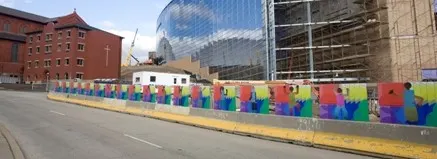
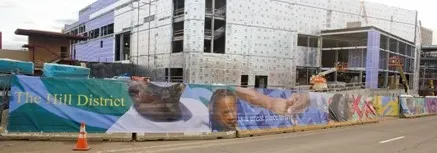
The plan outlines three projects: Construction as Canvas: Temporary artworks that are incorporated into the construction fences and developed by an artist, community organization, and youth collaboration. This project was completed in October 2009 and was at the site until fall 2010. Garden Passage: A public space that connects the southwest and northwest entry plazas and explores issues of terrain, environment, and infrastructure.

Walter Hood is the artist for this project. Activation: A digital or interactive artwork, for the arena's northeast plaza , that engages viewers directly and embraces the kinetic energy of athleticism and sport. This project will not be initiated until funding is secured. Construction as Canvas Pittsburgh artists Leslie Ansley, Gregory Anderson, and Ashley Hodder worked with three community organizations and young people in the Hill District and Uptown neighborhoods to create artwork integrated into the construction fence at the PPG Paints Arena site.

The project brought community organizations, artists, and young people together to create artwork that elevated the construction fence from a functional object to a platform for community expression. Once construction was complete, the artworks were returned to the community organizations for public display. The project was managed by the Office of Public Art, a partnership between the Greater Pittsburgh Arts Council and the City of Pittsburgh .

The Office of Public Art managed the selection process for the community organizations, the artist selection process, and the project management of each fence. In addition to the contributions from the SEA, URA, and the Penguins, Construction as Canvas received generous funding from The Heinz Endowments, PJ Dick / Trumbull / Lindy, Populous, Horizon Properties Group, SMG, and Lighthouse Electric Company, Inc. Remembering Our FutureLeslie Ansley Leslie Ansley worked with young people ages 10 to 18 in a program organized by Bedford Hill Apartments.

Ms. Ansley and her workshop participants designed a 600-foot photographic, fabric mural installed along the Centre Avenue construction fence. Her workshop focused on the history of the Hill District, with an emphasis on the work of playwright August Wilson and photographer Charles “Teenie” Harris. Ms. Ansley's students worked in photography, writing, role play, and costuming to develop the imagery for the fence. Remembering Our Future included photographs of costumed participants and community members, text from their writing workshops, and an abstracted map of the Hill's street grid.

Building a Greener HillAshley Hodder Ashley Hodder worked with young people ages 11 to 15 in a program organized by Schenley Heights Community Development Program. They designed a 580-foot “green fence” for the Fifth Avenue perimeter of the arena. Their project was inspired by Pittsburgh 's leadership in green building and design, including the Gold LEED ® certification of PPG Paints Arena. Ms. Hodder and her participants visited Phipps Conservatory, learned about green design, and toured public art in Pittsburgh as part of the inspiration for their fence.

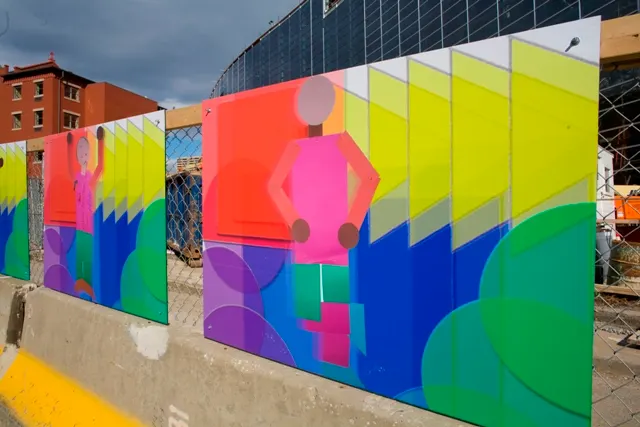
To create Building a Greener Hill, the artist and the participants designed a temporary artwork that was actually a living and growing fence – planting sections of the fence with sedum plants and reconfiguring construction cones into planters. These living sections were complemented by small sculptures of animals and plants created from recycled construction materials. Changing ShapeGregory Anderson Gregory Anderson worked with children ages 6 to 8 in a program organized by the Centre Avenue YMCA.

Mr. Anderson created and led a four week workshop to build student knowledge in the visual arts, including two and three dimensional shapes, basic anatomy, color theory, figure drawing, and cartooning. They developed Changing Shape, a series of 24 panels along the Washington Place construction fence. Each colorful panel contained a character created by the children during the workshop. Garden Passage Garden Passage is the proposed pedestrian connection linking the southwest and northwest plazas of PPG Paints Arena.

The total cost for the project is estimated at $2.47 million. Per the recommendations of the New Arena Public Art Master Plan, the design team selection process was completed in two-stages, with a Design Team Selection Committee first recommending three finalists and later a team to be awarded the commission. A request for qualifications (RFQ) was distributed to artists and design firms around the world and was also advertised in local newspapers and regional artist emailing lists.

After reviewing proposals and interviewing each of the teams, the selection committee recommended the selection of Hood Design (Oakland, CA). Walter Hood, principal of Hood Design, is both an artist and a landscape architect.

Text as published by the Authority at pgh-sea.com.


Law Enforcement Officers Memorial

North Shore

North Shore Riverfront Park Public Art

Cost
$250,000
Architect
Astorino

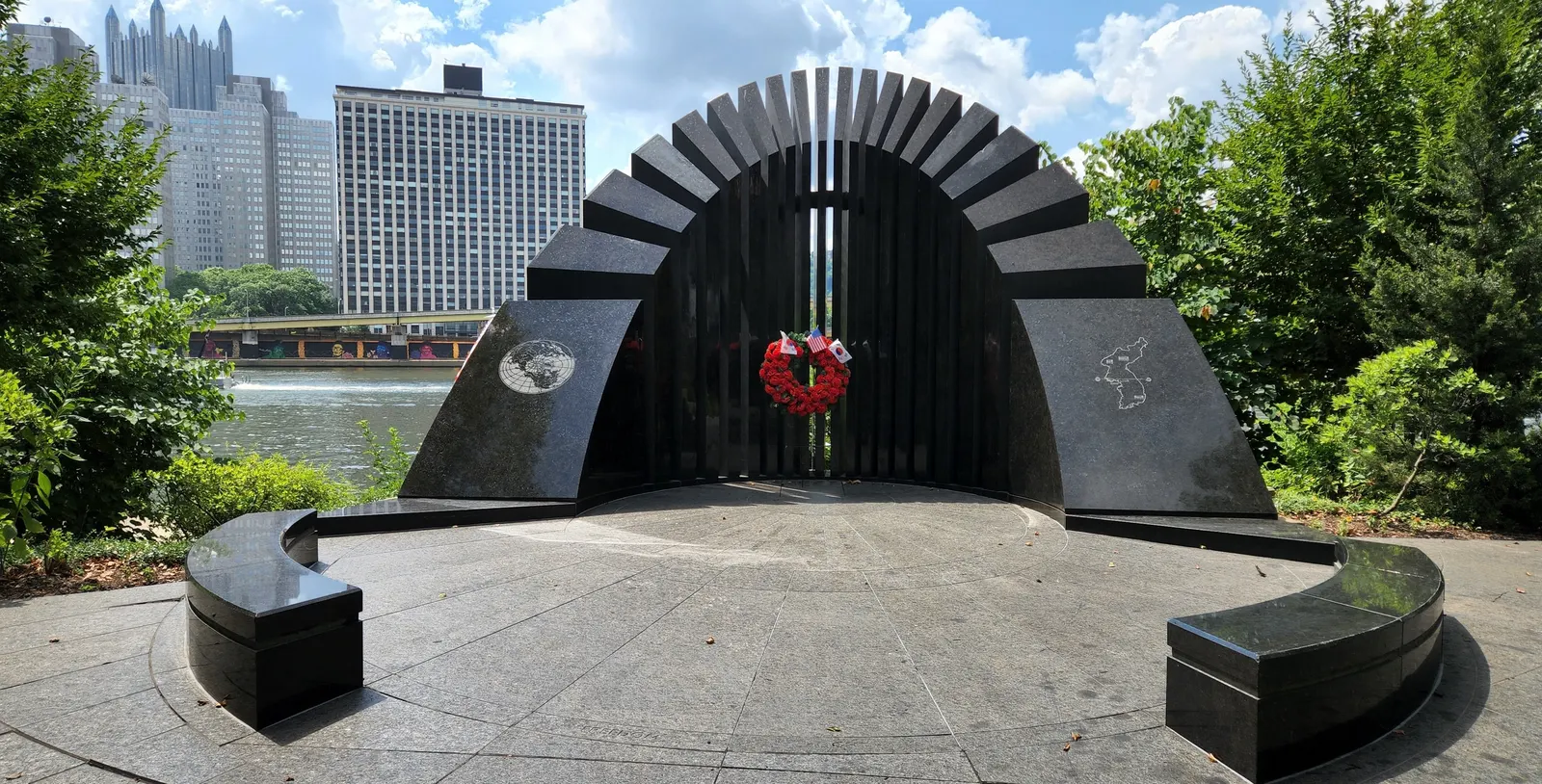
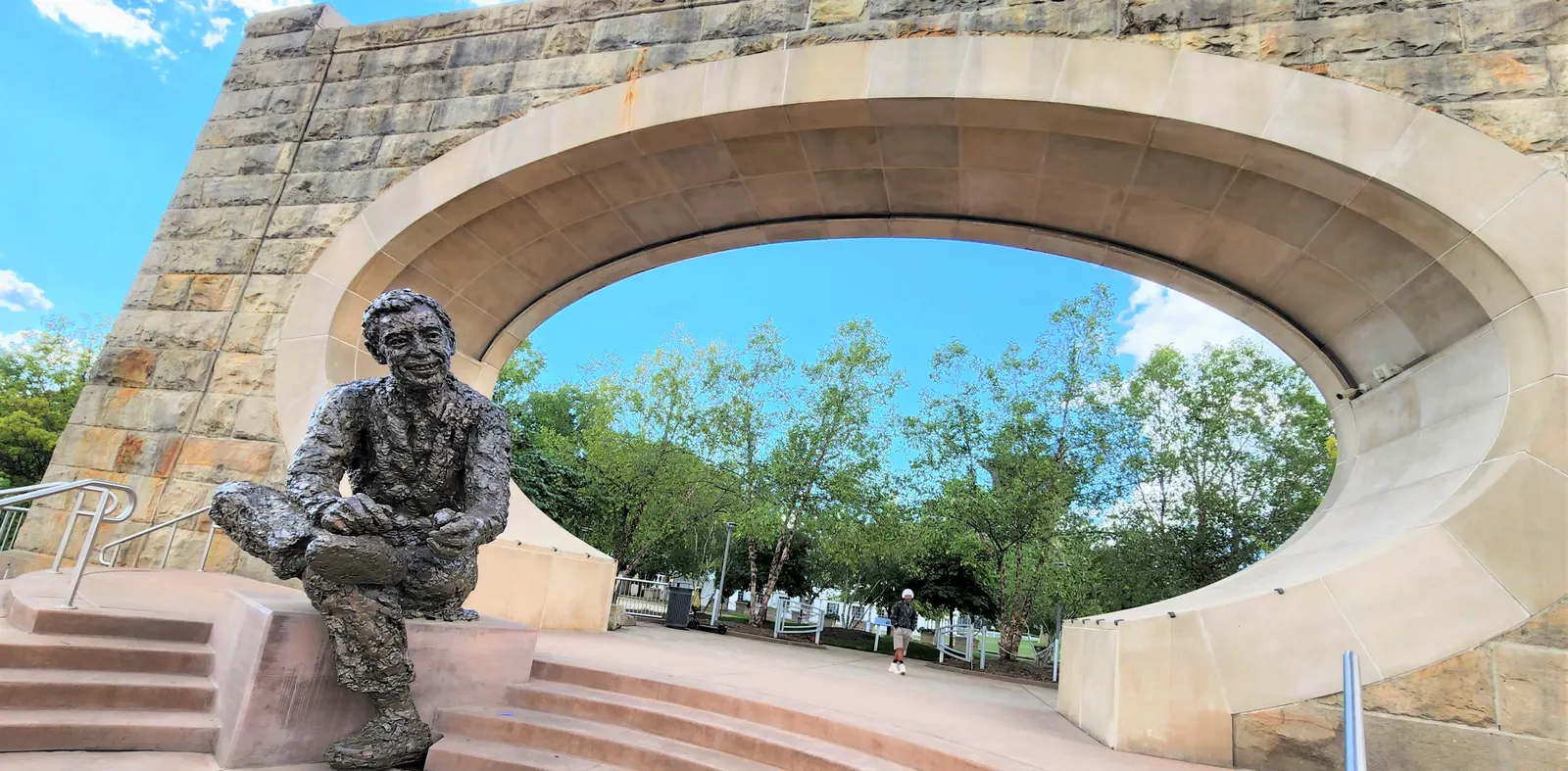
Korean War Veterans Memorial The original Korean War Veterans Memorial was installed on the North Shore in July 27, 1999. Further to the development of the North Shore, the SEA worked with the City and the Korean Veterans of Western Pennsylvania Memorial Fund for the modifications needed to reinstall the Memorial in the new site in the Park. It was rededicated on July 27, 2001, and is located west of PNC Park near Mazeroski Way.

The Memorial is owned by the City and its maintenance funding is provided by the City, with ongoing maintenance conducted by the City and the SEA. Langley Observatory Clock North Shore Riverfront Park is home to a public art piece titled Langley Observatory Clock, which was created by nationally acclaimed artist R.M. Fischer. Mr. Fischer was selected by a committee of local art experts to design and install site-specific artwork.

The Heinz Endowments and the Pittsburgh Foundation funded the program and installation was completed in August 2007. Key Facts Artist: R.M. Fischer Fabricator: Polich Talix Artworks Development Cost: $250,000 Artist Selected: 2002 Final Installation: August 2007 Features Langley Observatory Clock is the result of a public art program established by the SEA at the onset of the North Shore Riverfront Park project. The program sought to use public art as a means of reintroducing people to the rivers, promoting cultural activities and enriching the City's public art collection.

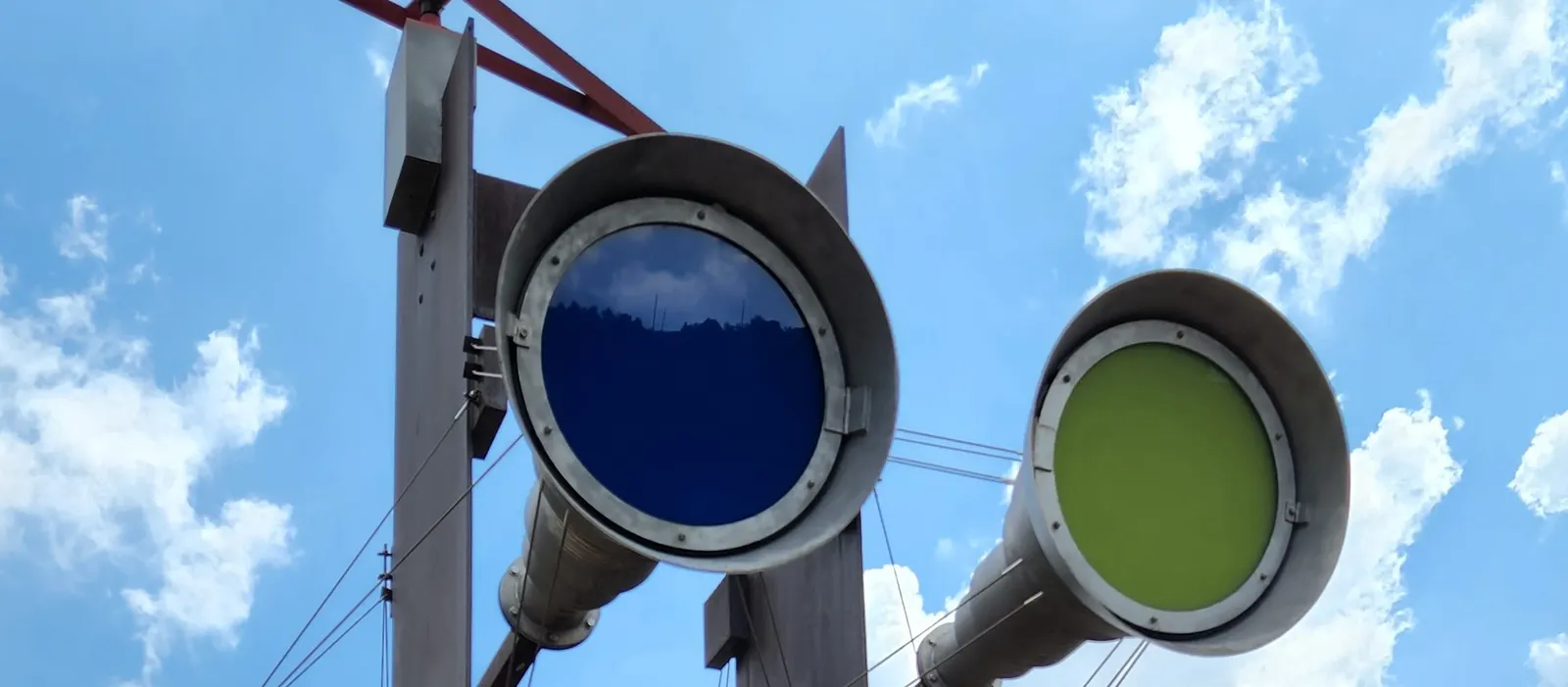
The SEA's Board of Directors appointed an eleven-member committee comprised of local art experts to oversee the program, develop selection criteria and award commissions. A Request for Qualifications was issued and nearly 30 responses were received. From the six artists that were invited to submit proposals, the committee selected R.M. Fischer to create a site-specific installation for the park. Langley Observatory Clock stands over 21 feet tall and is made primarily of Corten steel and stainless steel.

Attached to its main body are two stainless steel lanterns that extend outward. The telescoping “eyes” of the lanterns, held in tension by stainless steel cables, have illuminated blue and amber lenses like railroad switch lamps of yesterday. Below the lanterns a large triangular stainless steel trough theatrically illuminates the interior of the portal at night. At its zenith, a red aluminum clock hand circles horizontally, marking the passing minutes.

The forked form of the minute hand, inspired by the confluence of the three rivers, is a streamlined vector connoting the march of time. The title of the sculpture, Langley Observatory Clock, refers to the work of Samuel P. Langley. In 1870, Langley, Director of the Allegheny Observatory, created the Allegheny System - a standardized system of measuring and disseminating the accurate time. Langley used the observatory telescope and astronomical observations to set the time on a specifically designed clock.

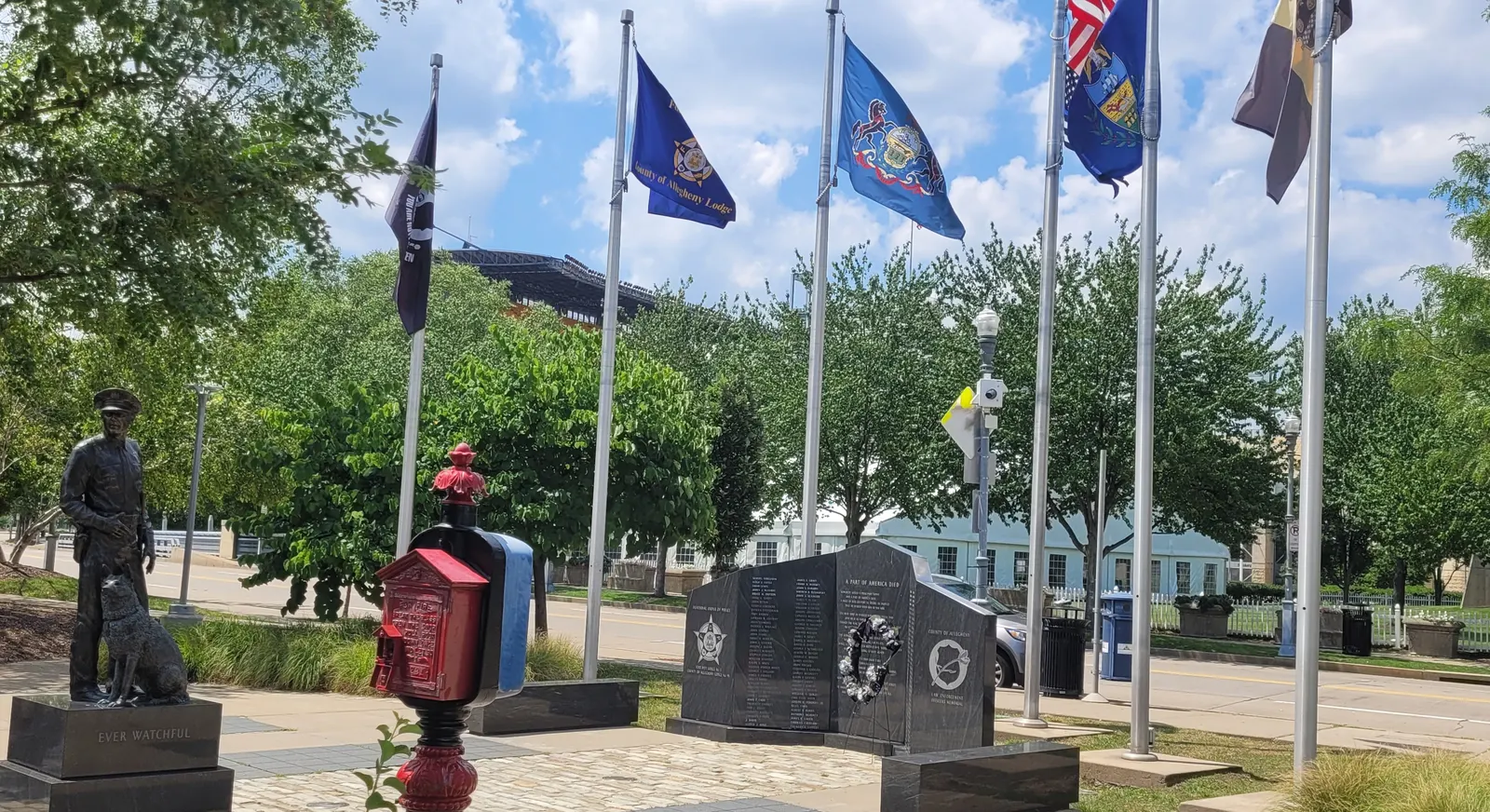
Using telegraph wires, Langley connected the observatory clock to a highly visible clock located at Pittsburgh's City Hall on Smithfield Street. By the end of the year, 42 railroads were provided a standard time through this system. In his artist statement, Mr. Fischer writes that his sculpture, "celebrates the act of looking out over the river. The work is a response to the industrial history of Pittsburgh while simultaneously appearing timeless and looking forward.” Law Enforcement Officers Memorial The Law Enforcement Officers Memorial, Inc. is a nonprofit organization consisting of police officers, survivors and private citizens who worked to build and maintain the Law Enforcement Officers Memorial (LEOM).

The original LEOM was dedicated August 25, 1996, and was located near Three Rivers Stadium. Further to the redevelopment of the North Shore, the SEA worked with the LEOM for the modifications needed to be reinstalled in the Park. It is now situated in the Great Lawn area next to Tribute To Children at North Shore Drive and Art Rooney Avenue. The Memorial was re-dedicated on Saturday, May 17, 2003. The Memorial is owned by the LEOM organization with ongoing maintenance provided by LEOM, Inc.

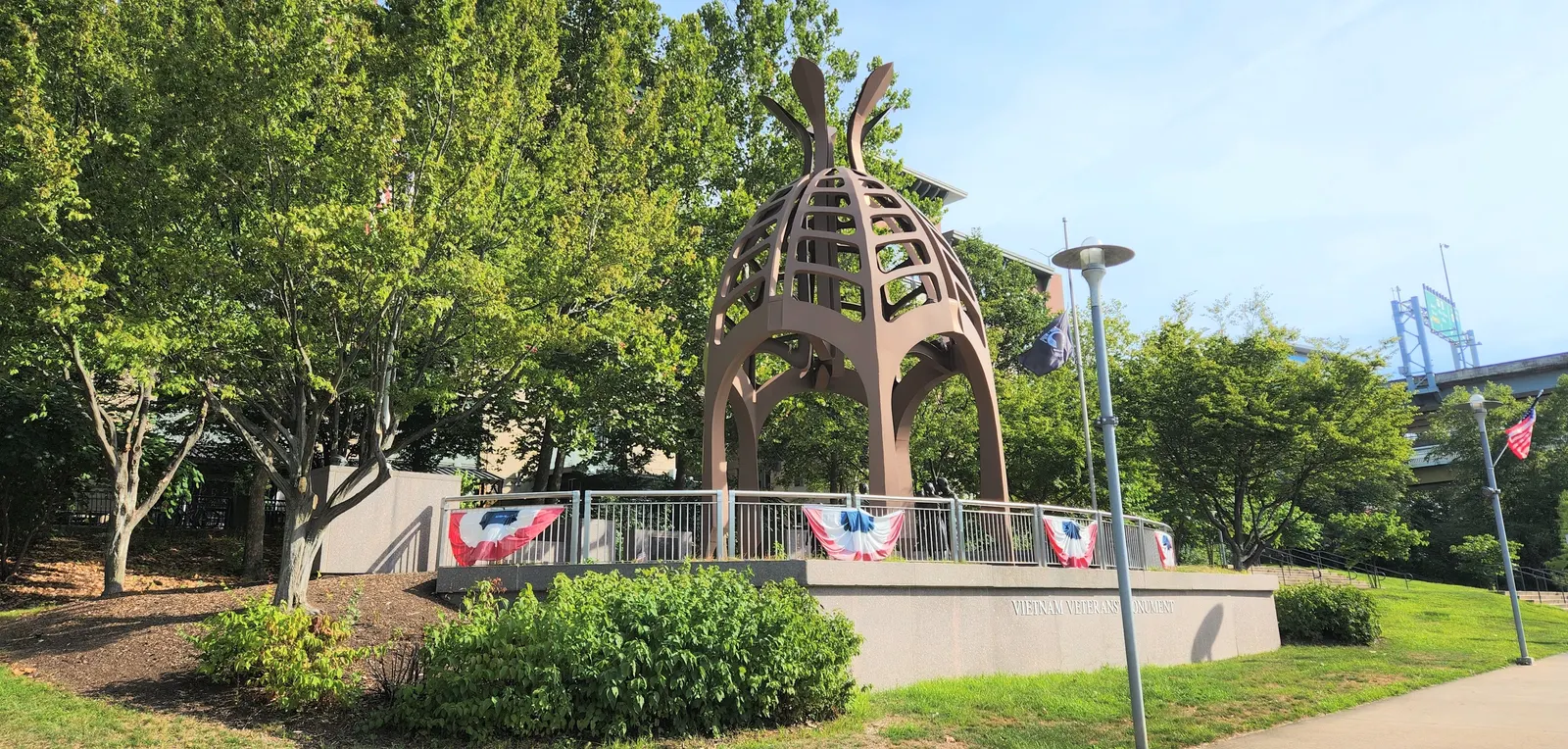
Pittsburgh Allegheny County Vietnam Veterans Monument The original Vietnam Veterans Monument was installed on the North Shore on November 11, 1987. Further to the development of the North Shore, the SEA worked with the City and the Pittsburgh Allegheny County Vietnam Veterans Monument Fund Charitable Trust for the modifications needed to reinstall the Monument in its new site in the Park. It was rededicated on June 23, 2002.

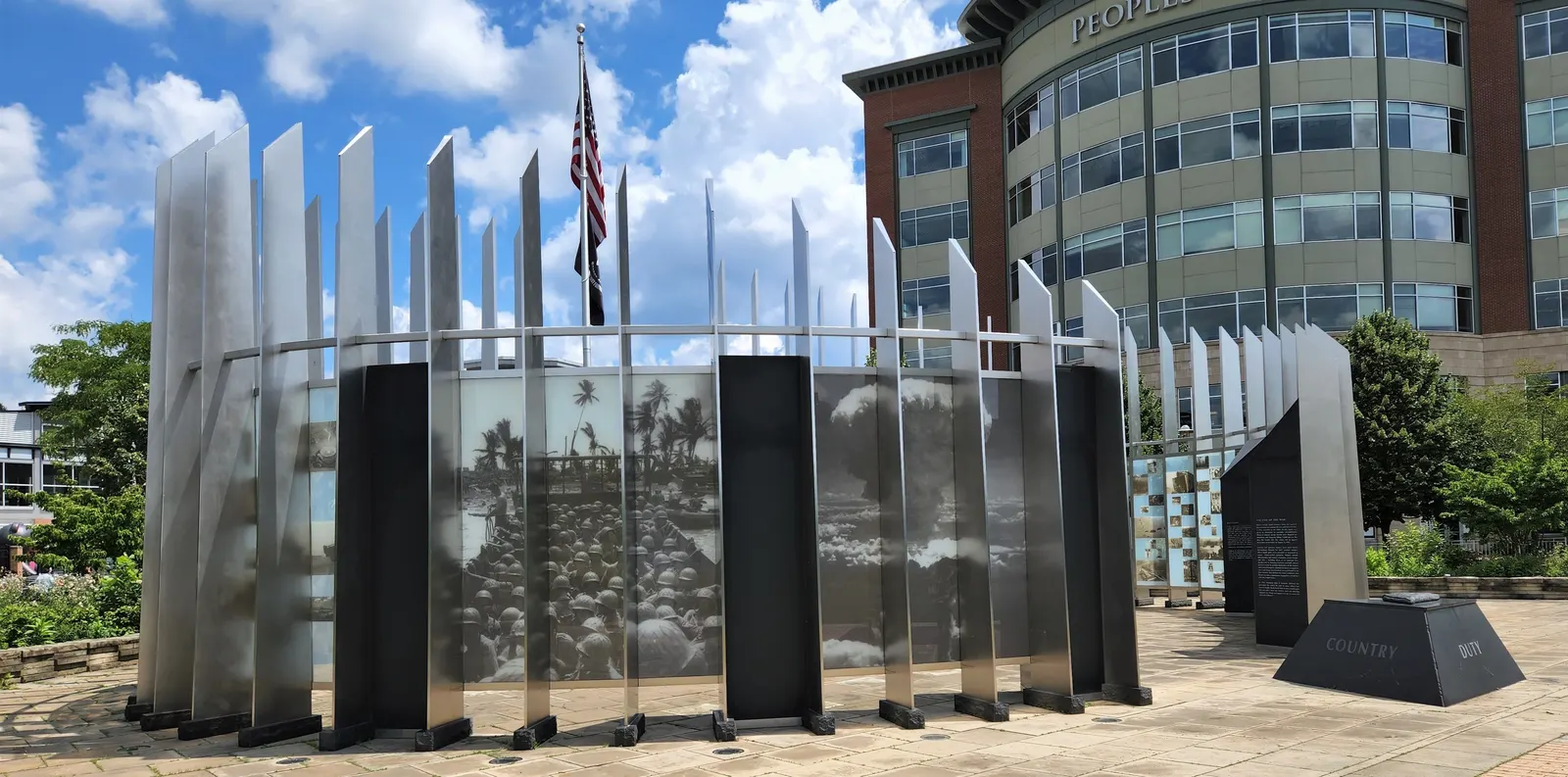
The Monument is located west of Fort Duquesne Bridge by the Del Monte Buildings and Market Street Pier. The Monument is owned and maintained by the City. The Pittsburgh Allegheny County Vietnam Veterans Monument Fund Charitable Trust, held by the Pittsburgh Foundation, helps to pay the costs of extraordinary repairs. Southwestern Pennsylvania World War II Memorial Key Facts Artist: Larry Kirkland Design Firm: Design Workshop Sponsor: World War II Veterans of Allegheny County Memorial Fund, Inc.

Development Cost: $4.1 million Dedication & Opening: December 6, 2013 For more information on the making of the WWII Memorial, images and videos, please visit the WWII Memorial website. Features The City of Pittsburgh and Allegheny County, working with local Veterans organizations, formed the WWII Veterans of Allegheny County Memorial Fund. In 2001, the Fund hosted a national design competition from which Larry Kirkland of Washington DC, and Design Workshop of Denver, CO, were selected for the project.

After reviewing several sites throughout the region, a portion of the Great Lawn at the North Shore Riverfront Park was selected in cooperation with the SEA. The design was approved by the SEA, Riverlife, and the City's Art Commission. Funding sources for the Memorial included State, philanthropic, corporate and individual for the design, construction and maintenance of the Memorial.

Text as published by the Authority at pgh-sea.com.

How Often the Record Names Each Work

Board resolutions and documents in the Authority’s own record that name each collection, from the decision trail on its own asset page.

Public record entries naming each of the three commissioned-art collections Convention Center Public Art Not yet named in the public record PPG Paints Arena Public Art 1 entry North Shore Riverfront Park Public Art Not yet named in the public record
Decision-trail entries per collection, against several thousand words of the Authority’s own description above.