A website concept for the Wheeler Opera House, by Stoa. Not the official Wheeler Opera House website.

Wheeler Opera House Aspen, Colorado

Box office closed, opens 12 PM 970-920-5770

Since 1889

Our Story

Jerome B. Wheeler built an opera house on silver money in 1889. It has burned, sat dark for decades, and been brought back more than once.

“The citizens of Aspen are to be congratulated in the possession of so grand a structure as the Wheeler Opera House.”

Aspen Daily Times, April 1889
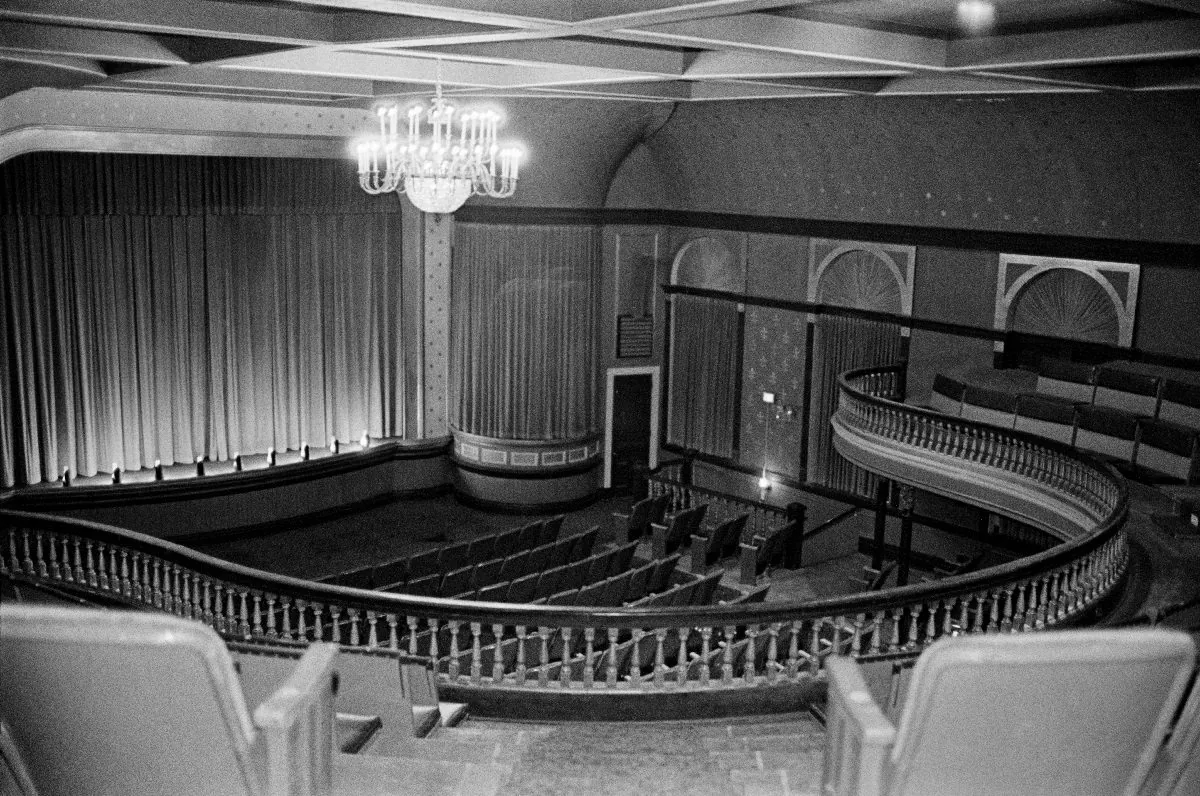
The Wheeler auditorium photographed from the back of the balcony. A curved balcony rail of turned spindles runs across the foreground, the orchestra seats stand empty in rows below it, and a cut-glass chandelier hangs from a coffered ceiling in front of the draped proscenium. Blind arches with radiating mullions are set into the upper side wall.
The auditorium from the balcony: the proscenium, the balcony rail, and the 475 seats the ticket map draws. Courtesy Wheeler Opera House.

A theatre built on silver

1889

Grand opening

Jerome B. Wheeler made his fortune at Macy’s, his wife’s family store in New York, and spent it on silver claims in the mountains above Aspen. In 1889 he built an opera house two blocks from his new hotel. The architect W. J. Edbrooke drew it in peachblow sandstone from the Frying Pan Valley, and it went up in under a year. Wheeler’s Bank took the street corner. A haberdashery, a dress shop, a mining company, an attorney and a dentist filled the floors above it. In the basement was Aspen’s finest “tonsorial parlor,” what everyone else called a barbershop.

Upstairs, the public got a proscenium stage, seats upholstered in Moroccan leather, and a ceiling painted azure and studded with silver stars. Aspen was the first city west of the Divide wired for electricity, and the Wheeler had it from opening night, April 23, 1889: satin programs scented with rose water, the Conreid Opera Company performing “The King’s Fool,” and a swordplay exhibition by a squad of female fencers.

Demand for the occasion ran so high that Aspen’s milliners took out a newspaper advertisement of their own: “We can take no more orders today, as it will tax our whole force to the utmost to complete engagements.”

1889–1912

Boom and bust

Aspen joined the Silver Circuit, a touring route that carried shows over the Divide from Denver and Colorado Springs, through Pueblo and Leadville, and on to Salt Lake City and Cheyenne. Traveling Shakespeare companies, minstrel shows, vaudeville, burlesque, concerts, lectures and even boxing matches all came through the Wheeler.

Then, in 1893, Congress repealed the Sherman Silver Act and silver crashed to market rates. Wheeler’s businesses failed, and he went bankrupt. Four years earlier, the Aspen Daily Times had called the hall “a perfect bijou of a theatre.”

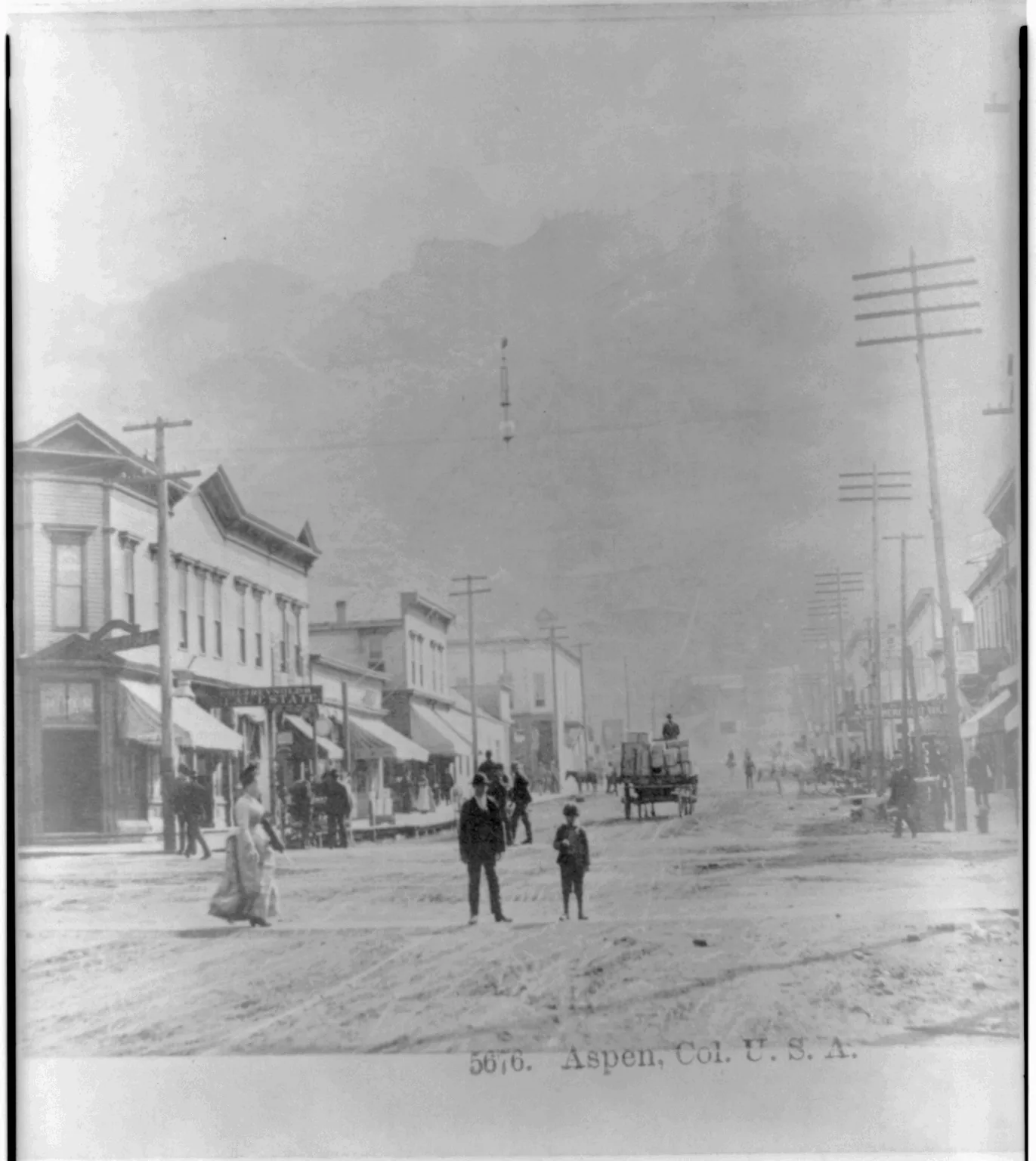
A wide dirt main street in Aspen, Colorado, photographed in 1890. Two-storey false-front brick and frame buildings with awnings line the left side, telegraph poles run down both sides toward a horse-drawn freight wagon, a woman in a long dress walks a child along the near edge, and a man and a boy stand in the middle of the road. A mountain face rises through the haze at the end of the street.
Aspen, Colorado, 1890, the year after the Wheeler opened. Photo: B. W. Kilburn / Library of Congress, public domain.

The dark years

1912–1940

The fires

On the night of November 12, 1912, just hours after a silent movie screening, a fire broke out between the stage floor and the dressing rooms below. It was put out quickly, though it damaged the retail offices and the grocery downstairs with water. The theatre was back to showing movies the very next night.

Nine days later, on November 21, fire broke out again, in three places at once: the box seats, the locked ushers’ room, and the scenery onstage. The Aspen Democrat Times ran the headline:

“Fiendish Firebugs Again Rampant in Our City, Wheeler Opera House Partially Destroyed, the Prettiest Little Structure of Its Kind Between Pueblo and Salt Lake City is Sacrificed to the Venom of a Degenerate Unfit to Remain Upon Earth.”

Aspen Democrat Times, November 1912

The Wheeler was twenty-three years old. It was boarded up and written off as another Aspen ruin. Only the shops on the first and second floors stayed open. In 1918, the City of Aspen bought the building for the cost of the back taxes owed on it: $1,155.

Bringing it back

1940s–1960s

Wheeler revival

Aspen’s own revival began in the 1940s, when the 10th Mountain Division trained nearby at Camp Hale and Walter and Elizabeth Paepcke arrived from Chicago. Their interest in the town laid the groundwork for its ski industry and for what they called the Aspen Idea, that a healthy mind, body and spirit belonged together. In 1949, the Goethe Bicentennial Convocation led to the founding of the Aspen Institute and the Aspen Music Festival.

The Paepckes’ interest in the Wheeler sparked a community effort to clean up the hall, patch its fire-damaged walls and floors, and replace the leaking roof. The architect Herbert Bayer gave it a spare, simple design: Japanese lanterns strung under the balcony, a bare stage with a plain orchestra shell, and rows of benches for seats. The coffered ceiling stayed open, its fire-charred beams still showing.

As Aspen grew busier, that patch job stopped being enough. Bayer came back for a second, very different renovation, mixing the building’s Victorian bones with mid-century Bauhaus design. The box seats came back as draped side stages, secondhand movie-theater seats replaced the benches, and the walls were painted a rich red with gold fleur-de-lis. A gold velvet curtain covered the stage, and the coffered ceiling was fully restored.

1970s

City vision

As its hundredth year approached, the Wheeler had real structural and safety problems. Outside summer, the hall was only good for screening classic films. In the 1970s, the Music Associates of Aspen, the group behind the Aspen Music Festival, led the push for a full structural overhaul.

The City Council found a way to pay for it: a small transfer tax on real estate sold within city limits, approved by voters in 1979 for a twenty-year term beginning in 1980. Voters renewed it in 1997, and again in 2016, most recently through 2039. In 2021, they expanded what the fund can pay for, to cover arts and culture beyond the Wheeler as well.

1984

Grand reopening

The $4.5 million restoration brought the Wheeler back to its 1889 self. The box seats, the proscenium arch and the Victorian-era fire curtain were all returned to their original state. The second floor became the theatre’s lobby for the first time, with the view of Aspen Mountain it still has today. The old bank corner became a bar, and the space beside it became the box office, also for the first time. A passenger elevator and a fire stair with its own freight elevator to the stage addressed accessibility and safety. The Wheeler welcomed its first executive director, Robert Murray.

On May 23, 1984, the Grand Re-Opening began a week of celebration: tours of the building, the Denver Repertory Theatre Company, the dance troupe Momix, pianist James Levine and cellist Lynn Harrell. The new orchestra pit got its first real use accompanying a screening of the silent film classic The Wind, with its star in the audience: Lillian Gish, then ninety years old.
Year-round again

1980s–1990s

A community venue

The Wheeler was now in use all year. A group of Aspen locals formed the Wheeler Associates, helped put the theatre on the map, and bought technical equipment it badly needed. Judy Collins, Spalding Gray, Arturo Sandoval, Harry Connick Jr. and a week-long run of STOMP all played the Wheeler. Lily Tomlin spent six weeks there fine-tuning her Broadway show, The Search for Signs of Intelligent Life in the Universe.

Texan singer Lyle Lovett played the Wheeler at least once a year. John Denver came by so often it was practically his second living room. Renée Fleming’s soprano first rang out here as a student in the Aspen Music Festival’s Opera Theatre program. The HBO/U.S. Comedy Arts Festival settled in for thirteen years, breaking unknown comics like Lewis Black, Margaret Cho, Bill Maher and a young Dave Chappelle.

2000s–2020s

Renovations, again

Stewardship continued. Orchestra seating changed from American to Continental style, taking out the side aisles. From 2010 through 2016, the Wheeler went through a bottom-to-top renovation: reorganized basement offices, an entirely new balcony structure with reconfigured seating, updated HVAC, and a switch from 35 mm film to digital cinema projection. In 2020, the Wheeler began a two-year project to repair its exterior stonework, the same peachblow sandstone Edbrooke used in 1889.

The Wheeler today

The City of Aspen owns and runs the Wheeler now, the same building Jerome Wheeler put up in 1889. It still seats 475 people, in the room restored in 1984 and renovated again between 2010 and 2016.

A citizen advisory board, appointed by City Council, meets most months to help guide how it runs. Most Wednesdays, the Aspen Historical Society leads a tour of the building for anyone who wants to see more of this history up close.

See What’s On Plan Your Visit Support the Wheeler