
How tech workers are speaking up at work and beyond – A worker voice event recap

5 years ago, gig workers started using a custom-built app to collect data from their Uber and Lyft rides. They then used this data to call for higher pay and build cases for worker protections. This is just one way workers have been able to use technology to work together and amplify their voices—i.e., exercise worker voice.
Worker voice is the ability of workers to represent and pursue their interests in the workplace and beyond, in ways that improve their working conditions and livelihoods. Worker voice brings workers’ perspectives and needs to the table when decisions about them are being made. Worker input can prevent managers from making decisions that harm workers and can lead to innovative solutions to workplace problems that benefit both workers and the work itself.
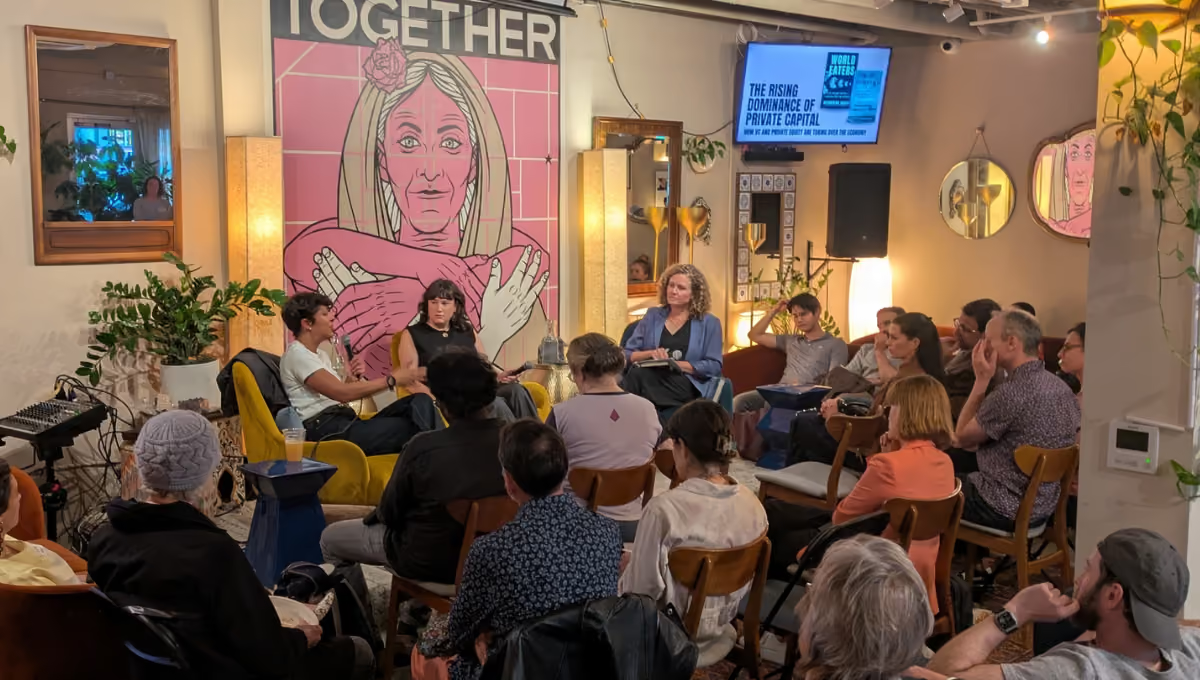
On January 27th, we heard directly from tech workers about how they are choosing to speak up, the lessons they’ve learned along the way, and how they can help colleagues find their voice.
Here’s what we learned from Tahlia Kirk, Alphabet Workers Union; Lisa Kresge, Senior Researcher in the Technology and Work Program at UC Berkeley Labor Center; and Varun Iyengar, Amazon Employees for Climate Justice.
NOTE: This webinar and explainer blog provide information for educational purposes only and do not constitute legal advice.
Tech workers are workers—and they are organizing to improve their workplaces and their industry across many different companies.
Tahlia, a Corporate Trainer at Accenture, began the conversation by sharing her experience with workplace organizing. Tahlia works with a team of technical writers contracted by Google to operate the Google Help Center. If you’ve ever been locked out of your Gmail account or are trying to resolve a Pixel issue, Tahlia’s team is the human workforce behind the scenes that ensures you have a step-by-step written solution to your problem. The working relationship with Google as a contractor is so close that Tahlia and her coworkers filed for joint employment and are currently organizing around it.
Tahlia is in one of the units within the Alphabet Workers Union that has a contract, a collective bargaining agreement with their employer. When asked about the top issues Tahlia and her coworkers are facing, she said job security is top of mind for everyone. Layoffs were a big issue; at one point, 75% of Tahlia’s team was laid off.
Later, due to the pandemic, many workers relocated and began working remotely. Their employer was not providing the necessary equipment to do work, and when the return to office mandates hit, it put her coworkers in a position where they had to either return to the office or quit. Key contract wins included permanent remote work and 6 weeks of severance pay, providing a safety net for affected employees.
Similarly, Vaurun Iyengar began organizing after Amazon forced everyone to return to office. Amazon’s negative climate impact, its treatment of warehouse workers, and its effects on the communities where its facilities are located motivated Varun to start organizing. That’s when Amazon Employees for Climate Justice found him.
Varun reflected that the current open letter campaign is the result of a multi-year effort to talk with coworkers. At the beginning of last year, when Varun was talking to his coworkers, the AI push was just beginning. Management discussed the need for employees to use AI. Management also made statements connecting AI usage to headcount reduction. At the same time, data center battles were heating up across the country.
At first, organizers were not sure if AI would be the thing that would galvanize the most workers at the moment, but AI just kept coming up in conversations: how it was impacting people at work, how it was impacting the way leadership made decisions, and the general fears about how AI was impacting the world.
Varun expressed that tech workers at Amazon and tech workers in general can be leaders in the AI fight, and need to put out a vision that says that tech workers are paying attention to this stuff, it is impacting workers, and we know it’s impacting the world, so “let’s, like, make a clear stance and try to bring that to people’s attention and get people on board with that as a way to move people into action.”
There are many ways to organize at your workplace. What matters most is developing a sense of community and building trust with your coworkers.
During the discussion, we reflected on workplace organizing and offered recommendations to other workers just starting their journey. Tahlia emphasized the importance of building your community and the need to focus on it. For her, establishing trust and meaningful relationships among coworkers is the foundation of every good union and organizing effort.
Varun echoed Tahlia, saying it is really about trust and the personal relationships workers can build with one another. It enables people to take more risks and handle the challenging aspects of organizing. He explained that companies want us to feel alone and that many of their systems are designed to create that division or make it hard to speak up, especially for workers in precarious positions, such as visa workers. For Varun:
“Winning also looks like feeling more comfortable at work. Winning looks like having that relationship with your coworkers where you can trust them, where you can be together, and carry some of what you’re experiencing in a shared way. So, yeah, just talk to people, try to bring them out of their shell and do the same for yourself if you can.”
Workers can also improve working conditions in the tech industry by ensuring that public policy creates protections for all workers.
Lisa Kresge has been researching labor contracts and just recently published an inventory of union contract provisions related to technology. Lisa explained the three buckets of provisions that are in the contracts that relate to technology:
- Decision-making power and governance.
- Worker protections and employer obligations.
- Technology itself and how it will be used.
Lisa brought to light that we are seeing more negotiations around working with technology, that third bucket, around the guardrails of specific technologies, like AI.
However, many workers, especially tech workers, are not in unions. Lisa detailed how non-unionized workers are often kept in the dark about the technology their employer is using or rolling out, or may not even know what technologies are being deployed behind the scenes.
Nonunion workers have less ability to assert a collective voice and are often left to bear economic risks individually. For Lisa, that is the importance of baseline protections in public policy for all workers, as well as really strong rights and protections for the right to organize for workers who are not already in unions.
Looking for a place to start? Check out our Tech Worker Resource Hub!
Whether you’re navigating AI in hiring, fighting for better protections, or trying to understand the hidden workforce powering artificial intelligence, our new Tech Worker Resource Hub is here to help.
We’ve brought together resources, tools, and stories from tech workers who are building power in the industry.
Tech Worker Resource Hub