In This Issue
-
DAKOTA IMAGES | Marcella LeBeau
Marcella Rose Ryan LeBeau (Wígmuŋke Wašté Wíŋ, or “Pretty Rainbow Woman”) of the Cheyenne River Sioux Tribe, was born in Promise, South Dakota, on 12 October 1919. LeBeau completed her nursing degree at St. Mary’s Hospital in Pierre. The following year, she enlisted in the United States Army Nurse Corps. During World War II, she served in England, France, and Belgium. On D-Day (6 June 1944), LeBeau landed in Normandy and treated wounded soldiers in tents. She arrived in Liege, Belgium, in December 1944 for the Battle of the Bulge. She concluded her military career as First Lieutenant. After her military service, she married Gilbert LeBeau, with whom she had eight children. She worked for the Eagle Butte Indian Health Service for thirty-one years before retiring as director of nursing. A founding member of the Cheyenne River Sioux Tribal Community, she served on the tribal council from 1991 to 1995, leading the tribe’s effort to become the first in South Dakota to approve the Smoke-Free Air Act (2015). LeBeau received multiple honors and medals for her service, including the World War II Victory Medal, a Medal of Honor from Belgium (2004), and the French Legion Medal of Honor (2004). In 2006, she was inducted into the South Dakota Hall of Fame and received a lifetime achievement award from South Dakota State University. The Daughters of the American Revolution conferred the Women in History Award to LeBeau in 2016. Five years later, she was inducted into the National Native American Hall of Fame. She passed away on 21 November 2021 in Eagle Butte, South Dakota, at the age of 102. In addition to her remarkable service during the war, LeBeau inspired many to pursue careers in nursing and made noteworthy contributions as an important health policy leader. Photo courtesy of Shane Balkowitsch, Nostalgic Glass Wet Plate Studio, Bismarck, N.Dak.
-
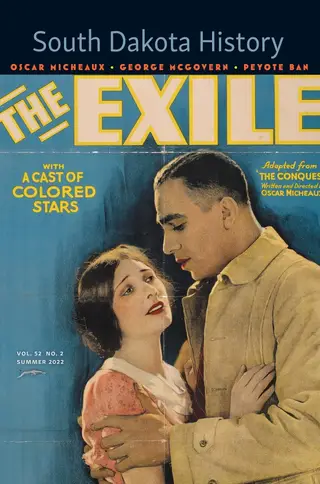
Oscar Micheaux and the South Dakota Frontier in Print and Cinema
Sara Gallagher’s article “Oscar Micheaux and the South Dakota Frontier in Print and Cinema” examines the career of a film director who drew inspiration from his time as a homesteader in Gregory, South Dakota, in the early twentieth century. Micheaux’s artistic endeavors highlighted the possibilities the western frontier held for African Americans while also underscoring the unique challenges they faced in the region. Gallagher is a researcher and lecturer for the English department at the University of Waterloo in Waterloo, Ontario.
-
Reverend Edward Ashley's 1923 Campaign to Ban Peyote in South Dakota
In “Reverend Edward Ashley’s 1923 Campaign to Ban Peyote in South Dakota,” Richmond L. Clow describes how a prominent Episcopalian missionary fought to end the ceremonial smoking of peyote in Native American Church ceremonies across the state. Edward Ashley, who previously championed the free exercise of religion among American Indians in South Dakota, believed that peyote use had negative social consequences and feared that the practice reflected a surge in fundamentalist sentiment on the reservations. Clow is professor emeritus of Native American studies at the University of Montana in Missoula.
-
The McGovern War Years: Reporting by Daryl "Bud" Lembke, 1972-1973
“The McGovern War Years: Reporting by Daryl ‘Bud’ Lembke, 1972–1973” unearths an unpublished piece written by a reporter who researched then-South Dakota senator George McGovern’s World War II career during his 1972 presidential run. Laurie Langland, who serves as the archivist for Dakota Wesleyan University (DWU), provides an introduction to a manuscript that Los Angeles Times reporter Daryl Lembke submitted to the Atlantic Monthly about his experience reporting on McGovern’s service record. Lembke donated the manuscript and his related correspondence to the DWU archives in 2012.