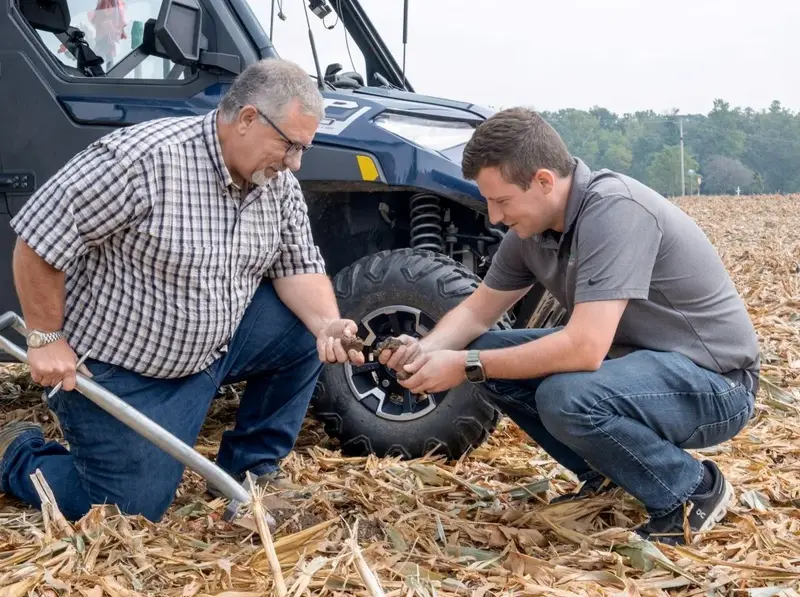
Chris Lee and mentor Pat Bittner on cover crop residue
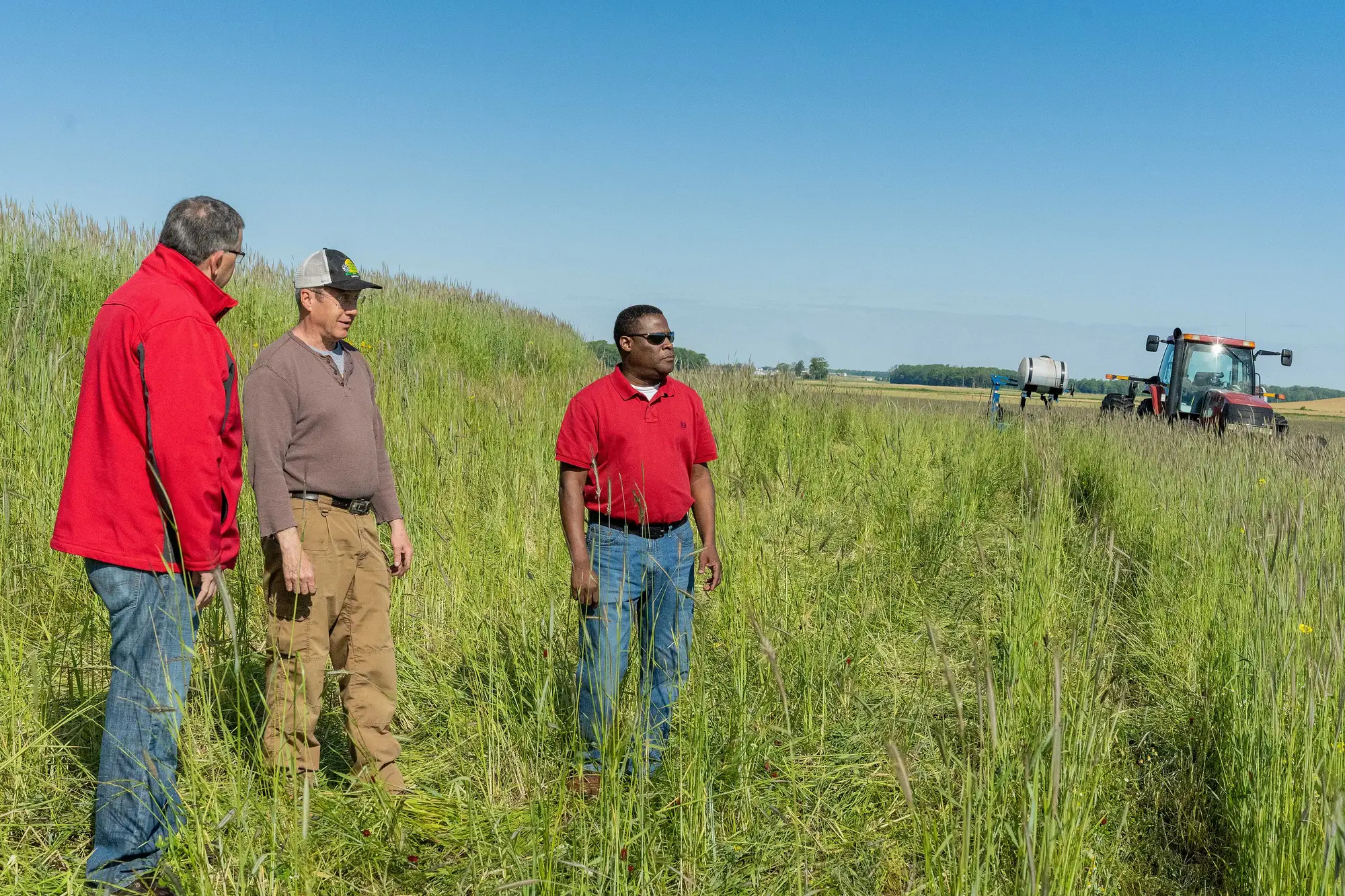
Since retiring from USDA Natural Resources Conservation Service, Chris Lee has been working with Farm Advisors Mentor Pat Bittner.
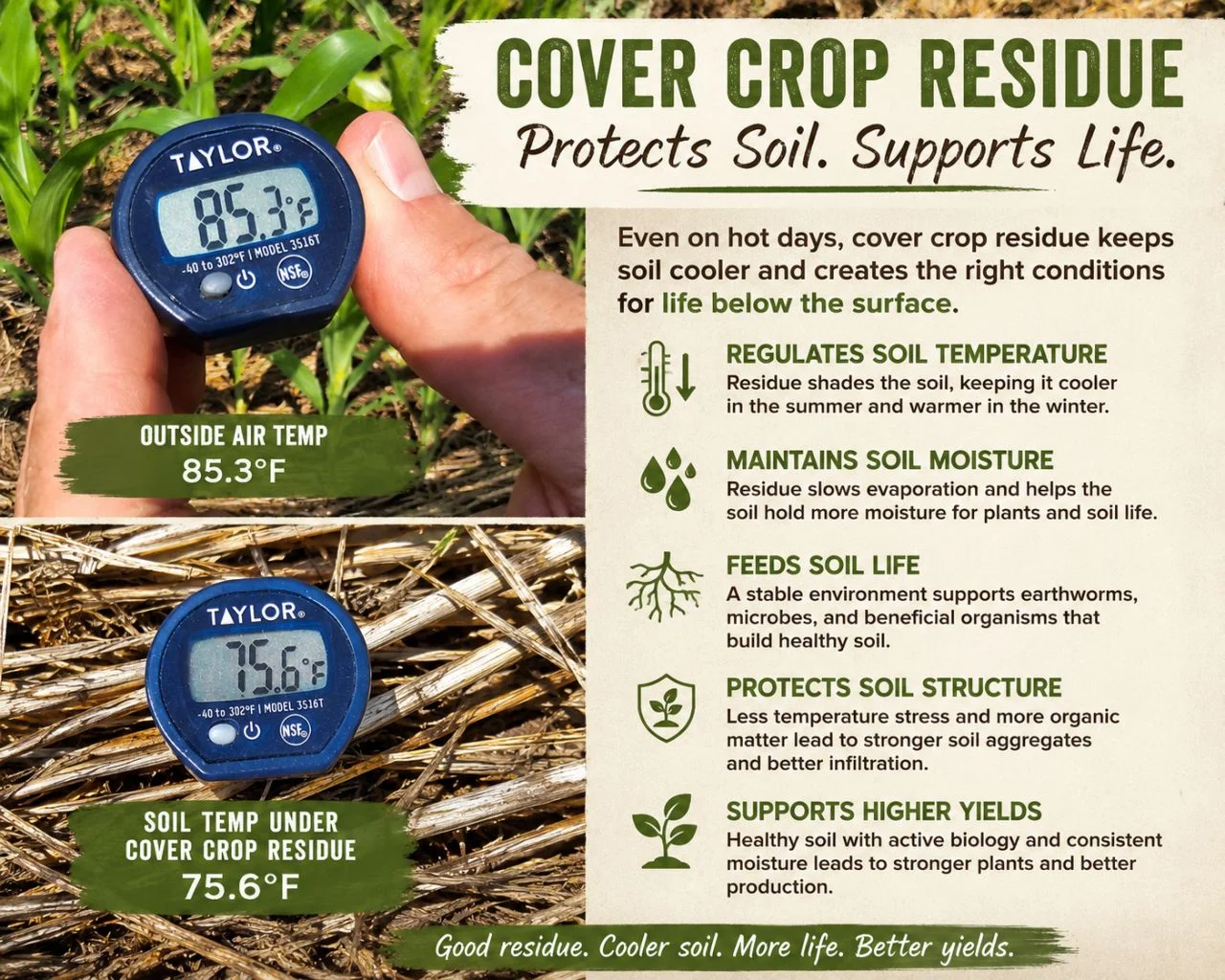
The graphic says it all.
Words in this graphic
- Cover crop residue: Protects Soil. Supports Life.
- Even on hot days, cover crop residue keeps soil cooler and creates the right conditions for life below the surface.
- Regulates soil temperature. Residue shades the soil, keeping it cooler in the summer and warmer in the winter.
- Maintains soil moisture. Residue slows evaporation and helps the soil hold more moisture for plants and soil life.
- Feeds soil life. A stable environment supports earthworms, microbes, and beneficial organisms that build healthy soil.
- Protects soil structure. Less temperature stress and more organic matter lead to stronger soil aggregates and better infiltration.
- Supports higher yields. Healthy soil with active biology and consistent moisture leads to stronger plants and better production.
- Outside air temp 85.3°F
- Soil temp under cover crop residue 75.6°F
- Good residue. Cooler soil. More life. Better yields.