
Chesapeake Quarterly · Volume 25, No. 1
The Shallows That Shape the Chesapeake
The Susquehanna Flats are one of the Chesapeake's most remarkable places. Where the Susquehanna River, the Bay's largest tributary, spreads into broad shallows at the head of the estuary, sunlight reaches the bottom and underwater grasses grow in a meadow that can stretch for thousands of acres. It is the Bay's largest expanse of submerged grasses, and a vital habitat for wildlife, water quality, and generations of waterfowl hunters.
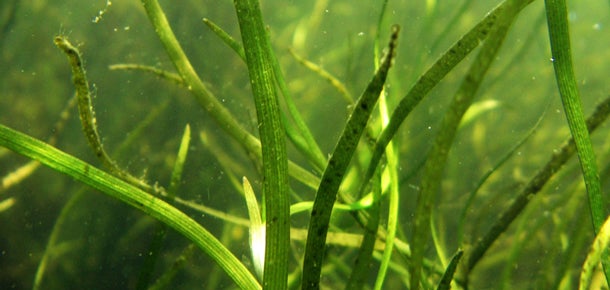
A vital sign of the Bay
Submerged aquatic vegetation, SAV, or simply "the grasses", is one of the clearest signals of the Chesapeake's health. The grasses shelter young crabs and fish, anchor sediment, and pull nutrients from the water. When the water runs clear enough for light to reach them, they thrive; when it clouds, they fade. Tracking them, year after year, is one way scientists read the state of the estuary.
Home to the Bay's largest expanse of submerged grasses, this vital habitat supports wildlife, water quality, and generations of waterfowl hunters.
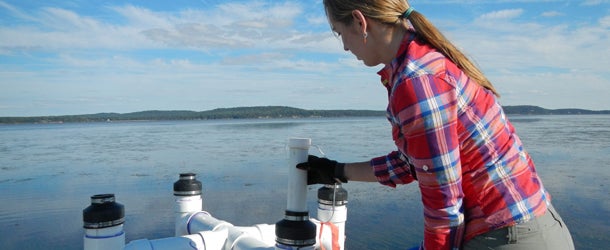
Loss, in a single storm
Then, in 1972, Tropical Storm Agnes swept through the watershed. The storm sent a surge of fresh water and sediment down the Susquehanna, and across the upper Bay the grass beds virtually disappeared. On the Flats, a meadow that had defined the place for generations was gone, and for years afterward, it stayed bare.
A quiet recovery
Decades later, the grasses began to return, slowly at first, then in a rush, until the bed had regrown into one of the Bay's great restoration stories. Researchers have worked to understand what made the comeback possible, and what it will take to hold onto it as the climate and the watershed keep changing. The Flats, once a cautionary tale, became a place to learn how a living system heals.
A place that was once a cautionary tale became a place to learn how a living system heals.
Chesapeake Quarterly
Read the full feature
This scroll-through is a concept template, it uses the real headline, summary, and imagery of Ashley Goetz's Volume 25 feature to show how Chesapeake Quarterly storytelling would live inside the redesigned Drupal site, off ArcGIS StoryMaps. The complete article runs on Chesapeake Quarterly.