From Adirondack Experience
HistoryFrom ADI
BIPOC History in the Adirondacks
The Adirondacks are a vast and diverse region of upstate New York, known for its dramatic high peaks, quiet forests, and low-lying wetlands. This unique landscape offers rich ecological variety and stunning natural beauty year-round.
Spanning over 6 million acres, the Adirondack Park is the largest protected natural area in the contiguous United States—bigger than Yellowstone, Yosemite, Grand Canyon, and Glacier National Parks combined, and comprised of both public and private lands.
History of Native Peoples in the Adirondacks
The Adirondack region has been part of the traditional homelands of Indigenous peoples for thousands of years. Primarily used by the Mohawk people, members of the Haudenosaunee (Iroquois Confederacy), as well as the Abenaki and other Algonquian-speaking groups, the area was rich in resources and held spiritual significance. These communities hunted game, gathered plants, fished in rivers and lakes, and traveled along well-established trade and travel routes through the mountains. While the rugged terrain limited the development of large, permanent settlements, it was an important seasonal and cultural landscape.
European colonization, land dispossession, and conflict led to the forced migration and marginalization of Native peoples in the region. However, Indigenous presence and influence remain. Today, tribes like the St. Regis Mohawk (Akwesasne) continue to advocate for the preservation of their culture, the protection of their land rights, and the recognition of their deep ties to the Adirondacks.
- Who are the Native people of the AdirondacksAdirondack Explorer
- Digging into Native Americans’ history in the AdirondacksAdirondack Almanack
- Indigenous Perspectives on Adirondack ParkAdirondack Experience
Black History in the Adirondacks
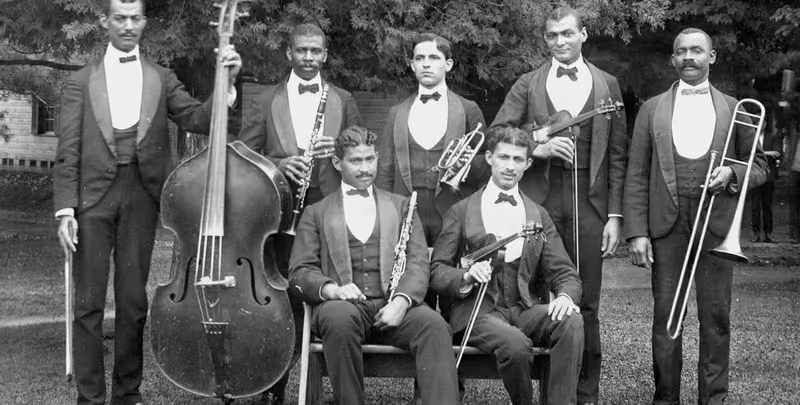
The Adirondack Park has a rich but often overlooked history of African American presence, especially in the 19th and early 20th centuries. Abolitionist Gerrit Smith supported free Black settlements, like Timbuctoo, offering land and a path to political participation. The region also served as a key route on the Underground Railroad and provided employment opportunities for Black workers in the resort and railroad industries. Despite racial challenges, some communities were relatively integrated. Ongoing research, including Amy Godine’s The Black Woods, continues to shed light on these important stories.
- The Missing Story of African Americans in the AdirondacksAdirondack Council
- Blacks in the Adirondacks: A HistoryAdirondack Explorer
- Timbuctoo: African American History in the AdirondacksAdirondack Experience
- Exploring Black history in the AdirondacksAdirondack Explorer
- Searching for TimbuctooPBS documentary
Author, Activist, and Civil Rights Champion
Alice Green’s Legacy
From Mountain Lake PBS
Remembering Alice Green
Alice Green, who grew up in the Adirondack hamlet of Witherbee, spent decades fighting for racial justice and reform in the criminal legal system. She founded the Center for Law and Justice in Albany in 1985, a hub for advocacy and support for incarcerated people and their families, and later served in state government under Governor Mario Cuomo.
Green made historic political bids, running for Lieutenant Governor on the Green Party ticket in 1998 and for Mayor of Albany in 2005. She remained a powerful voice in recent years, highlighting the overlooked Black history of the Adirondacks. In her 2023 memoir, she reflected on her childhood and what it meant to grow up Black in a largely white, rural region.
- Remembering Alice GreenUniversity at Albany magazine
Historic Agent of Change
Brother Yusuf’s Legacy
Brother Yusuf Abdul-Wasi Burgess (d. 2014) was an Albany-based environmentalist and youth mentor who transformed his life after incarceration into a mission of service. Through his Ultimate Journey program, he spent more than 15 years introducing inner-city teenagers, many from communities of color, to camping, paddling, and hiking in the Adirondacks. By combining outdoor education with mentorship, he worked to make public lands more inclusive, inspire a lifelong love of nature, and advocate for conservation.
His work also carried a broader message: that public lands should belong to everyone. Burgess challenged the racial and cultural barriers that had long shaped outdoor recreation, actively working to make the Adirondacks more welcoming and inclusive. At the same time, he used his own story to advocate for prison reform and restorative justice, showing how access to education, mentorship, and nature could change lives. Remembered as a compassionate guide and tireless advocate, Brother Yusuf left a lasting legacy in both environmental justice and youth empowerment.
Current Adirondack BIPOC leaders
Honoring and reclaiming BIPOC history in the region
Places to visit
Continue exploring the diverse history of the region at these local sites and museums!