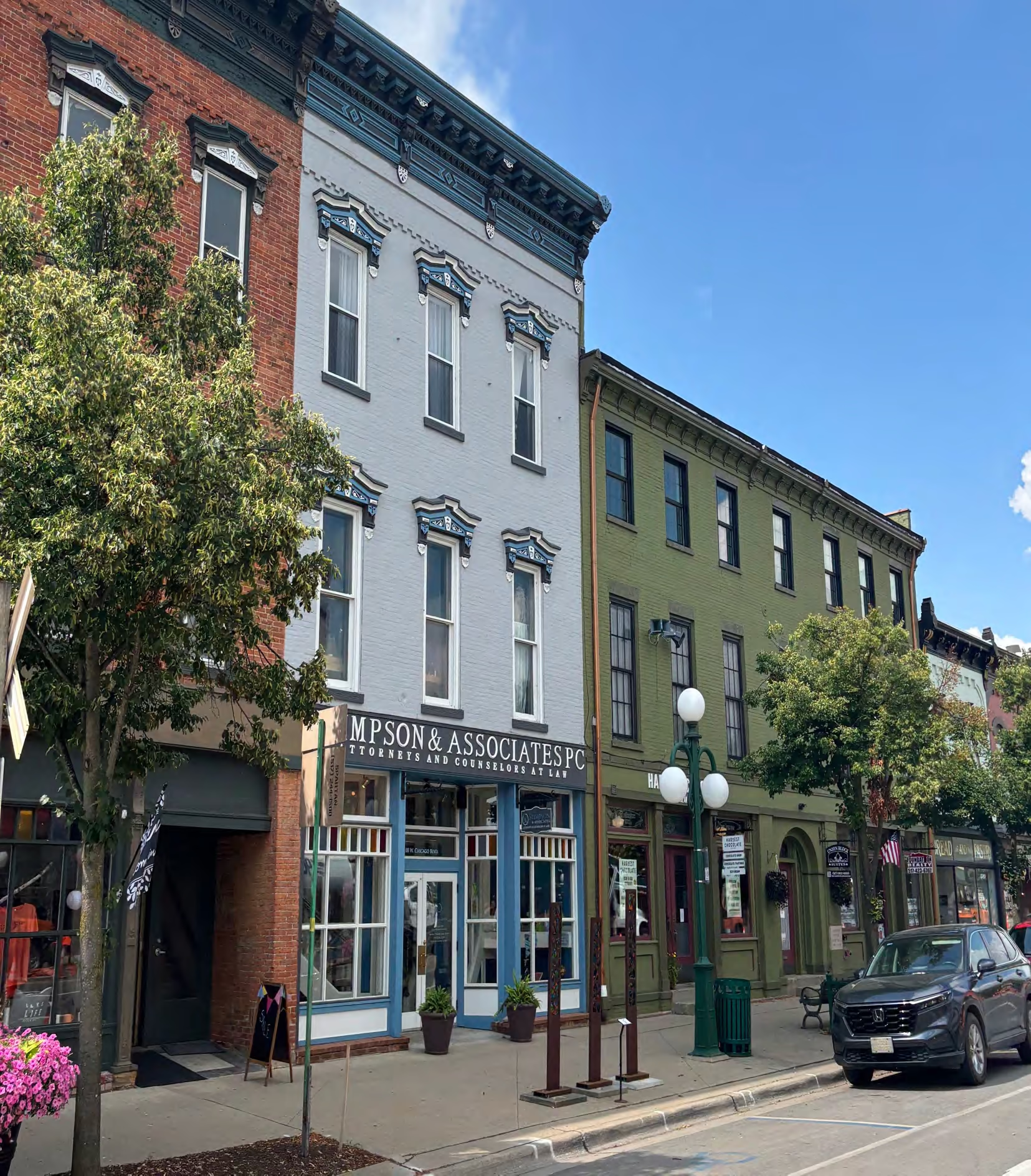
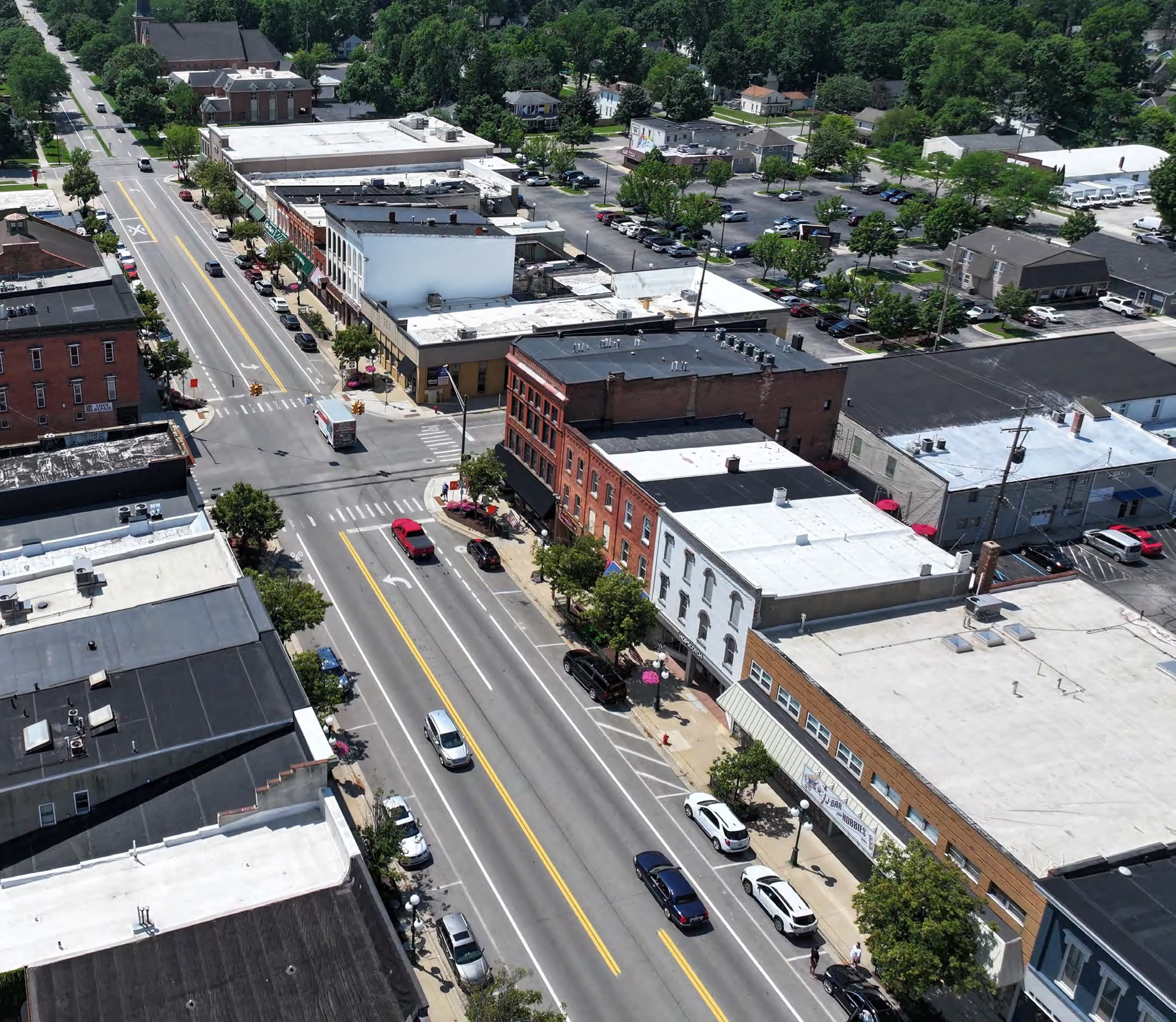
Beautiful architectural features are highlighted on homes and historic buildings. Stroll through the downtown at a pace that moves only as fast as you want it to and look up... notice the window details, each building is unique and beautiful. Stroll by the Bidwell Building on the main four corners downtown and find faces in the details of the archways... notice the brickwork and the antique doors. Tecumseh's merchants cherish the architectural details of our historic past and strive to preserve them for future generations. Come take a stroll and enjoy the historical beauty that is Tecumseh...
Lenawee County's first settlement
As one of the original Michigan territory colonies, Tecumseh was first home to settlers from Jefferson County, New York in 1824 when a community log cabin was built upon the riverbank. This group of less than 30 were the first true residents of what we now know as Tecumseh.
As more pioneers came to the area, the city grew, with the Territorial Legislature marking Tecumseh as the county seat of Lenawee until 1838, where it was transferred to the city of Adrian.
The Dancing Grounds
Michigan's ties to Native American culture are a cornerstone of the state's identity as a whole. The name Michigan itself is a form of the Ojibwe word "mishigamaa" meaning "large water" in reference to the beautiful lakes accessible from all corners of the state.
The city of Tecumseh was named after the great Shawnee Native American Chief Tecumseh, who died just a decade before the establishing of our city. Many believe that Tecumseh himself had visited the eponymous city in the years prior to his death at the Battle of Thames.
Known as the Dancing Grounds, the Tecumseh area was a critical crossroads used for Native American tribes. In addition to the dense population in the area, these tribes would travel through the region to move in all directions.
As Tecumseh grew and infrastructure was built, the streets continued to be named after Native American groups which you can still find today.
The Underground Railroad
Did you know that downtown Tecumseh was part of the Underground Railroad? Michigan as a state was a critical part of this pivotal freedom network due to its borders with Canada. The population in Tecumseh, and Lenawee County in general, were catalysts to the movement in Michigan, setting the standard for support against slavery in the region.
Many homes in Tecumseh are stated to have history tied to the Underground Railroad, with tunnels and secret passages to facilitate safe movement for escaping slaves on their search for freedom. From the Beardsley House to the Hamilton House and others, Tecumseh is full of stories about its history and ties to the Underground Railroad network.
Brookside Cemetery
Tecumseh’s Brookside Cemetery has an interesting array of very important residents. Many individuals serving in various wars have come home to rest eternally in Brookside. The history of the cemetery and the individuals who have helped shape the history of the community are available at the cemetery. Located at 501 North Union Street, the granite archway entrance leads you into the beautifully maintained grounds.
Brookside is officially listed as a Michigan Historic Site and is part of the National Registry of Historic Places.
The brick downtown
As Tecumseh grew, its downtown developed into a center of commerce and community life, characterized by enduring brick buildings — a response to fires in the mid-1800s that prompted more resilient construction methods. Many of these 19th-century structures still define the downtown streetscape today, with notable landmarks such as The Union Block (built in 1849) and the Bidwell Building standing as testaments to the City’s craftsmanship and attention to architectural detail. These buildings feature ornate brickwork, arched windows, and preserved facades that convey Tecumseh’s historical charm.
The beautiful architecture of the downtown area has roots going back to the 1800s. The oldest commercial building, known as The Union Block, was originally completed in 1849. Over the years, it has been home to many local businesses who serve the community, the old Lilley State Bank to taverns to drug stores.
In 2015, the Union Block was rehabilitated, with a focus on preserving as much charm and original work on the building as possible.